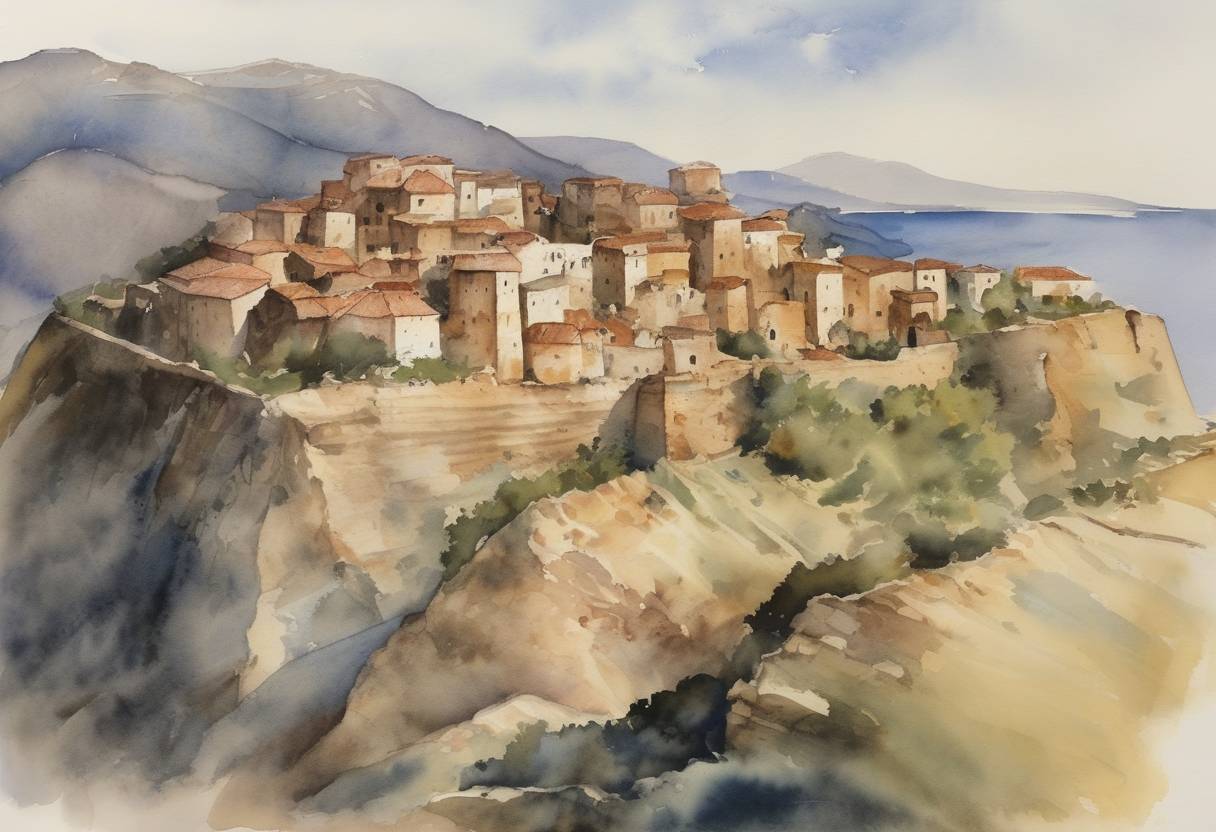
Earthquake in Crete - September 10, 1309
On September 10, 1309, the region of Crete, part of the Byzantine Empire, experienced a significant earthquake. This seismic event had considerable implications for the island and its inhabitants, reflecting both the geological volatility of the Aegean region and the socio-political challenges of the time.
Context
In 1309, Crete was under the rule of the Byzantine Empire, although it was a period marked by political instability and territorial threats, especially from Latin and Venetian influences post the Fourth Crusade. The island was strategically important due to its location in the Mediterranean, serving as a crucial point for trade and military purposes.
The Earthquake
The earthquake that occurred on this day was notable for its intensity and the damage it inflicted. Reports from the period, although limited, indicate that much of the island suffered from structural damage. The architecture of the time, primarily built to withstand elemental challenges, was tested by this natural disaster, leading to significant rebuilding efforts which strained resources.
Aftermath
The immediate aftermath of the earthquake saw the local Byzantine authorities dealing with the challenges posed by damaged infrastructure. Human casualty numbers remain undocumented, but the economic and social impacts would have been considerable, interrupting trade and daily life.
In the broader historical context, such natural events would often exacerbate existing tensions and vulnerabilities within the empire. In subsequent centuries, Crete fell under Venetian control, marking the end of Byzantine influence in the region. The earthquake could be seen as part of the string of challenges leading to the eventual weakening of Byzantine stability in this region.
Historical Significance
This event is an early illustration of Crete’s vulnerability to natural disasters, a factor that continues to influence its development throughout history. The earthquake of 1309 serves as a reminder of the dynamic interplay between natural phenomena and human sovereignty, challenging the resilience of communities and their capacity to adapt and rebuild. It also provides insight into the geological activity characterizing the Mediterranean region, a factor that has shaped the historical narrative and development of its civilizations.