Dissolution of the League of Nations: April 8, 1946
1946 · Geneva, Switzerland
The League of Nations, established after World War I to promote peace, was officially dissolved, transferring its assets to the United Nations.
September 9, 1926
The League of Nations Assembly voted unanimously to admit Germany, marking its official entry into the international organization.
Geneva, Switzerland | League of Nations
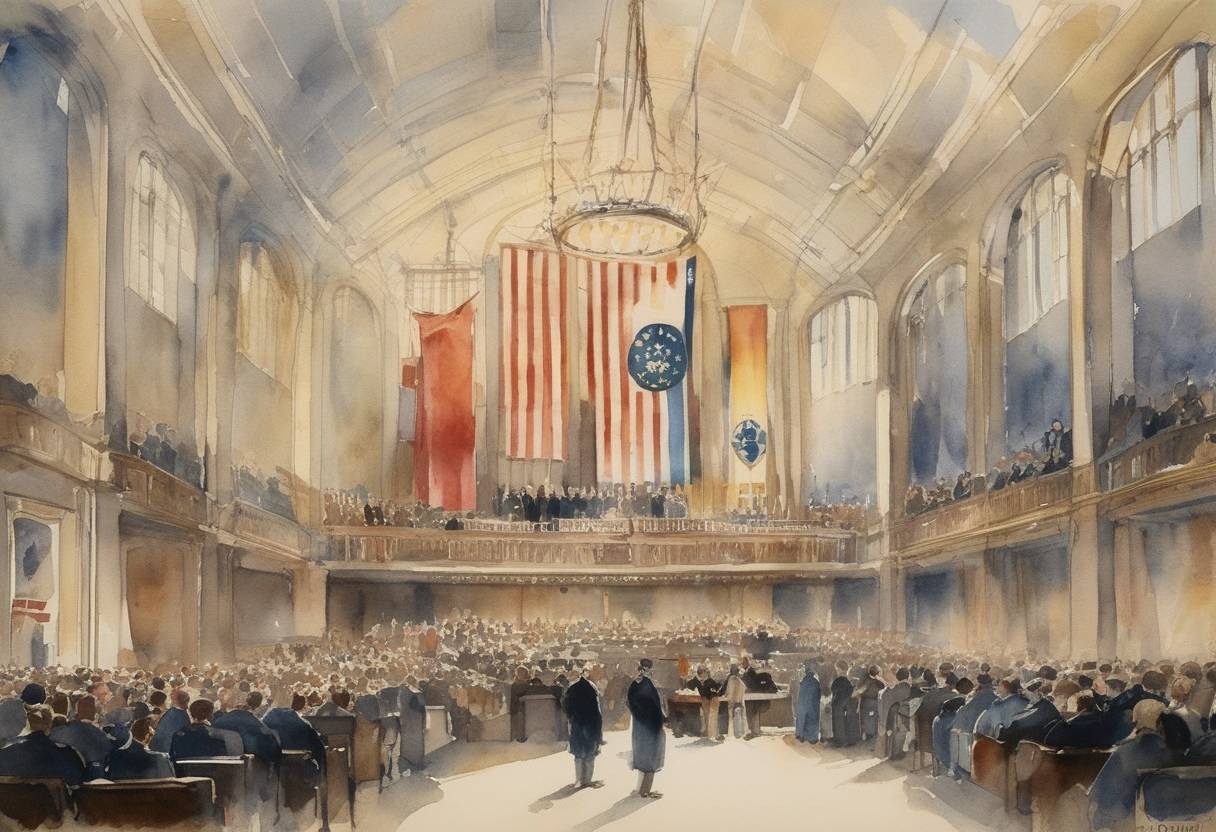
On September 9, 1926, the League of Nations Assembly voted unanimously to admit Germany as a member, marking a significant moment in post-World War I international diplomacy. As the League’s 58th member, Germany’s entry represented a move towards reconciliation and the stabilization of European affairs following the Great War.
The League of Nations, formed in 1920, was the precursor to the United Nations and aimed to maintain peace through collective security and diplomacy. Initially, Germany was excluded from the League’s foundation as it was considered a pariah state due to its role in World War I. However, in the years following, steps were taken towards Germany’s reintegration into the international community.
The Locarno Treaties (1925): The groundbreaking Locarno Treaties, signed in December 1925, were seen as a step towards normalizing relations between Germany and its Western neighbors. German Foreign Minister Gustav Stresemann worked with his French and British counterparts to secure these agreements, which guaranteed borders and prepared the way for Germany’s entry.
Diplomatic Efforts: Both the German government and other major Western powers actively supported Germany’s admission. The diplomatic push was led by British Foreign Secretary Austen Chamberlain and French Foreign Minister Aristide Briand, who believed Germany’s involvement in the League would help prevent future conflicts.
Internal Changes in Germany: Domestically, Germany under the Weimar Republic was stabilizing politically and economically, further making its case as a responsible international partner.
While Germany’s membership in the League marked a hopeful period for international diplomacy, the ensuing years tested these aspirations. The rise of extremism within Germany and broader geopolitical tensions eventually led to the League’s decline and the onset of World War II. Nonetheless, the inclusion of Germany in 1926 remains a notable instance of attempts at peace and reconciliation between World Wars.
Source: en.wikipedia.org