1836 · Niquinohomo, Nicaragua
Nicaraguan national hero, teacher, and popularly known martyr, Augusto César Sandino was born in Niquinohomo, Nicaragua.
October 15, 1844
Friedrich Nietzsche, the influential German philosopher, cultural critic, and poet known for his profound impact on Western philosophy and modern intellectual history, was born.
Röcken, Prussia (now Germany) | -
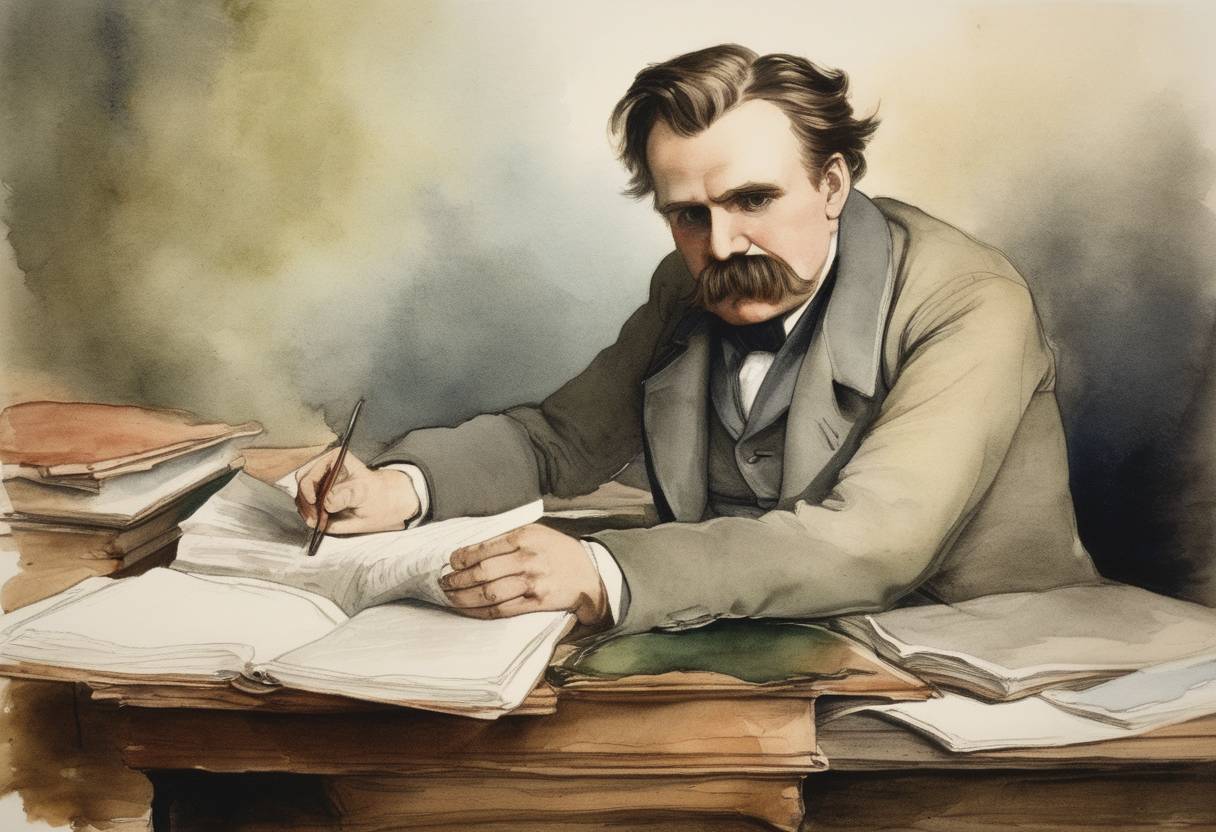
Friedrich Wilhelm Nietzsche was born on October 15, 1844, in Röcken, a small village near Lützen, in what was then the Prussian Province of Saxony, part of the Kingdom of Prussia. Nietzsche’s birth took place in a region that was steeped in religious and intellectual tradition, which would later provide a backdrop for his philosophical inquiries.
Nietzsche was the son of Carl Ludwig Nietzsche, a Lutheran pastor, and Franziska Nietzsche. His father died when Nietzsche was just five years old, leading to his upbringing by a predominantly female household, including his mother, grandmother, and two aunts. This close-knit familial environment fostered Nietzsche’s early education and intellectual development.
Displaying exceptional academic ability from a young age, Nietzsche was enrolled at the prestigious Schulpforta boarding school at the age of fourteen. He later attended the University of Bonn and the University of Leipzig, focusing on theology and classical philology. During his studies, Nietzsche became deeply influenced by the works of Arthur Schopenhauer and Richard Wagner, whose ideas profoundly shaped his later philosophical writings.
Nietzsche’s philosophical work is renowned for its critical approach to traditional morality, religion, and the positivist ideals of the 19th century. His concept of the “Übermensch” (Overman) and the declaration that “God is dead” signaled a radical reevaluation of ethics, human values, and the purpose of existence. These ideas have made a lasting impact on existentialism, nihilism, and postmodernism, influencing a wide array of fields from psychology to literature.
Nietzsche’s notable works include:
Despite suffering a mental collapse in 1889, which led to his withdrawal from active intellectual life, Nietzsche’s ideas gained prominence posthumously. His critique of contemporary culture and challenge to nihilism were pivotal in the development of 20th-century thought, impacting figures such as Jean-Paul Sartre, Albert Camus, Sigmund Freud, and Michel Foucault.
Today, Nietzsche is remembered as a profound and provocative philosopher whose work continues to inspire and challenge thinkers around the world. His birth on October 15, 1844, marks the inception of a life dedicated to challenging and redefining the boundaries of thought and human understanding.
Source: en.wikipedia.org