The Coronation of William III and Mary II: April 11, 1689
1689 · London, England
William III and Mary II were crowned as joint sovereigns of England, Scotland, and Ireland, marking the beginning of their reign.
December 11, 1688
James II of England flees to France during the Glorious Revolution, marking a pivotal point in the transfer of power to William of Orange.
London, England
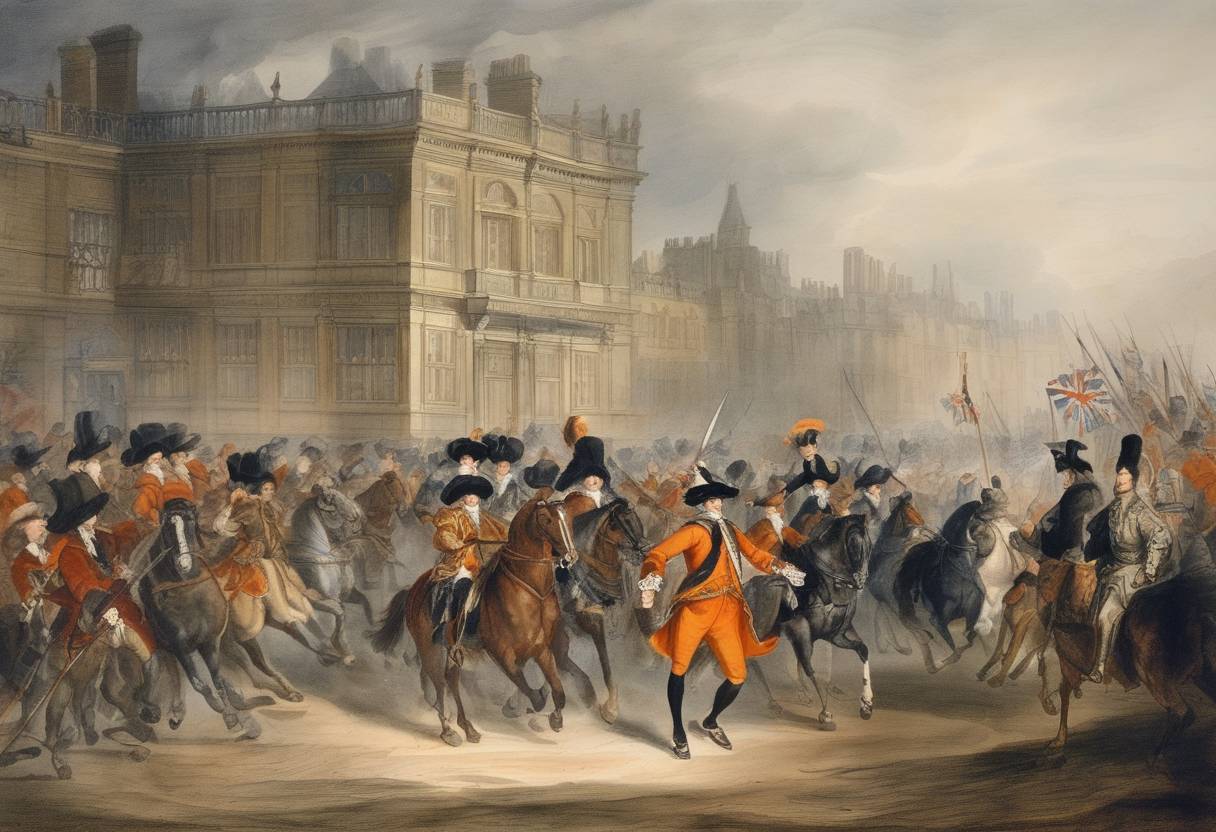
On December 11, 1688, King James II of England made the momentous decision to flee to France, marking a critical juncture in the Glorious Revolution. This event set the stage for the ascension of William of Orange and Mary II, effectively transferring power and altering the trajectory of English governance.
The Glorious Revolution of 1688 emerged from growing discontent with James II’s reign, primarily due to his openly Catholic faith and perceived attempts to install absolute monarchy in favor of Catholicism. This alarmed the predominantly Protestant population and Parliament, fueling fears of a return to Catholic dominance reminiscent of prior periods of religious strife in England.
The birth of James’s son, James Francis Edward Stuart, in June 1688 exacerbated tensions. This event dashed hopes that the throne would revert to his Protestant daughter, Mary, married to William of Orange, further unsettling Protestant leaders.
Invitation to William of Orange: A coalition of English nobles, later known as the “Immortal Seven,” invited William of Orange, a Protestant and James’s son-in-law, to invade England and restore Protestantism. William landed with his forces at Torbay on November 5, 1688.
Erosion of Support: James II’s support dwindled rapidly as several notable figures, including members of his military, defected to William’s side. Even his own daughter, Anne, joined the ranks of those supporting William.
Initial Escape Attempt: On December 10, anticipating his inevitable overthrow, James II attempted to flee but was intercepted in Kent. Determined to escape, he tried again the following day.
On December 11, James successfully made his way to the coast and embarked for France. This time, he encountered fewer obstacles, thanks to a deliberate lapse in security by William, who intended to avoid turning James into a martyr by allowing his safe passage.
Transfer of Power: James’s flight effectively removed opposition to William’s de facto control, paving the way for the Convention Parliament to offer the crown jointly to William and Mary in the spring of 1689.
Bill of Rights 1689: The Bill of Rights was enacted, limiting the monarch’s powers and solidifying parliamentary authority, a foundational moment in the development of constitutional monarchy in England.
Exile and Legacy: James spent the remainder of his life in exile, residing in France under the protection of King Louis XIV. His supporters, the Jacobites, continued to contest William’s rule, leading to subsequent uprisings.
James II’s departure on December 11, 1688, signaled the end of his reign and a shift in English power dynamics. The Glorious Revolution is remembered as a pivotal moment in British history, establishing parliamentary supremacy and setting a precedent for constitutional monarchy that influenced future governance in England and beyond.
Source: www.britannica.com