Reinstatement of Slavery in French Colonies by Napoleon Bonaparte on May 20, 1802
1802 · Paris, France
Napoleon Bonaparte reinstated slavery in the French colonies, reversing its abolition during the French Revolution.
July 29, 1836
Inauguration of the Arc de Triomphe in Paris, commissioned by Napoleon after his victory at Austerlitz in 1805.
Paris, France | French Government
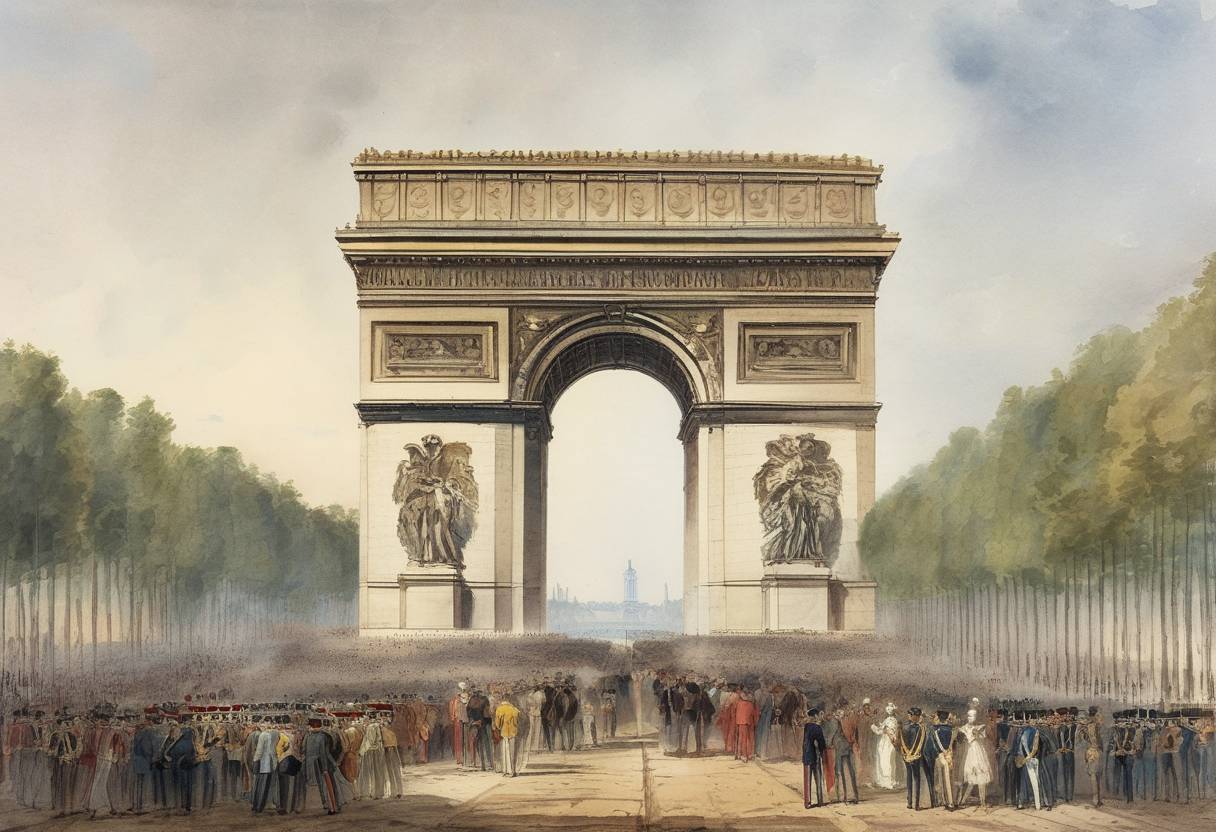
The Arc de Triomphe, one of Paris’s most iconic monuments, was officially inaugurated on July 29, 1836. This grand arch stands at the western end of the Champs-Élysées, at the center of Place Charles de Gaulle, formerly known as Place de l’Étoile. It was commissioned by Emperor Napoleon Bonaparte following his decisive victory at the Battle of Austerlitz in 1805, as a tribute to the French army.
Commissioning by Napoleon: After the Battle of Austerlitz on December 2, 1805, Napoleon sought to commemorate his Grande Armée’s triumph. The Arc de Triomphe was intended to celebrate the military prowess and glory of France under his rule.
Design and Construction: The initial design was created by architect Jean Chalgrin. Construction began in 1806 but faced numerous interruptions due to political changes and financial constraints. Chalgrin’s design was inspired by the Roman Arch of Titus, emphasizing classical grandeur.
Political Turmoil: The construction of the Arc de Triomphe was halted during the Bourbon Restoration after Napoleon’s fall. It resumed under King Louis-Philippe, who sought to complete the monument as a symbol of national unity.
Date and Ceremony: The Arc de Triomphe was inaugurated on July 29, 1836, during the reign of King Louis-Philippe. The ceremony was part of the July Monarchy’s efforts to consolidate power and foster a sense of national pride.
Significance: The inauguration marked the completion of a project that spanned three decades and several political regimes. It symbolized not only military victory but also the resilience and continuity of the French state.
Dimensions: The Arc de Triomphe stands 50 meters (164 feet) tall, 45 meters (148 feet) wide, and 22 meters (72 feet) deep. It is one of the largest triumphal arches in the world.
Sculptural Reliefs: The monument features intricate reliefs and sculptures, including “La Marseillaise” by François Rude, which depicts the French people rallying to defend the nation.
Engravings: The names of major French victories and generals are inscribed on the inner and outer surfaces, honoring the military achievements of the Napoleonic Wars.
Cultural Significance: The Arc de Triomphe has become a symbol of French national identity and pride. It serves as the focal point for national celebrations, including Bastille Day parades and the finish line for the Tour de France.
Tomb of the Unknown Soldier: In 1920, the Tomb of the Unknown Soldier was placed beneath the arch, with an eternal flame commemorating those who died in World War I and subsequent conflicts.
The Arc de Triomphe remains a testament to France’s historical legacy, embodying the nation’s military history and its enduring spirit.
Source: en.wikipedia.org