Succession of Justin II as Byzantine Emperor
565 · Constantinople, Byzantine Empire
The Byzantine Emperor Justin II succeeds his uncle Justinian I as Emperor of the Byzantine Empire.
January 22, 0565
Eutychius is deposed as Patriarch of Constantinople by Byzantine Emperor Justinian I.
Constantinople, Byzantine Empire | Byzantine Church
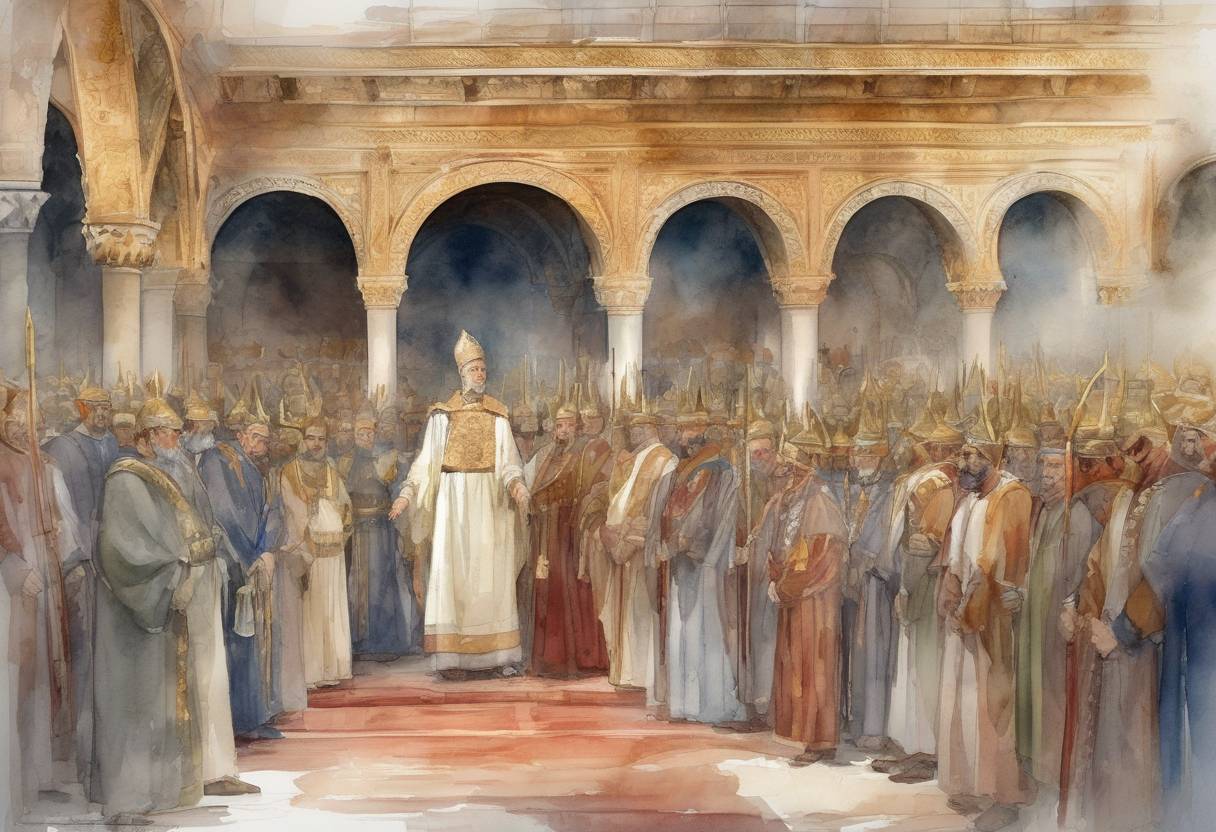
On January 22, 565, Eutychius was deposed as the Patriarch of Constantinople by the Byzantine Emperor Justinian I. This event is a significant moment in the history of the Byzantine Church and reflects the complex interplay between religious authority and imperial power during this period.
Eutychius became the Patriarch of Constantinople in 552, succeeding Menas. His tenure as patriarch was marked by theological disputes and the challenges of maintaining ecclesiastical unity within the Byzantine Empire. The period was characterized by intense theological debates, particularly concerning the nature of Christ, which had been a contentious issue since the Council of Chalcedon in 451.
Theological Disputes: Eutychius was involved in the ongoing theological controversies of the time, particularly those related to the nature of Christ. His views sometimes conflicted with those of Emperor Justinian I, who was deeply involved in theological matters and sought to enforce religious orthodoxy throughout the empire.
Justinian’s Religious Policies: Justinian I was known for his active role in religious affairs, often intervening in ecclesiastical matters to promote his vision of Christian orthodoxy. His reign saw the enforcement of the Chalcedonian Creed and efforts to reconcile various Christian factions within the empire.
Conflict with the Emperor: The specific reasons for Eutychius’s deposition are not entirely clear, but it is believed that his theological positions and possibly his resistance to some of Justinian’s religious policies led to his removal. Justinian’s desire to maintain control over the church and ensure doctrinal conformity likely played a significant role.
Exile and Return: After his deposition, Eutychius was exiled to a monastery in Amasea, in modern-day Turkey. He remained in exile for several years until he was recalled to Constantinople and reinstated as patriarch in 577, following the death of Justinian I.
Legacy: Eutychius’s deposition highlights the tensions between church and state in the Byzantine Empire. It underscores the extent to which emperors like Justinian I were willing to exert influence over ecclesiastical matters to achieve religious and political objectives.
Impact on the Church: The event is reflective of the broader struggles within the early Christian church to define orthodoxy and the role of imperial authority in religious affairs. It also illustrates the precarious position of church leaders who navigated the complex relationship between theological integrity and political expediency.
Eutychius’s experience as patriarch is a testament to the dynamic and often contentious nature of Byzantine religious and political life, offering insights into the challenges faced by religious leaders in maintaining their authority and doctrinal positions amidst imperial intervention.
Source: en.wikipedia.org