May 11, 2011

An earthquake of magnitude 5.1 struck the town of Lorca in southeastern Spain, causing significant damage and resulting in nine deaths.


Lorca, Spain | Spanish Government
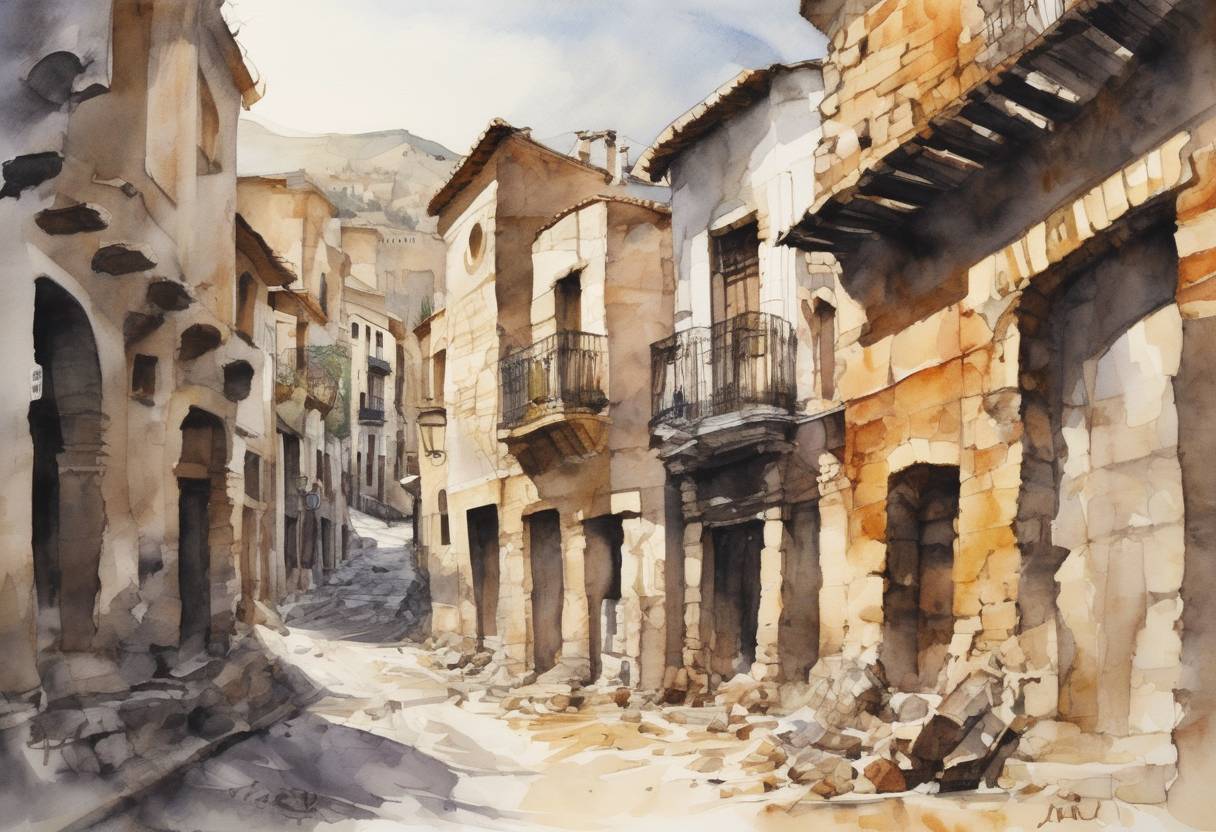
Watercolor painting based depiction of An earthquake of magnitude 5.1 struck the town of Lorca in southeastern Spain, causing significant damage and resulting in nine deaths. (2011)

The Lorca Earthquake of May 11, 2011

On May 11, 2011, a significant earthquake struck the town of Lorca in the Murcia region of southeastern Spain. This seismic event registered a magnitude of 5.1 on the Richter scale and had profound impacts on the local community, both in terms of human casualties and structural damage.

Context and Background

Lorca, a town with a rich historical heritage, is located in a seismically active region of Spain. The Iberian Peninsula, while not as prone to earthquakes as other parts of the world, does experience seismic activity due to the complex interactions between the Eurasian and African tectonic plates.

The Earthquake

  • Date and Time: The earthquake occurred on May 11, 2011, at approximately 6:47 PM local time.
  • Magnitude: The main shock was preceded by a smaller foreshock of magnitude 4.5, which occurred about two hours earlier.
  • Epicenter: The epicenter was located near the town of Lorca, at a shallow depth of around 1 kilometer, which contributed to the severity of the damage.

Impact

  • Casualties: The earthquake resulted in the tragic loss of nine lives. Many of the victims were caught in collapsing buildings or struck by falling debris.
  • Injuries: Dozens of people sustained injuries, ranging from minor to severe.
  • Structural Damage: The shallow depth of the earthquake exacerbated the destruction, leading to significant damage to buildings, including historical structures such as churches and the medieval castle of Lorca. Many residential buildings suffered partial or complete collapse.
  • Displacement: Thousands of residents were displaced as their homes were rendered uninhabitable.

Aftermath and Response

  • Emergency Response: The Spanish government and local authorities quickly mobilized emergency services to assist with rescue operations and provide aid to those affected.
  • Reconstruction Efforts: In the aftermath, significant efforts were made to rebuild and restore the damaged infrastructure. This included both modern buildings and historical sites, with a focus on improving earthquake resilience.
  • Seismic Awareness: The Lorca earthquake highlighted the need for improved seismic preparedness and building codes in the region, prompting discussions on enhancing structural safety standards.

Broader Significance

The Lorca earthquake of 2011 serves as a reminder of the seismic risks present in parts of Europe and underscores the importance of preparedness and resilient infrastructure in mitigating the impacts of natural disasters. The event also brought attention to the need for comprehensive urban planning that considers seismic activity, especially in historically significant areas.

In conclusion, the Lorca earthquake was a tragic event that had lasting effects on the community, prompting both immediate humanitarian responses and long-term changes in building practices and disaster preparedness in the region.

Source: www.bbc.com