The Recognition of Israel by the PLO on September 9, 1993
1993 · Oslo, Norway
The Palestine Liberation Organization (PLO) officially recognized Israel as a state, paving the way for the Oslo Accords.
February 4, 1969
Yasser Arafat was appointed leader of the Palestine Liberation Organization (PLO).
Cairo, Egypt | Palestine Liberation Organization
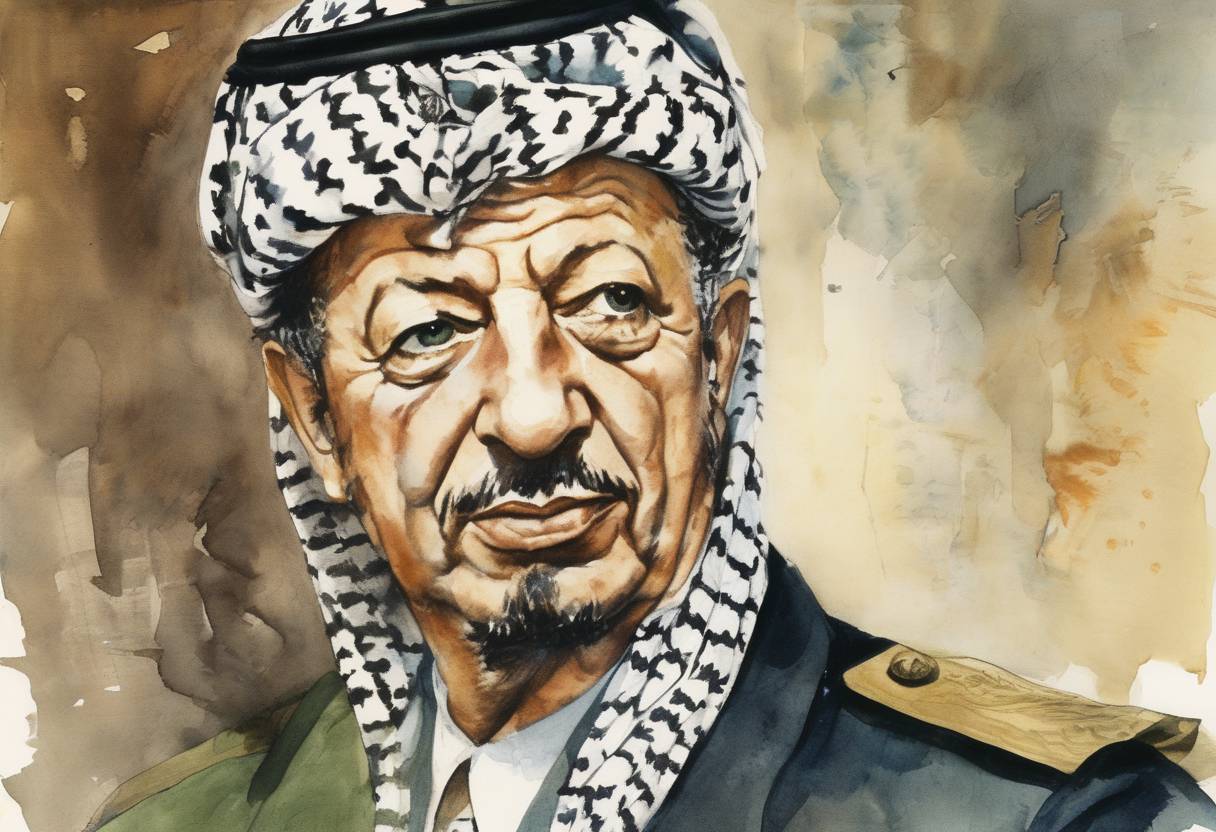
On February 4, 1969, Yasser Arafat was appointed as the chairman of the Palestine Liberation Organization (PLO), marking a significant turning point in the Palestinian national movement. This appointment was a pivotal moment in Middle Eastern politics and had far-reaching implications for the Israeli-Palestinian conflict.
The PLO was established in 1964 with the aim of creating an independent State of Palestine. Initially, it was dominated by Arab states, particularly Egypt, and was seen as a tool for broader Arab political goals rather than a truly independent Palestinian entity. However, the aftermath of the Six-Day War in 1967, which resulted in Israel’s occupation of the West Bank, Gaza Strip, and East Jerusalem, galvanized Palestinian nationalism and shifted the focus towards a more autonomous Palestinian leadership.
Yasser Arafat, born in Cairo in 1929, was a founding member of Fatah, a major Palestinian political and military organization established in the late 1950s. Fatah emphasized armed struggle as a means to achieve Palestinian self-determination. Arafat’s leadership in Fatah and his role in organizing guerrilla operations against Israel elevated his status among Palestinians.
By 1969, Arafat’s influence had grown significantly, and he was seen as a unifying figure capable of leading the Palestinian struggle. His appointment as the chairman of the PLO marked a shift in the organization’s strategy and structure, as it moved away from being an entity controlled by Arab states to one led by Palestinians themselves.
Militarization and Diplomacy: Under Arafat’s leadership, the PLO adopted a dual strategy of armed struggle and diplomatic engagement. This approach aimed to maintain pressure on Israel while seeking international recognition and support for the Palestinian cause.
International Recognition: Arafat’s tenure saw the PLO gain recognition as the legitimate representative of the Palestinian people. This was highlighted by Arafat’s address to the United Nations General Assembly in 1974, where he famously declared, “I have come bearing an olive branch and a freedom fighter’s gun. Do not let the olive branch fall from my hand.”
Internal Challenges: Arafat’s leadership was not without challenges. The PLO faced internal divisions, particularly between various factions with differing ideologies and strategies. Arafat’s ability to navigate these complexities was crucial to maintaining the organization’s cohesion.
Yasser Arafat remained a central figure in the Palestinian national movement until his death in 2004. His leadership of the PLO laid the groundwork for future negotiations with Israel, including the Oslo Accords in the 1990s, which aimed to establish a framework for peace and the eventual creation of a Palestinian state.
Arafat’s legacy is complex; he is remembered as a symbol of Palestinian resistance and a controversial figure in the broader geopolitical landscape. His appointment as the leader of the PLO on February 4, 1969, remains a defining moment in the history of the Israeli-Palestinian conflict, shaping the trajectory of the Palestinian struggle for self-determination.
Source: www.britannica.com