Henry VIII's Coronation: June 24, 1509
1509 · London, England
Henry VIII was crowned King of England at Westminster Abbey, marking the beginning of a reign that would include significant religious and political changes.
April 21, 1509
Henry VIII ascended to the throne of England following the death of his father, Henry VII.
London, England | English Monarchy
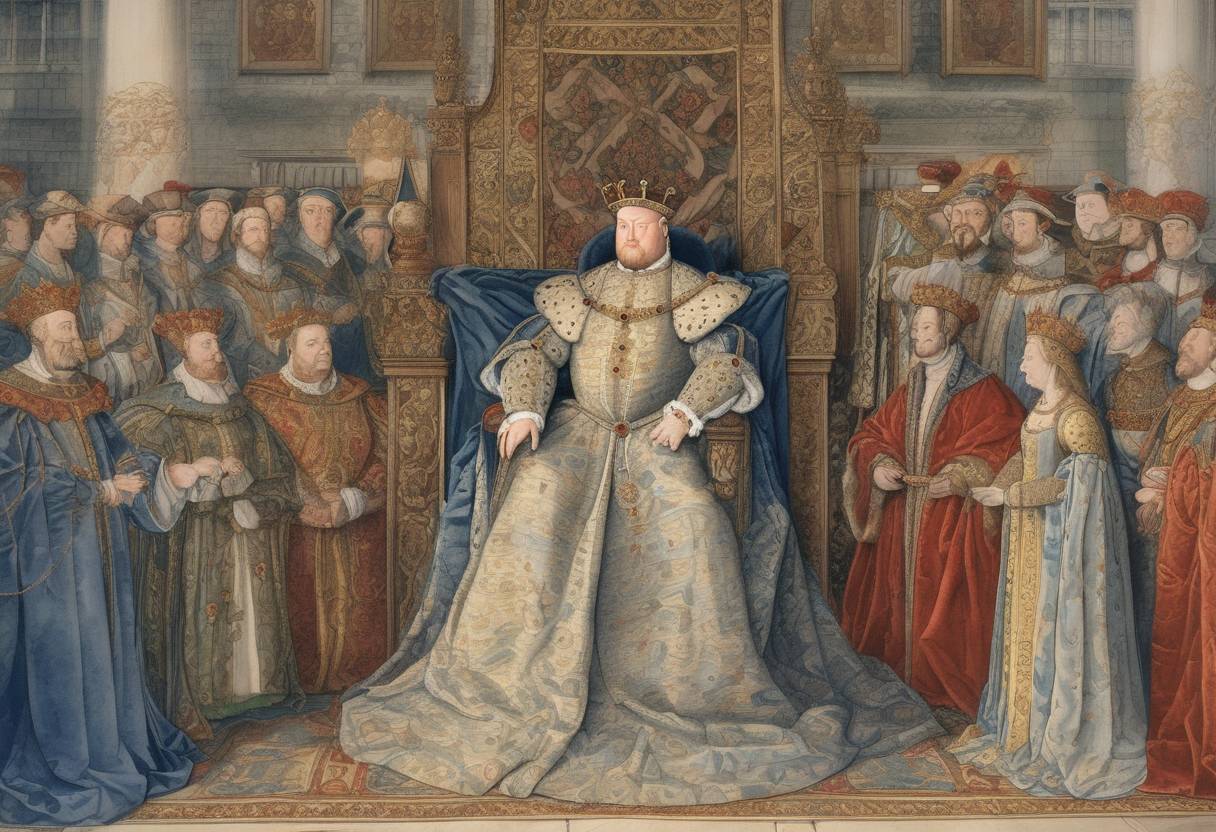
On April 21, 1509, Henry VIII ascended to the throne of England following the death of his father, Henry VII. This marked the beginning of a significant era in English history, characterized by profound political, religious, and cultural changes.
Henry VII’s Reign: Henry VII, the first monarch of the Tudor dynasty, had established a relatively stable and prosperous kingdom after the tumultuous Wars of the Roses. His reign focused on strengthening the monarchy, restoring fiscal stability, and securing alliances through strategic marriages.
Henry VIII’s Early Life: Born on June 28, 1491, Henry VIII was the second son of Henry VII and Elizabeth of York. Originally not destined for the throne, he became the heir apparent after the death of his elder brother, Arthur, Prince of Wales, in 1502.
Death of Henry VII: Henry VII passed away on April 21, 1509, at Richmond Palace. His death paved the way for his 17-year-old son, Henry VIII, to become king.
Coronation: Henry VIII was crowned on June 24, 1509, at Westminster Abbey. His ascension was met with enthusiasm, as he was seen as a vibrant and promising young monarch.
Religious Transformation: Henry VIII’s reign is most notably marked by the English Reformation. His desire to annul his marriage to Catherine of Aragon led to a break with the Roman Catholic Church and the establishment of the Church of England, with the king as its supreme head.
Marital Alliances and Successions: Henry VIII is famously known for his six marriages, which were driven by his quest for a male heir and political alliances. His marriages had significant political and religious implications.
Cultural Patronage: Henry VIII was a patron of the arts and humanism, contributing to the English Renaissance. His court became a center of culture and learning.
Military Campaigns: His reign included various military campaigns, notably against France and Scotland, which were aimed at expanding English influence.
Succession: Henry VIII’s death in 1547 led to the brief reign of his only legitimate son, Edward VI, followed by the tumultuous reigns of his daughters, Mary I and Elizabeth I.
Religious Legacy: The establishment of the Church of England had lasting religious and political impacts, influencing the course of English and European history.
Dynastic Stability: Despite the challenges, the Tudor dynasty continued to rule England until the death of Elizabeth I in 1603, marking the end of the Tudor era.
Henry VIII’s ascension to the throne was a pivotal moment that set the stage for significant transformations in England, shaping the nation’s future for generations to come.
Source: www.britannica.com