Germany Declares War on Russia: August 1, 1914
1914 · Berlin, Germany
Germany declared war on Russia, marking the beginning of World War I.
January 31, 1917
Germany announces its policy of unrestricted submarine warfare, a factor leading to the United States entering World War I.
Berlin, Germany | German Empire
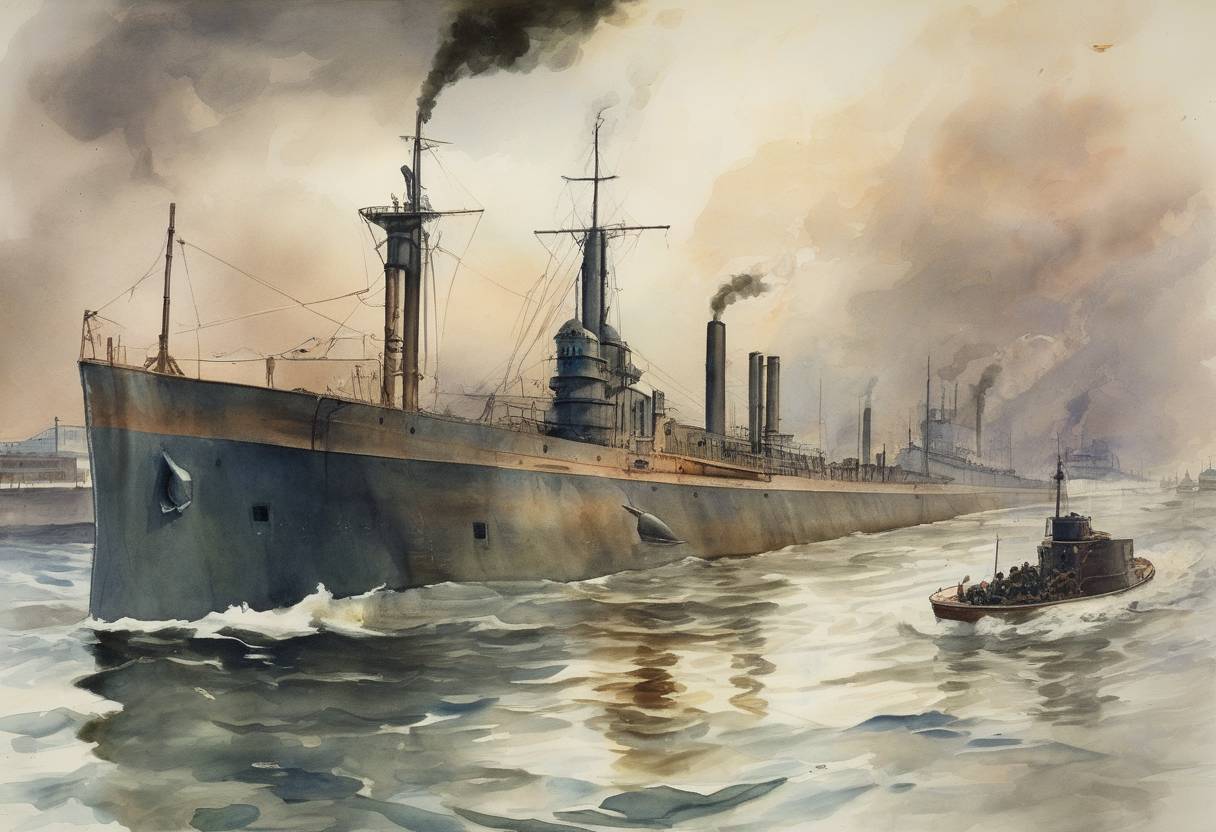
On January 31, 1917, Germany made a pivotal decision in the context of World War I by announcing the resumption of its policy of unrestricted submarine warfare. This strategic move significantly influenced the course of the war and played a crucial role in the United States’ eventual entry into the conflict.
World War I Overview: By 1917, World War I had been raging for nearly three years. The conflict involved major powers divided into two alliances: the Allies, including France, the United Kingdom, and Russia, and the Central Powers, led by Germany, Austria-Hungary, and the Ottoman Empire.
Submarine Warfare: Germany had previously employed unrestricted submarine warfare as a tactic to blockade and disrupt Allied supply lines. This involved German U-boats (submarines) attacking military and civilian ships without warning, a practice that had been temporarily suspended in 1915 due to diplomatic pressures, particularly from the United States.
Diplomatic Tensions: The sinking of the RMS Lusitania in 1915, which resulted in the deaths of 1,198 passengers, including 128 Americans, had already strained German-American relations. The U.S. had pressured Germany to restrict its submarine warfare to avoid civilian casualties.
Strategic Calculations: By early 1917, Germany faced a protracted war on multiple fronts and severe resource shortages due to the British naval blockade. German military leaders believed that resuming unrestricted submarine warfare could decisively cut off supplies to the Allies and force a quick victory before the United States could effectively intervene.
Announcement: On January 31, 1917, Germany formally announced its intention to resume unrestricted submarine warfare starting February 1. This meant that any ship, including those from neutral countries, found in the war zone around the British Isles would be subject to attack without warning.
Impact on the United States: The resumption of unrestricted submarine warfare was a direct challenge to U.S. neutrality and maritime rights. The policy led to the sinking of several American merchant ships, escalating tensions between the two nations.
Zimmermann Telegram: Compounding the situation, the British intercepted and decoded the Zimmermann Telegram in which Germany proposed a military alliance with Mexico against the United States. This further inflamed American public opinion.
U.S. Entry into the War: The combination of unrestricted submarine warfare and the Zimmermann Telegram galvanized U.S. sentiment against Germany. On April 6, 1917, the United States declared war on Germany, joining the Allies in the fight against the Central Powers.
The decision to resume unrestricted submarine warfare was a critical factor in shifting the balance of World War I. It not only brought the United States into the conflict, providing the Allies with fresh troops and resources, but also marked a turning point in the war’s dynamics, ultimately contributing to the defeat of the Central Powers in 1918.
Source: en.wikipedia.org