Luna 9: The First Soft Landing on the Moon
1966 · Moscow, Soviet Union
The Soviet Union's Luna 9 became the first spacecraft to achieve a soft landing on the Moon and transmit photographic data to Earth.
June 30, 1971
The crew of the Soviet Soyuz 11 mission was tragically killed during re-entry after a successful mission to the Salyut 1 space station, marking the first human deaths in space.
Kazakhstan, Soviet Union | Soviet Space Program
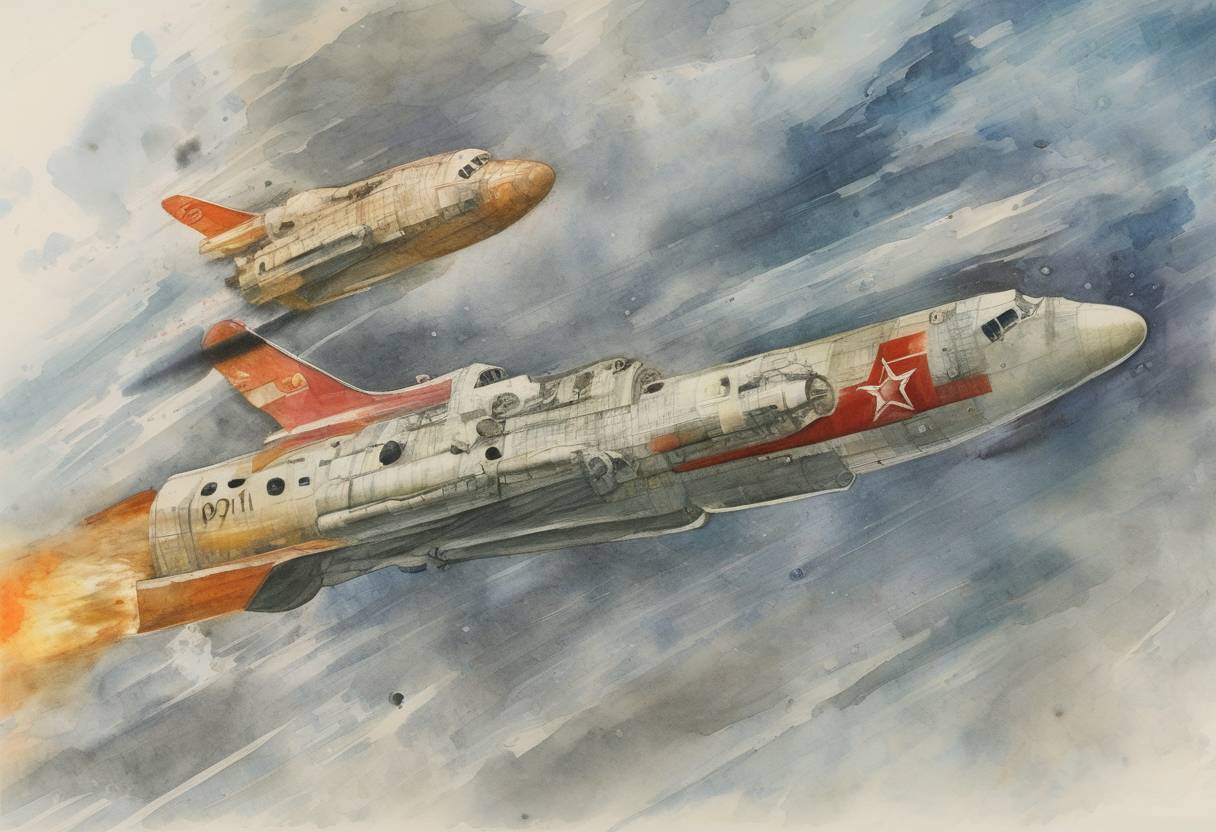
On June 30, 1971, the Soviet Soyuz 11 mission ended in tragedy when its crew was killed during re-entry, marking the first human deaths in space. This event was a significant moment in the history of space exploration, highlighting both the achievements and the inherent dangers of human spaceflight.
The Soyuz 11 mission was launched on June 6, 1971, with the primary objective of docking with and inhabiting the world’s first space station, Salyut 1. The mission was a part of the Soviet Union’s efforts to maintain its lead in the space race during the Cold War era. The crew consisted of three cosmonauts:
The Soyuz 11 mission successfully docked with Salyut 1 on June 7, 1971. The crew spent 23 days aboard the space station, conducting various scientific experiments and setting a new record for the longest duration in space at the time. Their work demonstrated the feasibility of long-term human habitation in space, a crucial step for future missions.
After completing their mission, the crew undocked from Salyut 1 and began their return to Earth on June 29, 1971. During re-entry, a cabin vent valve unexpectedly opened due to a design flaw, causing the cabin to depressurize. The crew, who were not wearing space suits, were exposed to the vacuum of space and died from asphyxiation.
The spacecraft landed safely in Kazakhstan, but recovery teams found the crew dead upon opening the hatch. The tragedy was a devastating blow to the Soviet space program and underscored the risks associated with space travel.
The Soyuz 11 disaster prompted significant changes in spacecraft design and safety protocols. Future Soyuz missions required cosmonauts to wear pressure suits during critical phases of flight, such as launch and re-entry, to prevent similar tragedies.
The incident also led to a temporary halt in Soviet space station missions as engineers worked to address the safety issues. Despite the setback, the lessons learned from Soyuz 11 contributed to the development of safer and more reliable spacecraft, paving the way for future successes in human space exploration.
The Soyuz 11 mission remains a poignant reminder of the perils faced by those who venture into space. It highlighted the importance of rigorous safety measures and the need for continuous improvement in spacecraft technology. The bravery and sacrifice of Georgi Dobrovolski, Viktor Patsayev, and Vladislav Volkov are remembered as a testament to human courage and the relentless pursuit of knowledge beyond our planet.
Source: en.wikipedia.org