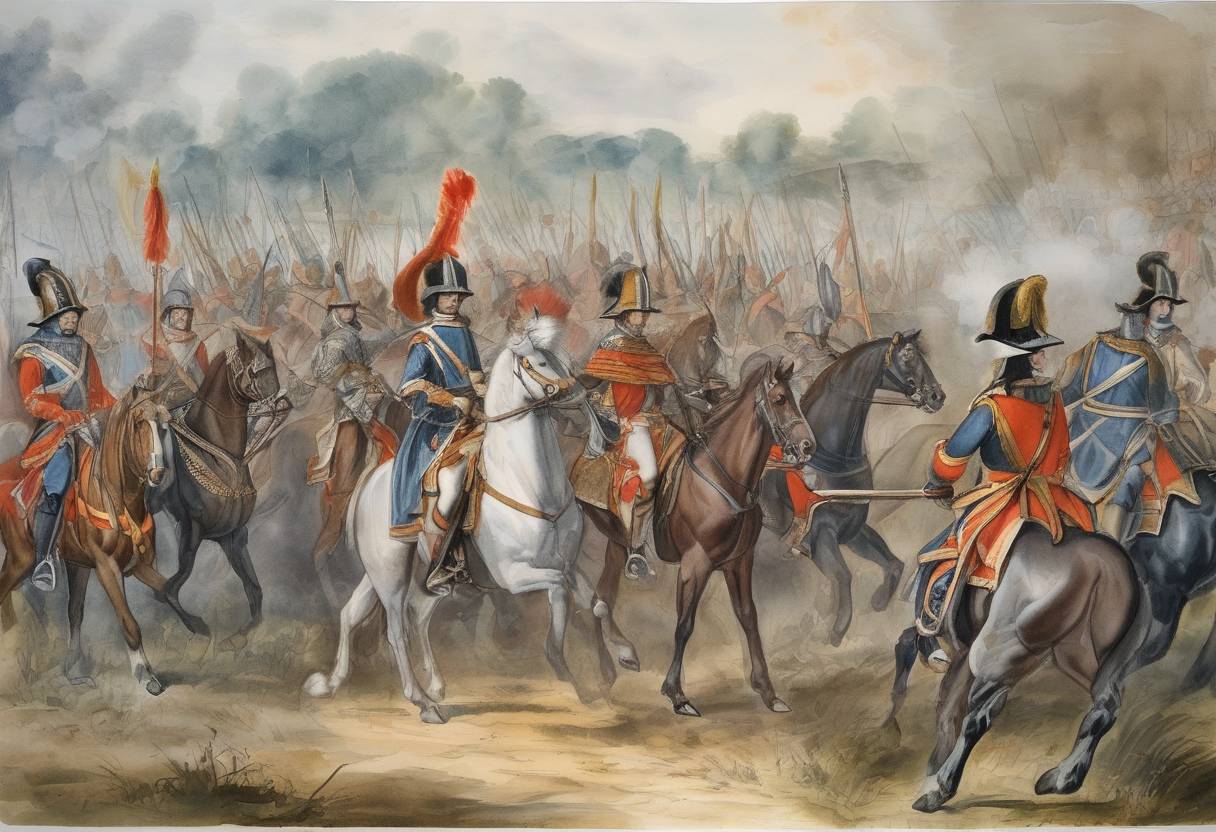
The Battle of Rocroi: May 19, 1643
The Battle of Rocroi, fought on May 19, 1643, was a pivotal engagement during the Thirty Years’ War, marking a significant shift in European military power. This battle saw the French army, under the command of Louis II de Bourbon, Prince de Condé, achieve a decisive victory over the Spanish forces.
Context and Background
Thirty Years’ War: The battle took place during the latter stages of the Thirty Years’ War (1618–1648), a protracted and complex conflict involving many European powers. The war was primarily fought in the Holy Roman Empire but had far-reaching implications across Europe.
French-Spanish Rivalry: France and Spain were two of the major Catholic powers in Europe, yet they were rivals. The battle was part of the broader Franco-Spanish War (1635–1659), which was itself a theater of the larger Thirty Years’ War.
Leadership: The French forces were led by the young and talented Louis II de Bourbon, Prince de Condé, also known as the Grand Condé. At just 21 years old, this was his first major command. The Spanish army was commanded by Francisco de Melo.
The Battle
Location: The battle took place near the small town of Rocroi, in the Ardennes region of northern France, close to the border with the Spanish Netherlands.
Forces: The French army numbered approximately 23,000 troops, while the Spanish had around 27,000 soldiers, including the renowned Spanish tercios, known for their discipline and effectiveness.
Tactics and Outcome:
- The battle began with a strong Spanish attack, but Condé’s strategic acumen turned the tide. He effectively utilized his cavalry to outflank the Spanish forces.
- The French managed to break the Spanish lines, leading to a rout. The Spanish infantry, particularly the tercios, fought valiantly but were eventually overwhelmed.
- The victory was decisive, with the French capturing or killing a significant portion of the Spanish army.
Aftermath and Significance
Impact on Spanish Power: The defeat at Rocroi marked the decline of Spanish military dominance in Europe. The battle shattered the myth of the invincibility of the Spanish tercios, which had been the backbone of Spanish military might for over a century.
Rise of French Influence: The victory at Rocroi heralded the rise of France as a dominant military power in Europe. It boosted French morale and prestige, setting the stage for France’s increased influence in European affairs.
Condé’s Reputation: The battle established Louis II de Bourbon as one of France’s greatest military leaders. His success at Rocroi was the beginning of a distinguished military career.
Broader Consequences: The battle contributed to the eventual peace negotiations that led to the Treaty of Westphalia in 1648, which ended the Thirty Years’ War and reshaped the political map of Europe.
The Battle of Rocroi remains a significant event in military history, symbolizing the transition of power from Spain to France and highlighting the evolving nature of warfare in the 17th century.