The 1934 Plebiscite in Germany: Adolf Hitler Becomes Führer
1934 · Berlin, Germany
A plebiscite in Germany gives Adolf Hitler complete power as Führer.
July 14, 1933
In Germany, all political parties except the Nazi Party were banned, consolidating Adolf Hitler's power.
Berlin, Germany | Nazi Party
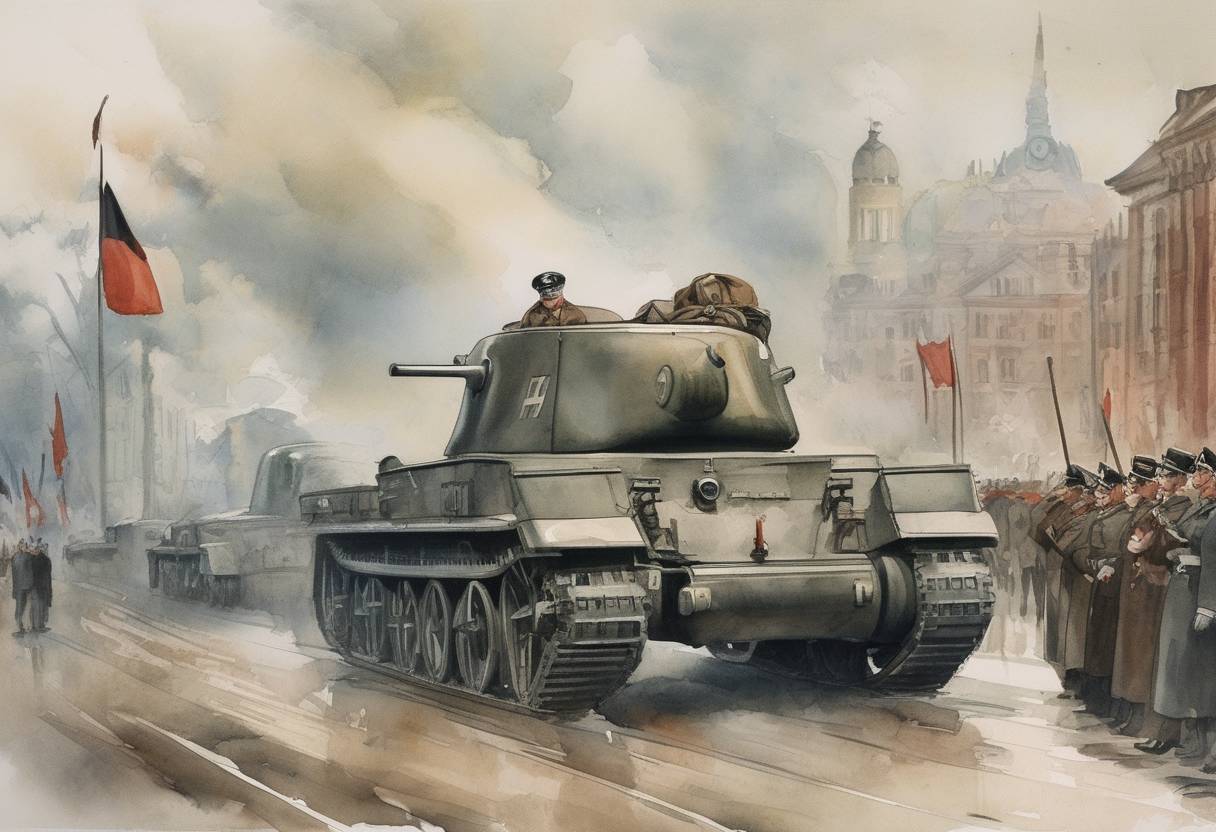
On July 14, 1933, a pivotal moment in German history occurred when the Nazi regime, under the leadership of Adolf Hitler, enacted a law that effectively banned all political parties except for the National Socialist German Workers’ Party (NSDAP), commonly known as the Nazi Party. This legislative move was a critical step in consolidating Hitler’s totalitarian control over Germany.
Rise of the Nazi Party: The Nazi Party had been gaining significant traction in the early 1930s, capitalizing on the economic turmoil and political instability following the Great Depression. Hitler was appointed Chancellor of Germany on January 30, 1933.
Reichstag Fire and Enabling Act: Following the Reichstag Fire in February 1933, the Reichstag Fire Decree was issued, suspending civil liberties and allowing for the arrest of political opponents. Subsequently, the Enabling Act was passed in March 1933, granting Hitler the power to enact laws without the Reichstag’s consent, effectively sidelining the legislative body.
Suppression of Opposition: In the months leading up to July 1933, the Nazi regime systematically dismantled opposition parties. The Communist Party of Germany (KPD) and the Social Democratic Party of Germany (SPD) were among the first to be targeted, with their leaders arrested and their activities banned.
Legislation: The “Law Against the Formation of New Parties” was enacted on July 14, 1933. This law declared the Nazi Party as the only legal political party in Germany, effectively outlawing all other political organizations.
Impact on Political Landscape: This law marked the end of the Weimar Republic’s multi-party democracy and established a one-party state under Nazi rule. It eliminated any remaining political opposition and solidified the Nazi regime’s authoritarian grip on power.
Totalitarian Regime: With the ban on political parties, Hitler’s regime could implement its policies without opposition, leading to the establishment of a totalitarian state characterized by propaganda, censorship, and the suppression of dissent.
Path to World War II: The consolidation of power allowed the Nazi regime to pursue aggressive expansionist policies, ultimately leading to the outbreak of World War II in 1939.
Legacy: The events of July 14, 1933, serve as a stark reminder of the dangers of unchecked political power and the erosion of democratic institutions. The Nazi regime’s actions during this period had profound and devastating impacts on Germany and the world.
In summary, the ban on political parties on July 14, 1933, was a crucial step in Adolf Hitler’s establishment of a totalitarian regime in Germany, setting the stage for the catastrophic events that would follow in the ensuing years.
Source: en.wikipedia.org