Arrest of Ratko Mladić on May 26, 2011
2011 · Lazarevo, Serbia
Ratko Mladić, the former Bosnian Serb military leader, is arrested in Serbia after 16 years on the run, charged with war crimes including genocide during the Bosnian War.
July 11, 1995
The Srebrenica massacre began during the Bosnian War, where more than 8,000 Bosniak men and boys were killed by units of the Army of Republika Srpska.
Srebrenica, Bosnia and Herzegovina | Army of Republika Srpska
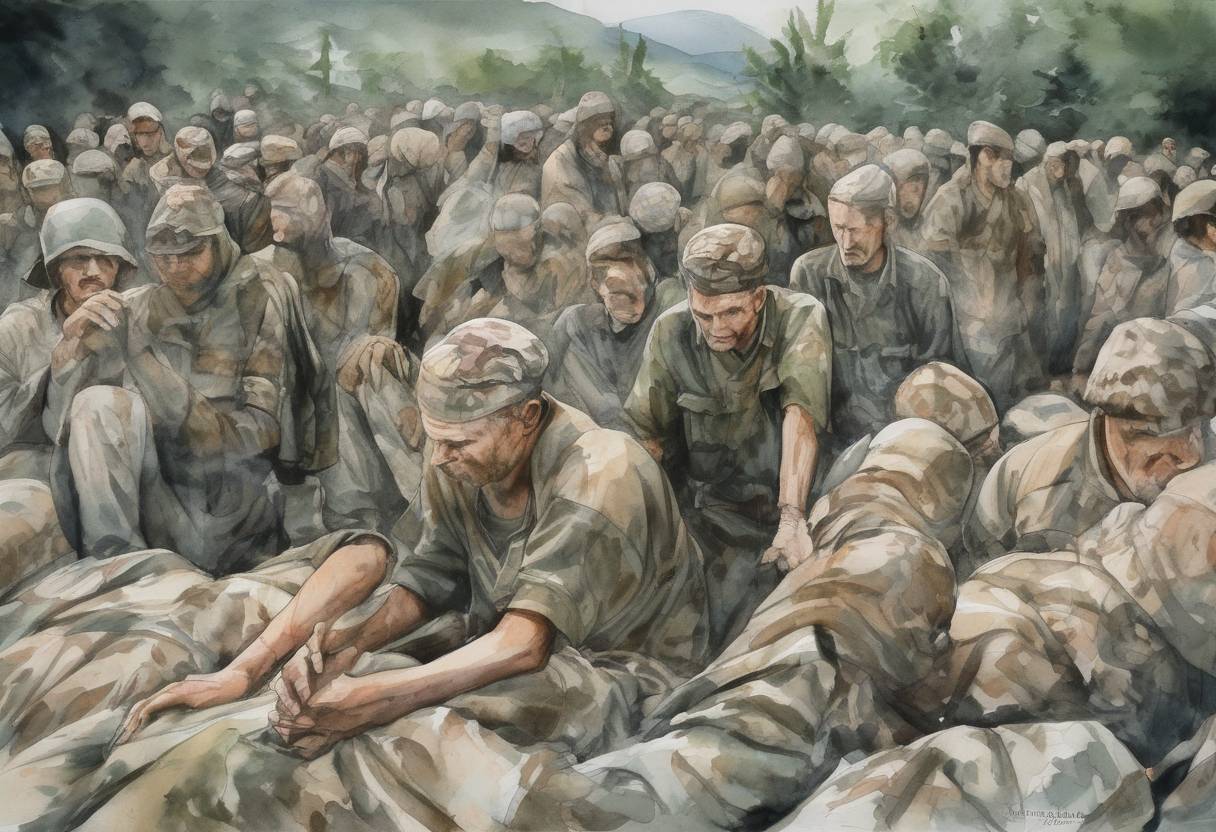
The Srebrenica massacre, one of the most harrowing events of the Bosnian War, began on July 11, 1995. This tragic event involved the systematic killing of more than 8,000 Bosniak men and boys by units of the Army of Republika Srpska, commanded by General Ratko Mladić. The massacre took place in and around the town of Srebrenica in Bosnia and Herzegovina, which had been declared a “safe area” by the United Nations.
Bosnian War Background: The Bosnian War (1992-1995) was a result of the disintegration of Yugoslavia, leading to ethnic tensions and conflict primarily among Bosniaks, Croats, and Serbs. The war was marked by widespread atrocities and ethnic cleansing.
UN Safe Areas: In 1993, the United Nations declared Srebrenica a “safe area” to protect the Bosniak population from the ongoing conflict. However, the UN forces stationed there were inadequately equipped and undermanned.
Strategic Importance: Srebrenica was strategically significant due to its location and the demographic composition, which made it a target for Bosnian Serb forces aiming to consolidate territory.
Capture of Srebrenica: On July 11, 1995, Bosnian Serb forces overran the town of Srebrenica. The UN peacekeepers, primarily Dutch troops, were unable to prevent the takeover due to their limited mandate and resources.
Separation and Execution: Following the capture, Bosniak men and boys were separated from women and children. Over the next several days, they were systematically executed and buried in mass graves.
International Response: The massacre was met with international outrage and condemnation. It highlighted the failures of the international community and the UN in preventing genocide.
War Crimes Trials: The International Criminal Tribunal for the former Yugoslavia (ICTY) later prosecuted several individuals for their roles in the massacre. Ratko Mladić and Radovan Karadžić, the political leader of the Bosnian Serbs, were among those convicted of genocide and other crimes.
Impact on International Law: The Srebrenica massacre underscored the need for more robust international mechanisms to prevent genocide and protect civilians in conflict zones.
Legacy and Remembrance: The massacre remains a poignant reminder of the atrocities of the Bosnian War. Annual commemorations are held to honor the victims, and efforts continue to identify and properly bury those who were killed.
The Srebrenica massacre is often cited as the worst atrocity in Europe since World War II. It played a crucial role in shaping international policies on humanitarian intervention and the responsibility to protect civilians. The event also contributed to the eventual NATO intervention in Bosnia and the Dayton Accords, which brought an end to the Bosnian War in December 1995.
The massacre’s legacy continues to influence discussions on international justice and reconciliation in post-conflict societies.
Source: en.wikipedia.org