The Founding of the British Labour Party
1900 · London, United Kingdom
The British Labour Party is founded at the Memorial Hall in Farringdon, London.
January 13, 1893
The Independent Labour Party of the United Kingdom holds its first meeting, marking a significant development in the British labor movement.
Bradford, United Kingdom | Independent Labour Party
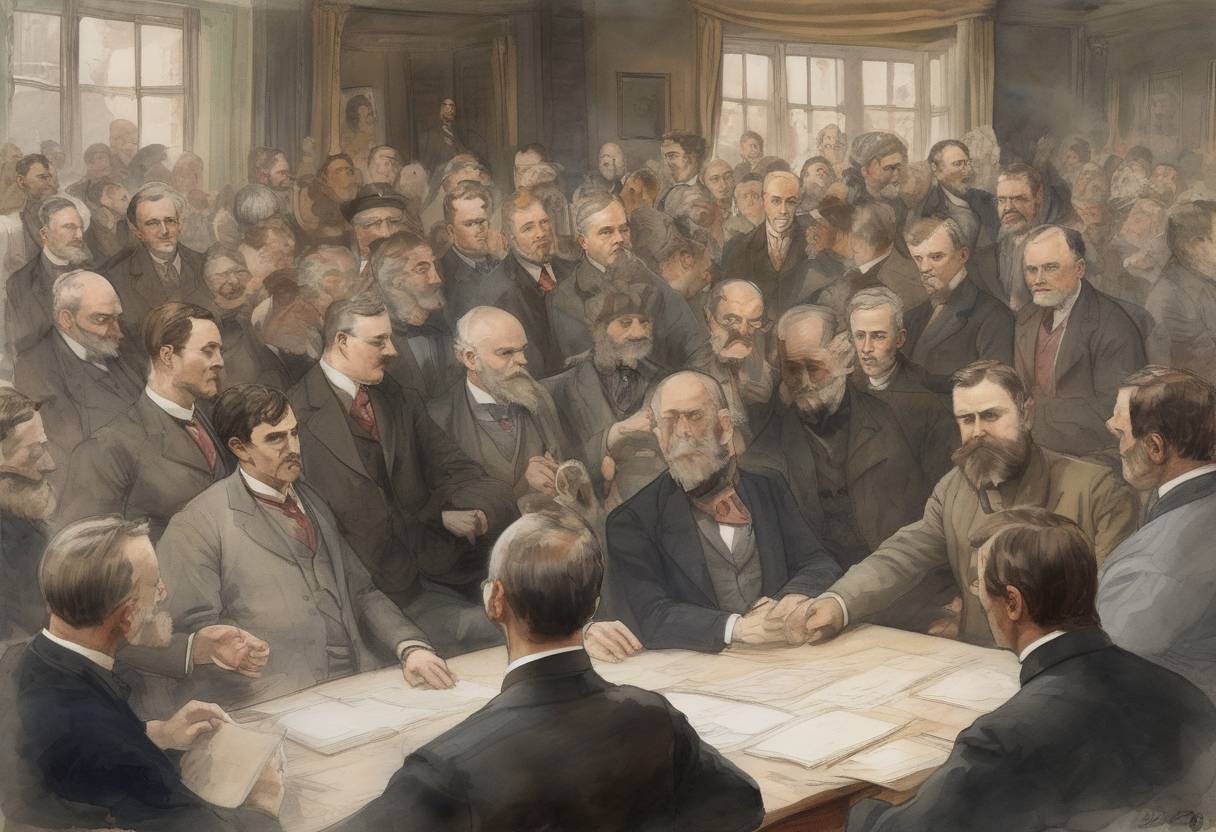
On January 13, 1893, the Independent Labour Party (ILP) held its inaugural meeting in Bradford, England. This event marked a pivotal moment in the history of the British labor movement, signifying the formal establishment of a political organization dedicated to representing the interests of the working class.
The late 19th century in Britain was characterized by significant social and economic changes, including industrialization and the expansion of the working class. Despite these changes, the existing political parties, primarily the Liberal and Conservative parties, largely failed to address the needs and concerns of workers. This dissatisfaction led to the rise of labor movements and trade unions, which sought better working conditions, fair wages, and political representation.
The ILP was founded as a response to the limitations of the existing political landscape. It aimed to provide a distinct political voice for the working class, advocating for social justice, labor rights, and democratic socialism. The party’s formation was spearheaded by prominent socialist and labor leaders, including Keir Hardie, who became the ILP’s first chairman.
The first meeting of the ILP took place at the Bradford Labour Institute, attracting delegates from various labor and socialist groups across the country. The gathering was marked by a sense of optimism and determination to create a political force that could challenge the status quo and promote the interests of the working class.
The ILP set out several key objectives, including:
The formation of the ILP was a significant development in British politics, as it laid the groundwork for the future Labour Party, which would eventually become one of the major political parties in the United Kingdom. The ILP played a crucial role in advocating for social reforms and influencing public policy, contributing to the broader labor movement’s successes in the early 20th century.
In conclusion, the first meeting of the Independent Labour Party on January 13, 1893, was a landmark event in the history of the British labor movement, setting the stage for significant political and social changes in the years to come.
Source: en.wikipedia.org