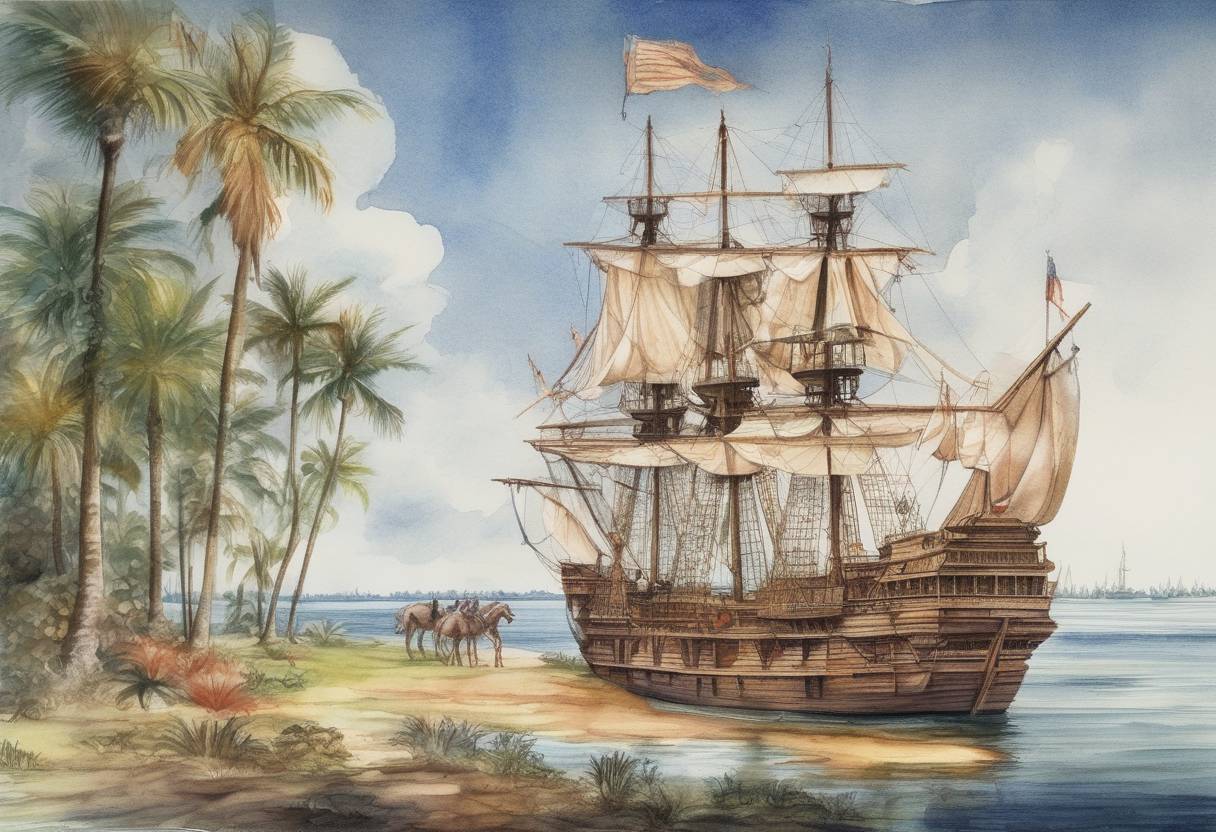
Juan Ponce de León’s Discovery of Florida
On April 2, 1513, Spanish explorer Juan Ponce de León first sighted land in what is now the United States, specifically the region he named “La Florida.” This event marked a significant moment in the history of European exploration in the Americas.
Background
Juan Ponce de León was a Spanish explorer and conquistador who had previously been involved in the colonization of the Caribbean. He served as the first Governor of Puerto Rico by appointment of the Spanish crown. Motivated by the search for new lands and the legendary Fountain of Youth, Ponce de León set sail from Puerto Rico in March 1513 with three ships.
The Voyage
- Departure: Ponce de León’s expedition departed from Puerto Rico on March 3, 1513. The fleet consisted of the ships Santiago, San Cristobal, and Santa Maria de la Consolacion.
- Route: The expedition sailed northwest, navigating through the Bahamas before reaching the North American mainland.
Discovery of Florida
- Date: On April 2, 1513, Ponce de León and his crew sighted the eastern coast of what is now the state of Florida.
- Naming: He named the land “La Florida” in honor of the Easter season, known as “Pascua Florida” in Spanish, which means “Festival of Flowers.” The lush, verdant landscape he observed also contributed to the name.
- Landing: Ponce de León’s expedition made landfall shortly after sighting the coast, although the exact location of the landing is debated among historians. It is generally believed to have been near present-day St. Augustine or further south near Melbourne Beach.
Significance
- Exploration: This event marked the first recorded European expedition to the mainland of what would become the continental United States.
- Spanish Claims: Ponce de León’s discovery led to Spain’s claim over Florida, which would become a strategic region for Spanish exploration and colonization efforts in the New World.
- Legacy: Although Ponce de León is often mythically associated with the search for the Fountain of Youth, his voyage was primarily driven by exploration and expansion of Spanish territories.
Aftermath
- Further Expeditions: Ponce de León returned to Florida in 1521 with the intention of establishing a colony. However, this expedition ended in failure due to resistance from indigenous peoples, and Ponce de León was wounded in an attack, leading to his death shortly thereafter.
- Spanish Influence: Florida remained under Spanish control for much of the next two centuries, playing a crucial role in the colonial dynamics of North America.
Ponce de León’s sighting of Florida was a pivotal moment in the age of exploration, setting the stage for further European incursions into the North American continent.