Lech Wałęsa Elected President of Poland - December 9, 1990
1990 · Warsaw, Poland
Lech Wałęsa is elected President of Poland, becoming the first democratically elected president of the country after the fall of communism.
August 19, 1989
Polish president Wojciech Jaruzelski nominates Solidarity activist Tadeusz Mazowiecki to be the first non-communist prime minister in Eastern Europe in over 40 years.
Warsaw, Poland | Solidarity
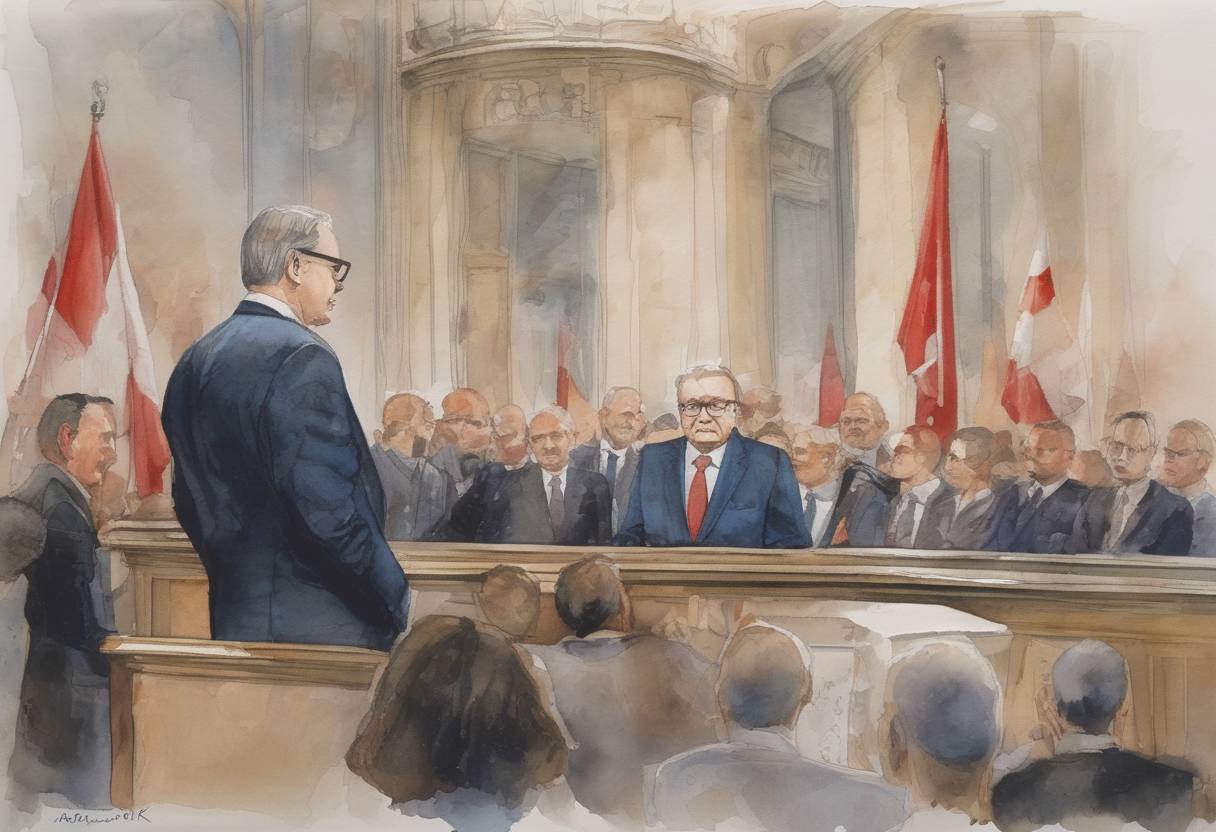
On August 19, 1989, a pivotal moment in Eastern European history unfolded when Polish President Wojciech Jaruzelski nominated Tadeusz Mazowiecki, a prominent Solidarity activist, to become the Prime Minister of Poland. This nomination marked a significant shift in the political landscape of Eastern Europe, as Mazowiecki became the first non-communist prime minister in the region in over four decades.
Solidarity Movement: The Solidarity movement, led by Lech Wałęsa, emerged in Poland in the early 1980s as a trade union and social movement advocating for workers’ rights and political reform. It played a crucial role in challenging the communist regime’s authority.
Political Climate: By the late 1980s, Poland was experiencing significant economic difficulties and social unrest. The communist government, under pressure from both domestic and international fronts, began negotiations with opposition groups, including Solidarity.
Round Table Talks: In early 1989, the Polish government and opposition leaders engaged in the Round Table Talks, which led to an agreement to hold partially free elections. These talks were instrumental in setting the stage for political transformation in Poland.
June 1989 Elections: The semi-free elections held in June 1989 resulted in a landslide victory for Solidarity, which won all contested seats in the Sejm (the lower house of parliament) and a majority in the Senate. This outcome significantly weakened the communist party’s hold on power.
Political Negotiations: Following the elections, intense negotiations took place between Solidarity leaders and the communist party. The aim was to form a coalition government that could address Poland’s pressing economic and political issues.
Nomination Announcement: On August 19, 1989, President Wojciech Jaruzelski, who had been a key figure in the communist regime, took the unprecedented step of nominating Tadeusz Mazowiecki as Prime Minister. This decision was a clear indication of the shifting power dynamics in Poland.
Significance: Mazowiecki’s nomination was historic, as it symbolized the end of communist dominance in Poland and the beginning of a transition towards democratic governance. It also set a precedent for other Eastern European countries, inspiring similar movements across the region.
Government Formation: Tadeusz Mazowiecki officially took office on September 12, 1989, leading a coalition government that included members of Solidarity and former communist officials. His government focused on economic reforms and democratization.
Impact on Eastern Europe: Mazowiecki’s appointment was a catalyst for change throughout Eastern Europe, contributing to the wave of revolutions in 1989 that led to the fall of communist regimes in countries such as East Germany, Czechoslovakia, and Romania.
Legacy: The peaceful transition of power in Poland demonstrated the potential for negotiated political change and set a model for other nations transitioning from authoritarian rule to democracy.
Mazowiecki’s nomination and subsequent leadership marked a turning point in the history of Eastern Europe, highlighting the power of grassroots movements and the possibility of peaceful political transformation.
Source: www.britannica.com