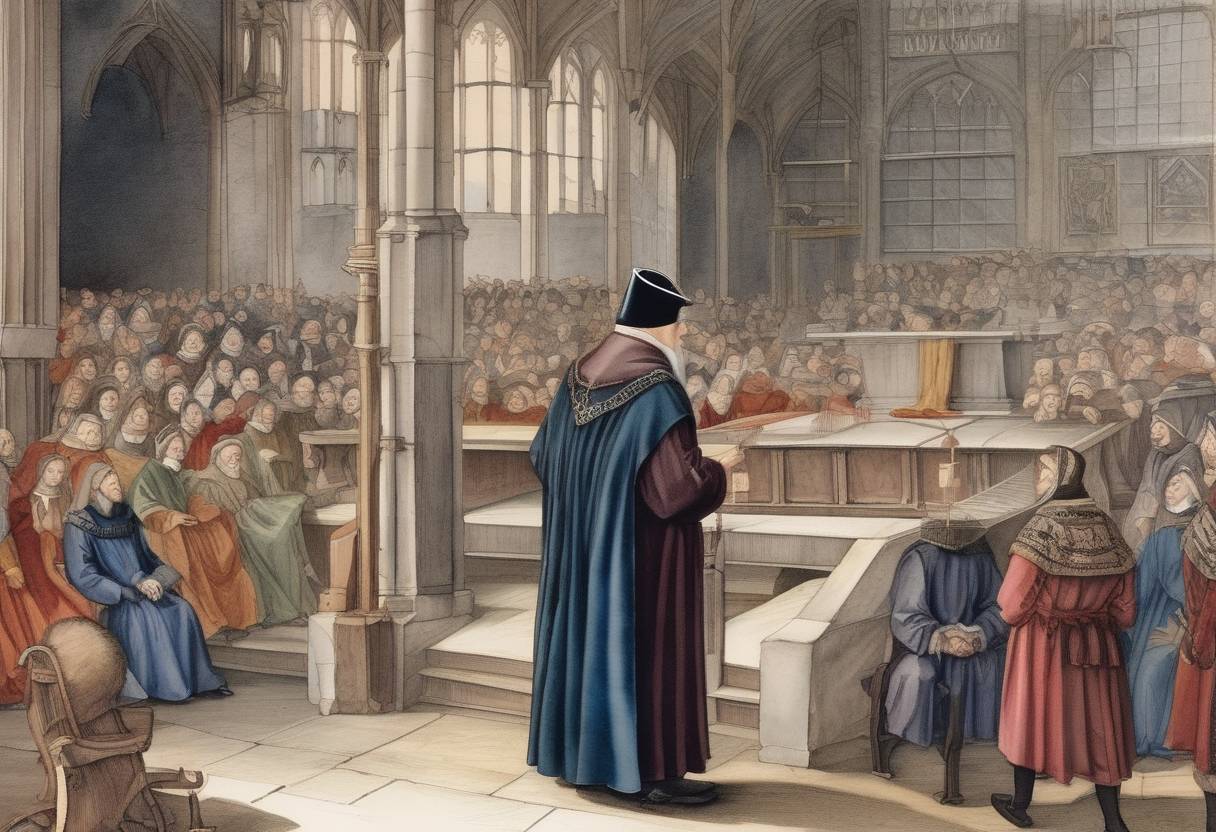
Execution of Thomas Cranmer: March 21, 1556
Thomas Cranmer, the former Archbishop of Canterbury, was executed on March 21, 1556, marking a pivotal moment in the Marian Persecutions. His death was a significant event in the religious turmoil of 16th-century England, as Queen Mary I sought to restore Roman Catholicism after the Protestant reforms initiated by her father, King Henry VIII, and furthered by her half-brother, King Edward VI.
Background
- Thomas Cranmer’s Role: Cranmer was a leading figure in the English Reformation. Appointed as the Archbishop of Canterbury in 1533, he was instrumental in the annulment of Henry VIII’s marriage to Catherine of Aragon and the subsequent establishment of the Church of England, independent of papal authority.
- Religious Reforms: Under Cranmer’s guidance, significant religious reforms were implemented, including the introduction of the Book of Common Prayer and the promotion of Protestant doctrines.
Events Leading to Execution
- Accession of Mary I: When Mary I, a devout Catholic, ascended the throne in 1553, she sought to reverse the Protestant reforms and restore Catholicism. This led to the persecution of Protestant leaders, known as the Marian Persecutions.
- Cranmer’s Arrest: Cranmer was arrested in 1553 and charged with treason and heresy. Despite initially recanting his Protestant beliefs under pressure, he later withdrew his recantations, reaffirming his commitment to Protestantism.
Execution
- Trial and Conviction: Cranmer was tried for heresy and found guilty. His execution was delayed multiple times, during which he was pressured to recant his beliefs.
- Final Stand: On the day of his execution, Cranmer was brought to St. Mary’s Church in Oxford, where he was expected to publicly recant. Instead, he declared his Protestant faith and denounced the Pope, famously stating that his right hand, which had signed the recantations, would be punished by being burned first.
- Burning at the Stake: Cranmer was executed by burning at the stake, maintaining his Protestant convictions to the end.
Aftermath and Significance
- Impact on the Reformation: Cranmer’s execution became a symbol of Protestant martyrdom and highlighted the intense religious conflict of the period. It galvanized Protestant resistance against Mary’s Catholic restoration.
- Legacy: Cranmer’s contributions to the English Reformation, particularly the Book of Common Prayer, had a lasting impact on Anglican worship and identity. His martyrdom was later celebrated by Protestants as a testament to faith and conviction.
The execution of Thomas Cranmer underscored the deep religious divisions in England and the lengths to which Mary I was willing to go to restore Catholicism. His death remains a significant event in the history of the English Reformation.