BCG Vaccine First Administered to a Human - June 20, 1921
1921 · Paris, France
The BCG vaccine against tuberculosis is first administered to a human.
March 24, 1882
German scientist Robert Koch announced the discovery of Mycobacterium tuberculosis, the bacterium responsible for tuberculosis.
Berlin, Germany | Imperial Health Office
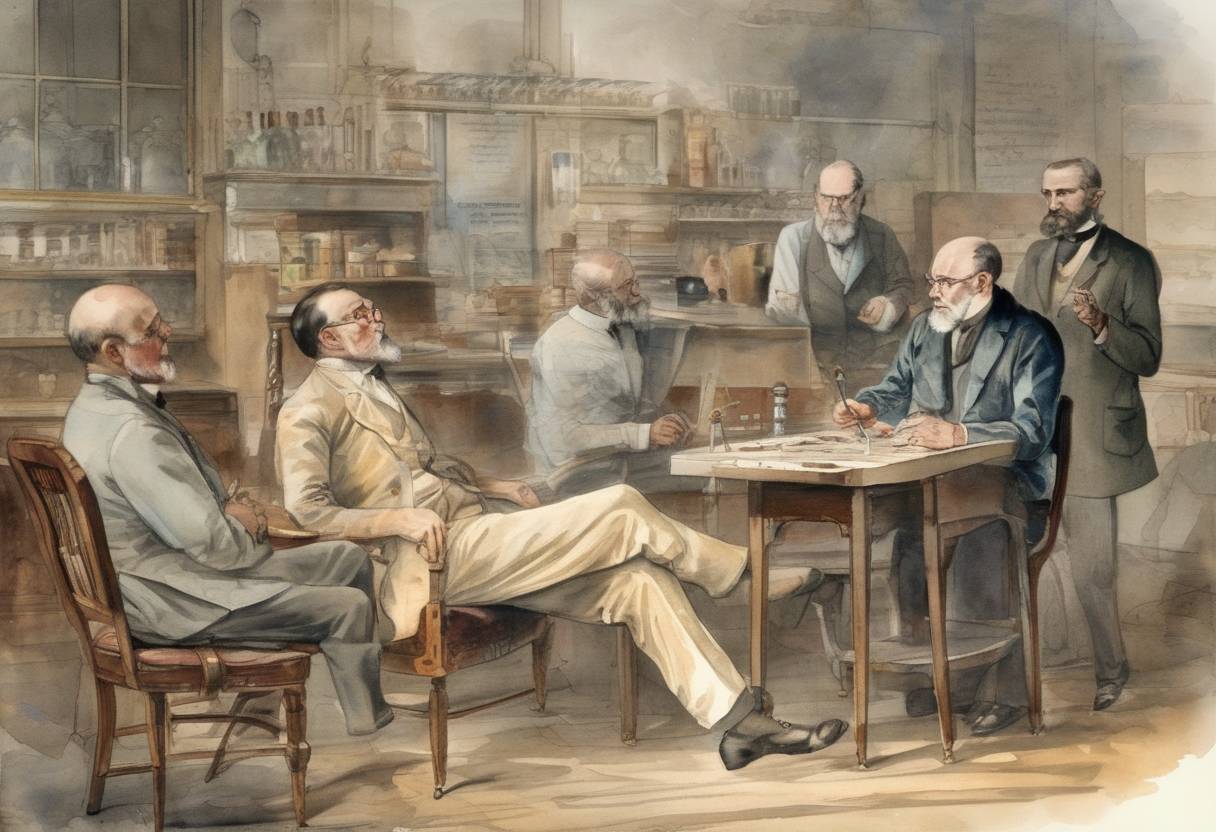
On March 24, 1882, the German physician and microbiologist Robert Koch made a groundbreaking announcement that would significantly impact the field of medical science and public health. He revealed the discovery of Mycobacterium tuberculosis, the bacterium responsible for tuberculosis (TB), a disease that was a leading cause of death at the time.
During the 19th century, tuberculosis was a rampant and deadly disease, often referred to as “consumption” due to the severe weight loss it caused in sufferers. It was responsible for millions of deaths worldwide, and its cause was unknown, leading to widespread fear and speculation.
Robert Koch, already renowned for his work on anthrax, was determined to identify the causative agent of tuberculosis. His research was part of a broader movement in the scientific community to understand infectious diseases through the identification of specific pathogens, a field that would later be known as bacteriology.
Koch’s announcement took place at the Physiological Society of Berlin. He presented his findings in a lecture titled “Die Aetiologie der Tuberculose” (The Etiology of Tuberculosis). Koch meticulously detailed his methods, which included:
Staining Techniques: Koch developed a special staining method using methylene blue and vesuvin that allowed him to visualize the bacteria under a microscope. This was crucial because the bacteria were difficult to detect due to their waxy cell walls.
Cultivation: He successfully cultivated the bacteria outside the human body, which was a significant achievement at the time. This involved growing the bacteria on solid media, which allowed for further study and experimentation.
Animal Experiments: Koch demonstrated that the bacteria could cause tuberculosis in animals, fulfilling the postulates he had previously established to prove causation between a microbe and a disease.
Koch’s discovery was a monumental step forward in medical science. It provided the first clear evidence that a specific microorganism could cause a specific disease, reinforcing the germ theory of disease. This laid the groundwork for future research into infectious diseases and the development of treatments and public health measures.
The identification of Mycobacterium tuberculosis eventually led to the development of diagnostic tests, vaccines, and antibiotics, significantly reducing the prevalence and mortality of tuberculosis in the 20th century.
Robert Koch’s work earned him the Nobel Prize in Physiology or Medicine in 1905. His contributions to microbiology and public health have had a lasting impact, and he is often regarded as one of the founders of modern bacteriology.
March 24 is now commemorated as World Tuberculosis Day, in honor of Koch’s discovery, to raise awareness about the ongoing challenges of tuberculosis and to promote efforts to eliminate the disease globally.
Koch’s meticulous approach to scientific research and his dedication to understanding infectious diseases continue to inspire scientists and public health professionals around the world.
Source: www.britannica.com