WHO Declares Polio an International Public Health Emergency - May 5, 2014
2014 · Geneva, Switzerland
The World Health Organization declared the spread of polio an international public health emergency due to outbreaks in several countries.
February 23, 1954
The first mass inoculation of children against polio with the Salk vaccine begins in Pittsburgh, Pennsylvania.
Pittsburgh, United States | University of Pittsburgh
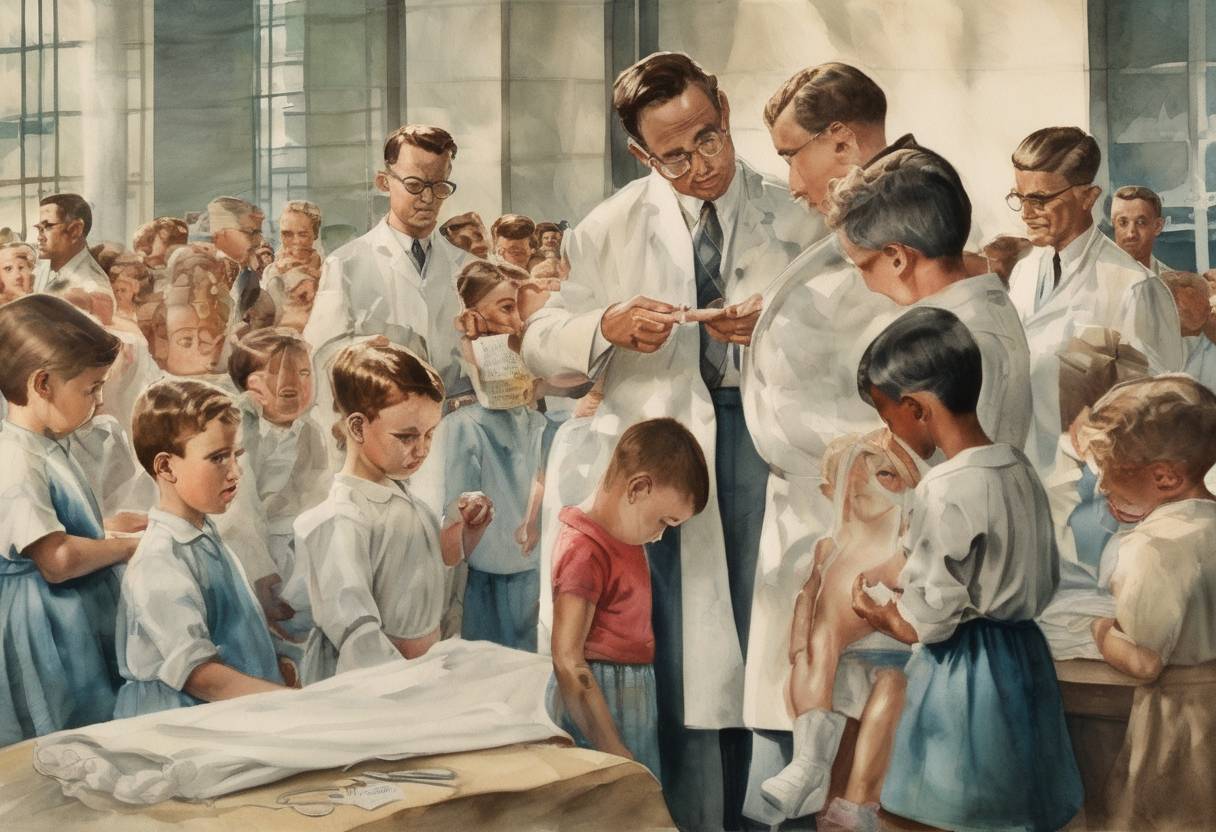
In the early 20th century, poliomyelitis, commonly known as polio, was a feared disease, causing paralysis and death across the globe. The United States experienced several polio epidemics, with the most severe occurring in the late 1940s and early 1950s. The disease primarily affected children, leading to widespread public concern and a desperate need for a vaccine.
Dr. Jonas Salk, an American medical researcher and virologist, began developing a polio vaccine in the early 1950s. Salk’s approach involved using an inactivated (killed) virus to stimulate immunity without causing the disease. This method was considered safer than using a live virus, which was the basis for other vaccines being developed at the time.
On February 23, 1954, the first mass inoculation of children with the Salk polio vaccine began in Pittsburgh, Pennsylvania. This event marked the start of a large-scale clinical trial involving approximately 1.8 million children across the United States, known as the “Polio Pioneers.” The trial was meticulously organized and conducted to ensure the vaccine’s safety and efficacy.
The results of the mass inoculation were announced on April 12, 1955, coinciding with the 10th anniversary of President Franklin D. Roosevelt’s death, a prominent polio sufferer. The vaccine was declared safe and effective, leading to its widespread distribution and use.
The mass inoculation against polio was a landmark event in medical history, showcasing the power of scientific research and collaboration in combating infectious diseases. It also set a precedent for future vaccination campaigns and underscored the critical role of public health initiatives in disease prevention.
The success of the Salk vaccine is a testament to the impact of scientific innovation and the importance of continued investment in medical research to address global health challenges.
Source: en.wikipedia.org