Fidel Castro's Death: End of an Era in Cuban History
2016 · Havana, Cuba
Fidel Castro, the former President of Cuba and revolutionary leader, dies at the age of 90, marking the end of an era in Cuban history.
February 25, 2008
Fidel Castro retires as the President of Cuba, ending nearly 50 years of rule, and his brother Raúl Castro is elected as the new president.
Havana, Cuba | Cuban Government
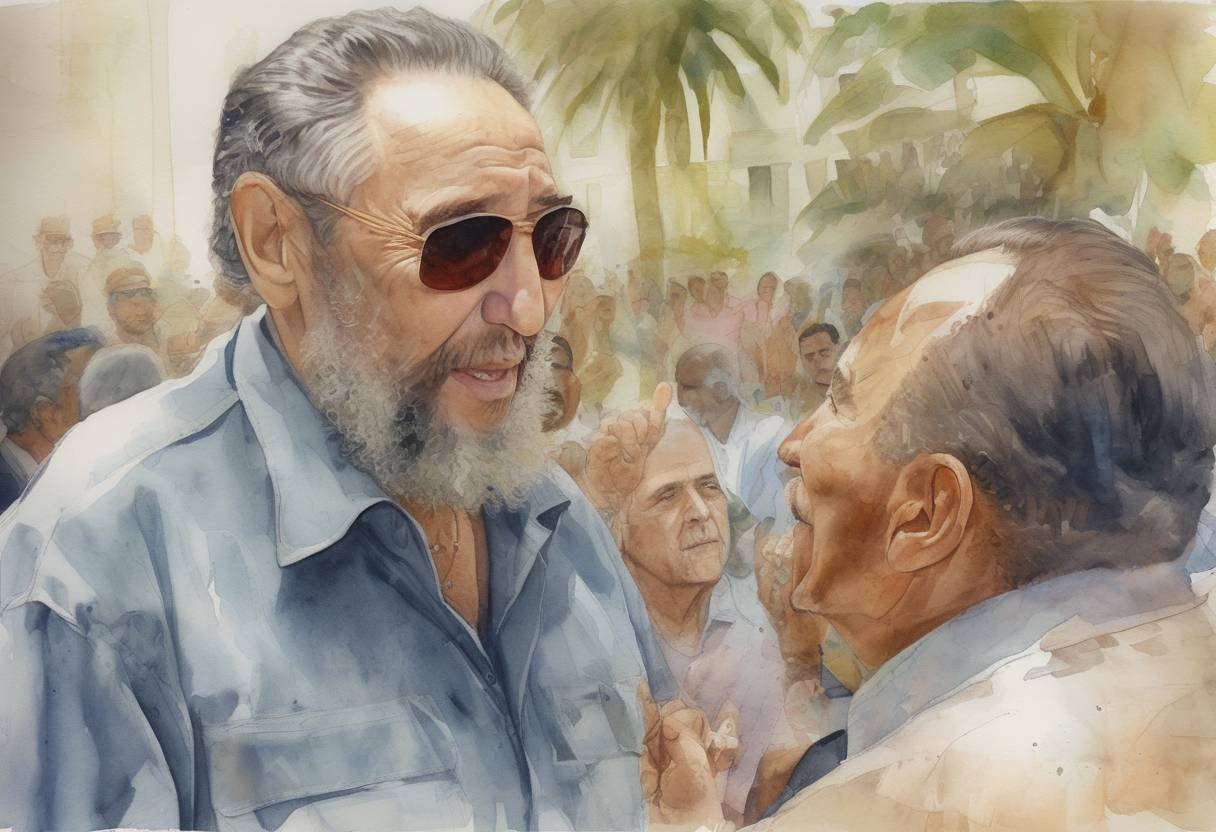
On February 25, 2008, a significant chapter in Cuban history came to a close as Fidel Castro officially retired as the President of Cuba, marking the end of nearly five decades of his leadership. This transition of power was a pivotal moment in the political landscape of Cuba and had implications for both domestic and international relations.
Fidel Castro had been a central figure in Cuban politics since the Cuban Revolution, which culminated in 1959 when he and his revolutionary forces overthrew the regime of Fulgencio Batista. Castro’s leadership established a socialist state aligned with the Soviet Union during the Cold War, which led to decades of tension with the United States, including events such as the Bay of Pigs Invasion and the Cuban Missile Crisis.
In July 2006, Fidel Castro temporarily ceded power to his younger brother, Raúl Castro, due to health issues. This temporary transfer became permanent when Fidel announced his retirement in February 2008. Fidel’s health had been deteriorating, and he had undergone several surgeries, which made it increasingly difficult for him to fulfill his duties as head of state.
On February 24, 2008, the National Assembly of People’s Power elected Raúl Castro as the new President of Cuba. Raúl, who had been serving as the acting president since 2006, was seen as a pragmatic leader. He had been a key figure in the Cuban government, serving as the Minister of the Revolutionary Armed Forces since 1959 and as the First Vice President since 1976.
Raúl Castro’s presidency marked a period of cautious reform in Cuba. He introduced several economic changes aimed at modernizing the Cuban economy, such as allowing limited private enterprise and reducing state control over some sectors. These reforms were intended to improve the efficiency of the Cuban economy while maintaining the socialist framework established by his brother.
Internationally, Raúl’s leadership opened the door for improved relations with other countries, including the United States. This eventually led to the historic thawing of U.S.-Cuba relations under the Obama administration, culminating in the restoration of diplomatic ties in 2015.
Fidel Castro’s retirement and Raúl Castro’s subsequent election as president marked a new era for Cuba. While the transition maintained the continuity of the Castro leadership, it also set the stage for gradual changes within the country. This period was characterized by a delicate balance between preserving the revolutionary ideals of the past and adapting to the challenges of the 21st century.
Source: www.bbc.com