Execution of Girolamo Savonarola - May 23, 1498
1498 · Florence, Italy
Girolamo Savonarola, an Italian Dominican friar and preacher, was executed in Florence.
February 7, 1497
The Bonfire of the Vanities took place in Florence, Italy, where supporters of the Dominican friar Girolamo Savonarola collected and publicly burned thousands of objects deemed to be associated with vanity, such as cosmetics, art, and books.
Florence, Italy | Supporters of Girolamo Savonarola
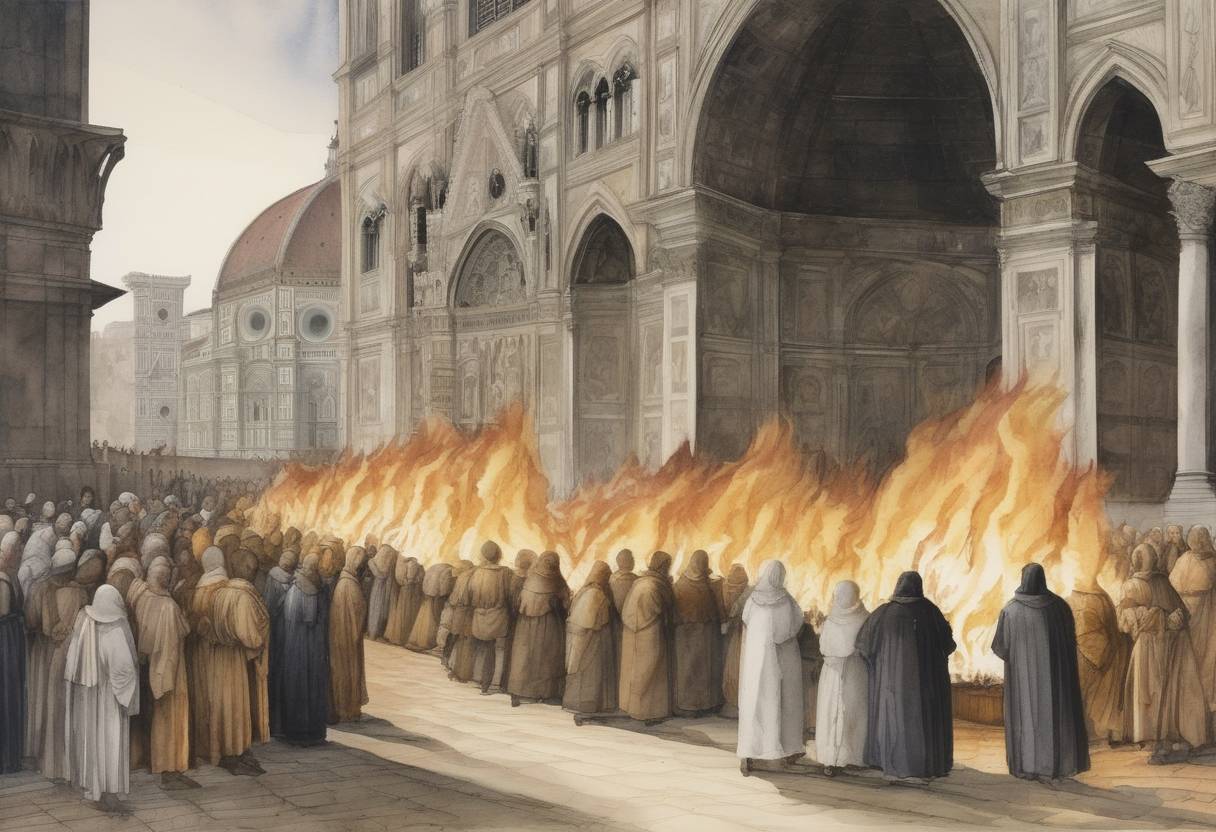
On February 7, 1497, a significant event known as the “Bonfire of the Vanities” took place in Florence, Italy. This event was orchestrated by the followers of the Dominican friar Girolamo Savonarola, a fervent preacher and reformer who had gained considerable influence in Florence during the late 15th century.
Girolamo Savonarola: Savonarola was a Dominican friar known for his passionate sermons against moral corruption and the secularism of the Renaissance. He criticized the excesses of the clergy and the ruling class, advocating for a return to Christian piety and simplicity.
Florence in the Late 15th Century: During this period, Florence was a vibrant center of Renaissance art and culture. However, it was also a time of political instability and moral questioning, which Savonarola capitalized on to gain a following.
Rise to Power: After the expulsion of the Medici family from Florence in 1494, Savonarola became a leading figure in the city, influencing its governance and religious life. He called for the establishment of a “Christian Republic” and sought to reform the city’s morals.
Purpose: The Bonfire of the Vanities was intended to purge the city of items that Savonarola and his followers deemed sinful or vanity-driven. This included cosmetics, art, books, musical instruments, and other luxury items that were associated with moral decay and secularism.
Execution: On the day of the bonfire, supporters of Savonarola, including many young followers known as the “Piagnoni” or “Weepers,” went through the city collecting these items. They were then piled up in the Piazza della Signoria and set ablaze in a dramatic public spectacle.
Impact on Art and Culture: The bonfire resulted in the loss of numerous works of art and literature, some of which were irreplaceable. This act was emblematic of the tension between religious reform and the flourishing of Renaissance culture.
Savonarola’s Downfall: Although initially popular, Savonarola’s influence began to wane as his radical measures and opposition to the Pope drew criticism. In 1498, he was excommunicated, arrested, and ultimately executed for heresy and sedition.
Historical Significance: The Bonfire of the Vanities is often cited as a symbol of the clash between religious zealotry and the cultural advancements of the Renaissance. It highlights the complex dynamics of power, religion, and culture in late 15th-century Italy.
In summary, the Bonfire of the Vanities was a pivotal event that underscored the tensions of the era and left a lasting mark on the history of Florence and the broader Renaissance movement.
Source: en.wikipedia.org