Assassination of Emperor Aurelian - September 25, 275
275 · Caenophrurium, Roman Empire
The Roman Emperor Aurelian is assassinated by his own troops, leading to a brief period of instability in the Roman Empire.
March 10, 0241
Emperor Gordian III is assassinated by mutinous soldiers in Zaitha (Mesopotamia).
Zaitha, Roman Empire | Roman Army
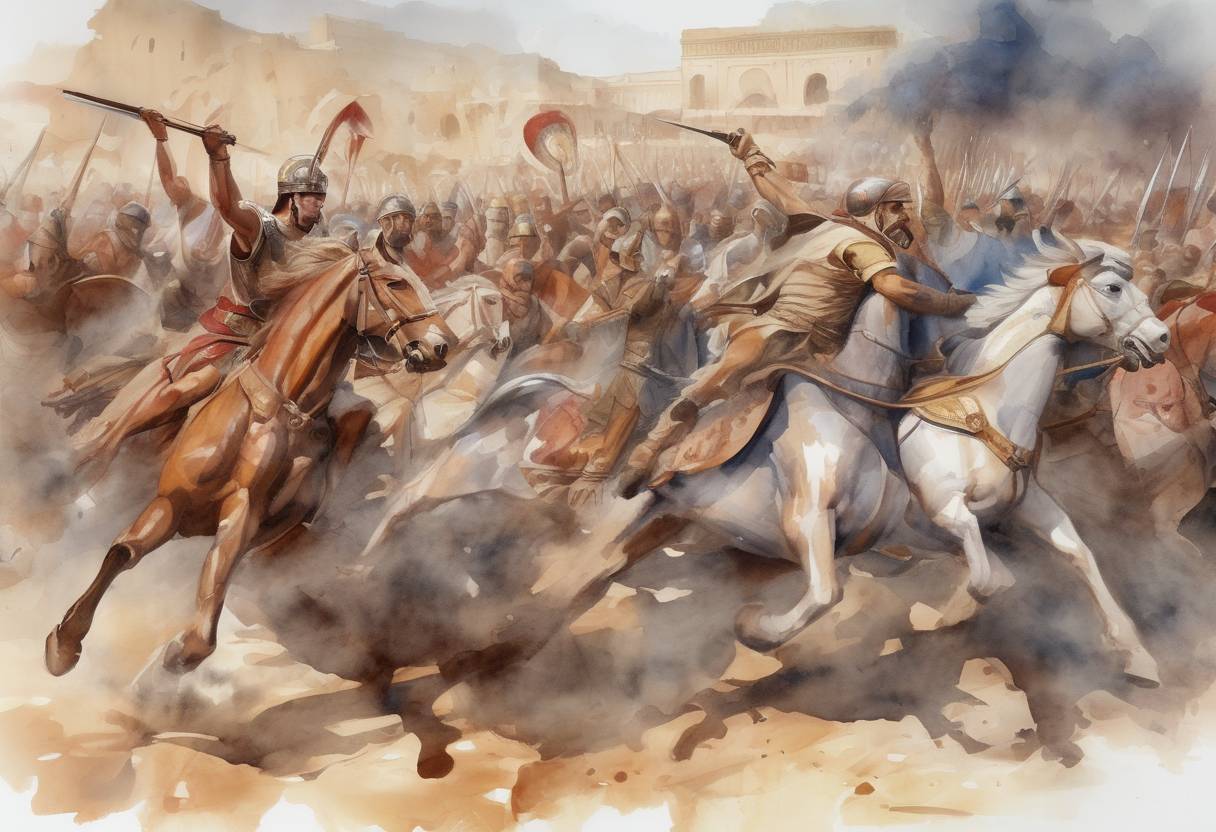
On March 10, 241 AD, the Roman Emperor Gordian III was assassinated by mutinous soldiers in Zaitha, a location in Mesopotamia. This event marked a significant moment in the tumultuous period of the Roman Empire known as the Crisis of the Third Century.
Gordian III ascended to the throne in 238 AD, during a time of great instability within the Roman Empire. He was only 13 years old when he became emperor, making him the youngest sole emperor in Roman history. His rise to power came after the chaotic Year of the Six Emperors, a period characterized by rapid changes in leadership and civil unrest.
Gordian III’s reign was largely influenced by his advisors, particularly his father-in-law, Timesitheus, who served as the Praetorian Prefect. Under their guidance, the empire saw a temporary stabilization, and efforts were made to strengthen the Roman military and economy.
In 241 AD, Gordian III embarked on a military campaign against the Sassanian Empire, which was threatening the eastern borders of the Roman Empire. The campaign initially saw some success, but the situation deteriorated following the death of Timesitheus, who had been a key figure in maintaining order and strategy.
After Timesitheus’s death, Philip the Arab, another influential figure, became the new Praetorian Prefect. Tensions rose within the Roman military ranks, exacerbated by logistical challenges and dissatisfaction among the troops.
The exact circumstances of Gordian III’s assassination remain somewhat unclear, with historical sources providing differing accounts. However, it is generally accepted that Gordian III was killed by his own soldiers in Zaitha, Mesopotamia. The reasons for the mutiny are believed to be a combination of discontent with the campaign’s progress, internal power struggles, and Philip the Arab’s possible involvement.
Following Gordian III’s death, Philip the Arab quickly assumed power, becoming the next Roman Emperor. His reign marked a continuation of the challenges faced by the empire, including external threats and internal instability.
The assassination of Gordian III is emblematic of the broader Crisis of the Third Century, a period characterized by frequent changes in leadership, military defeats, economic decline, and social upheaval. This era ultimately led to significant reforms and the eventual transformation of the Roman Empire.
Gordian III’s death highlights the vulnerabilities of youthful and inexperienced leadership during times of crisis and the impact of military dissatisfaction on the stability of empires.
Source: en.wikipedia.org