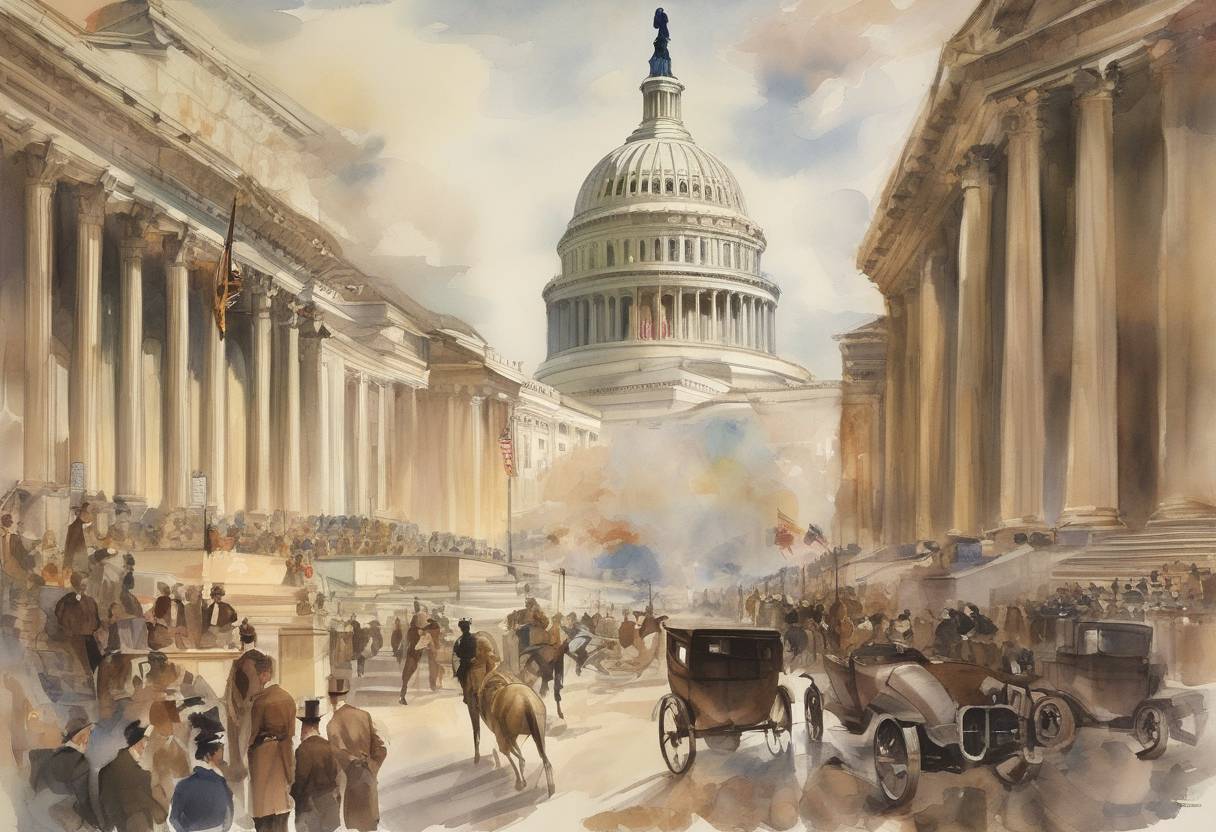
The Blaine Act and the Repeal of Prohibition
On February 17, 1933, the U.S. Senate passed the Blaine Act, a pivotal piece of legislation that set the stage for the repeal of the Eighteenth Amendment, effectively ending Prohibition in the United States. This act was a significant step in American legislative history, reflecting a shift in public sentiment and economic priorities during the early 20th century.
Background
The Eighteenth Amendment, ratified in 1919, had prohibited the manufacture, sale, and transportation of alcoholic beverages in the United States. This era, known as Prohibition, was initially supported by various temperance movements and was seen as a moral and social reform. However, the enforcement of Prohibition proved challenging and led to unintended consequences, such as the rise of organized crime, illegal speakeasies, and widespread bootlegging.
The Blaine Act
Named after its sponsor, Wisconsin Senator John J. Blaine, the Blaine Act was introduced as a resolution to repeal the Eighteenth Amendment. The act proposed the Twenty-first Amendment, which would nullify the previous amendment and restore the legal status of alcohol. The passage of the Blaine Act by the Senate was a crucial legislative step, reflecting growing public dissatisfaction with Prohibition and the economic pressures of the Great Depression, which highlighted the potential tax revenue from legal alcohol sales.
Key Events Leading to the Passage
Public Discontent: By the early 1930s, public opinion had shifted significantly against Prohibition. Many Americans viewed it as a failed social experiment that had led to more harm than good.
Economic Considerations: The Great Depression, which began in 1929, intensified the need for economic recovery. Legalizing alcohol was seen as a means to create jobs and generate tax revenue.
Political Support: The Democratic Party, under the leadership of Franklin D. Roosevelt, included the repeal of Prohibition in its platform during the 1932 presidential election. Roosevelt’s victory signaled strong political support for repeal.
Aftermath and Consequences
Following the Senate’s approval of the Blaine Act, the proposed Twenty-first Amendment was sent to the states for ratification. On December 5, 1933, Utah became the 36th state to ratify the amendment, meeting the required threshold for it to become law. This officially ended Prohibition, making the United States the first and only country to repeal a constitutional amendment.
The repeal had several significant impacts:
- Economic Boost: The legal alcohol industry quickly revived, providing jobs and generating substantial tax revenue.
- Regulatory Framework: The federal government and states established regulatory frameworks to control alcohol production and distribution, aiming to prevent the issues that had led to Prohibition.
- Cultural Shift: The end of Prohibition marked a cultural shift towards more liberal attitudes regarding alcohol consumption and personal freedoms.
In summary, the passage of the Blaine Act by the U.S. Senate on February 17, 1933, was a decisive moment in American history, leading to the repeal of Prohibition and reflecting broader societal changes during the early 20th century.