2013 · Vatican City, Vatican City
Pope Francis was inaugurated as the 266th pope of the Roman Catholic Church, becoming the first pope from the Americas and the Southern Hemisphere.
April 24, 2005
Cardinal Joseph Ratzinger is inaugurated as Pope Benedict XVI, succeeding Pope John Paul II.
Vatican City, Vatican City | Roman Catholic Church
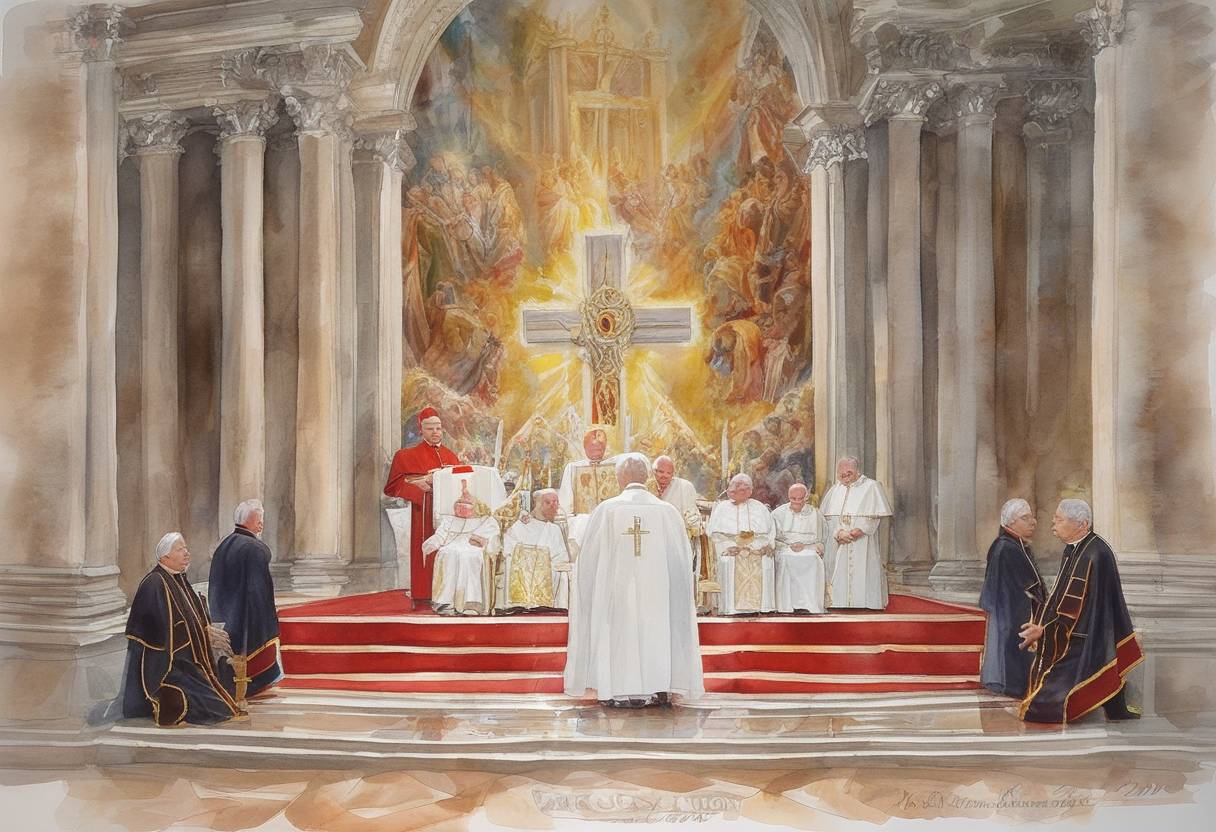
On April 24, 2005, Cardinal Joseph Ratzinger was inaugurated as Pope Benedict XVI, succeeding Pope John Paul II. This event marked a significant moment in the history of the Roman Catholic Church, as it saw the transition of leadership following the death of one of the most influential popes of the 20th century.
Pope John Paul II’s Papacy: Pope John Paul II, who served as pope from 1978 until his death on April 2, 2005, was a pivotal figure in the Catholic Church and world affairs. His papacy was marked by efforts to improve the Church’s relations with Judaism, Islam, and the Eastern Orthodox Church, as well as his role in the fall of communism in Eastern Europe.
Conclave of 2005: Following the death of John Paul II, the College of Cardinals convened in a conclave to elect a new pope. The conclave began on April 18, 2005, and concluded on April 19, 2005, with the election of Cardinal Joseph Ratzinger.
Background: Born on April 16, 1927, in Bavaria, Germany, Joseph Ratzinger was a prominent theologian and served as the Prefect of the Congregation for the Doctrine of the Faith from 1981 until his election as pope. He was known for his conservative theological views and his role as a close advisor to Pope John Paul II.
Election as Pope: Ratzinger was elected on the second day of the conclave, taking the papal name Benedict XVI. His election was seen as a continuation of John Paul II’s conservative legacy.
Location: The inauguration took place at St. Peter’s Basilica in Vatican City, a traditional venue for such ceremonies.
Ceremony Highlights: The inauguration mass was attended by thousands of faithful, dignitaries, and representatives from various religious and political backgrounds. During the ceremony, Pope Benedict XVI received the pallium and the Fisherman’s Ring, symbols of his papal authority.
Papal Address: In his inaugural homily, Pope Benedict XVI emphasized the importance of unity within the Church and the need to engage with the modern world while remaining true to the Church’s teachings.
Papal Priorities: Pope Benedict XVI’s papacy focused on addressing issues such as the secularization of Europe, interfaith dialogue, and the internal challenges facing the Church, including the sexual abuse scandal.
Legacy: Benedict XVI served as pope until his resignation on February 28, 2013, becoming the first pope to resign in nearly 600 years. His resignation paved the way for the election of Pope Francis.
The inauguration of Pope Benedict XVI was a moment of continuity and change for the Catholic Church, as it navigated the challenges of the 21st century under new leadership.
Source: www.britannica.com