Re-establishment of the U.S. Marine Corps
1798 · Washington, D.C., USA
The U.S. Marine Corps was re-established as part of the United States Navy by the Act of July 11, 1798.
March 27, 1794
The United States Congress authorized the construction of the original six frigates of the United States Navy.
Philadelphia, United States | United States Congress
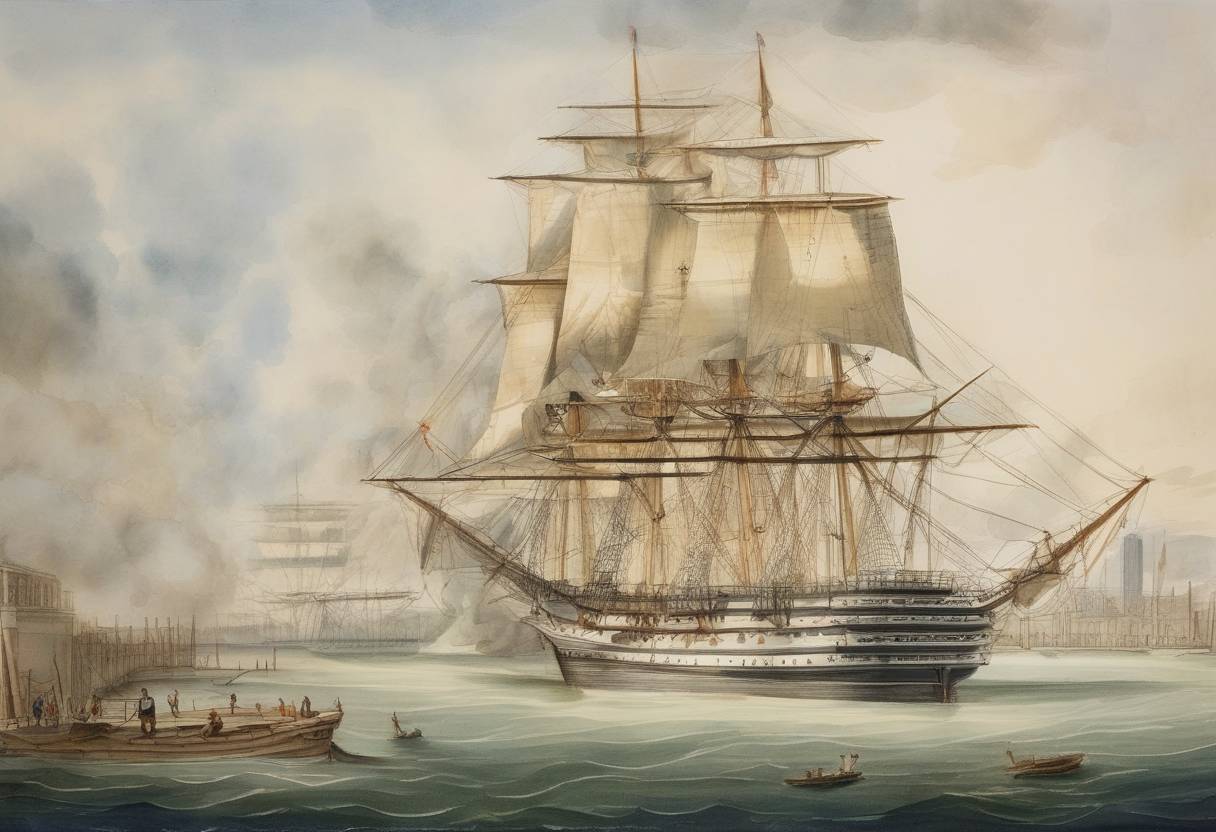
On March 27, 1794, the United States Congress passed an act that authorized the construction of the first six frigates of the United States Navy. This decision marked a pivotal moment in American naval history, laying the foundation for the establishment of a permanent naval force.
In the years following the American Revolutionary War, the United States faced numerous challenges on the high seas. American merchant ships were frequently targeted by Barbary pirates from North Africa, who demanded tribute for safe passage. Additionally, the young nation had limited naval capabilities to protect its interests against European powers, particularly Britain and France, who were often at odds and whose conflicts affected American shipping.
The lack of a strong naval presence left American commerce vulnerable, prompting debates within the government about the necessity of a standing navy. The decision to build a fleet was part of a broader strategy to protect American interests and assert the nation’s sovereignty on international waters.
The legislation, known as the Naval Act of 1794, was signed into law by President George Washington. It authorized the construction of six frigates, which were to be the backbone of the new U.S. Navy. These ships were designed to be powerful enough to defend against the Barbary pirates and to hold their own against the naval forces of other nations.
The construction of these frigates represented a significant investment in national defense and marked the beginning of the United States as a maritime power. The decision to build these ships was not without controversy, as it required substantial financial resources and sparked debates about the role of a standing military force in a republic.
The frigates proved their worth during the Quasi-War with France and the First Barbary War, showcasing the strategic importance of a capable navy. Their success helped to establish the United States Navy as a formidable force and laid the groundwork for future expansion and development.
In summary, the authorization of the original six frigates was a crucial step in securing American maritime interests and asserting the nation’s presence on the global stage. It demonstrated the importance of naval power in protecting commerce and national security, setting a precedent for future naval policies.
Source: www.history.navy.mil