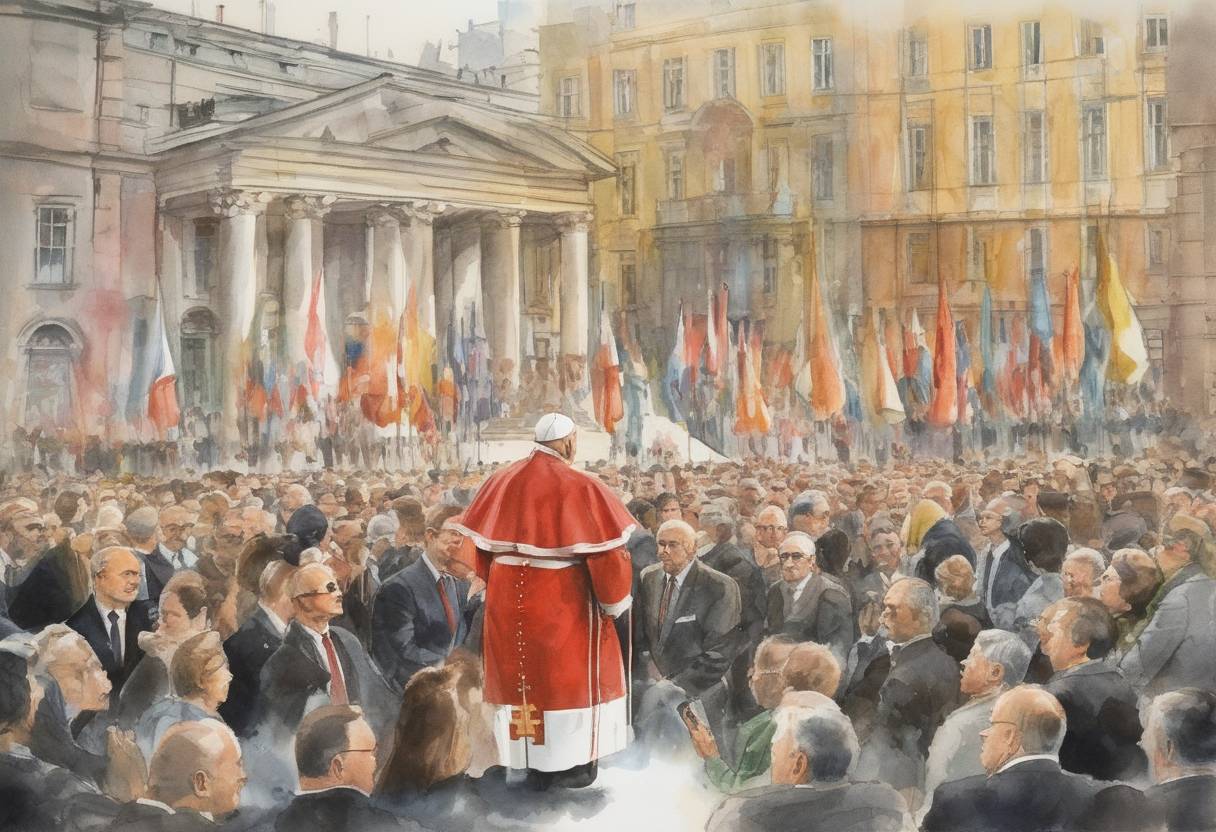
Pope John Paul II’s First Visit to Poland - June 2, 1979
On June 2, 1979, Pope John Paul II embarked on his first official visit to his native Poland, a pivotal event in the history of the Cold War. This visit was not only significant for the Catholic Church but also had profound implications for the socio-political landscape of Eastern Europe.
Context and Background
- Election as Pope: Karol Józef Wojtyła was elected as Pope John Paul II on October 16, 1978. He was the first non-Italian pope in 455 years and the first Polish pope in history.
- Cold War Tensions: At the time, Poland was under communist rule, part of the Eastern Bloc dominated by the Soviet Union. The government was officially atheist, and religious activities were often suppressed.
- Polish Catholicism: Despite the communist regime, Poland remained a deeply Catholic country. The election of a Polish pope was a source of immense national pride and hope for many Poles.
The Visit
- Duration and Itinerary: The visit lasted from June 2 to June 10, 1979. Pope John Paul II traveled to several cities, including Warsaw, Gniezno, Częstochowa, Kraków, and Auschwitz.
- Mass in Victory Square: On June 2, he celebrated an open-air Mass in Victory Square (now Piłsudski Square) in Warsaw. An estimated one million people attended, and millions more watched on television.
- Message of Hope and Unity: Throughout his visit, the Pope emphasized themes of faith, human rights, and national unity. His speeches often subtly criticized the communist regime, advocating for spiritual renewal and freedom.
Impact and Significance
- Inspiration for Solidarity: The Pope’s visit is widely credited with inspiring the rise of the Solidarity movement, a non-violent, anti-communist social movement that emerged in 1980. Solidarity played a crucial role in the eventual fall of communism in Poland.
- Challenge to Communist Authority: The massive public gatherings and the Pope’s messages of hope and resistance posed a significant challenge to the communist authorities, who were unable to suppress the religious fervor and nationalistic sentiments.
- Broader Cold War Implications: The visit highlighted the limitations of Soviet control over Eastern Europe and demonstrated the power of religious and cultural identity in challenging authoritarian regimes.
Aftermath
- Fall of Communism: The momentum generated by the Pope’s visit and the subsequent rise of Solidarity contributed to the eventual collapse of communist rule in Poland in 1989, part of a broader wave of democratization across Eastern Europe.
- Legacy of John Paul II: Pope John Paul II’s role in these events cemented his legacy as a pivotal figure in the struggle against communism and a champion of human rights and dignity.
Pope John Paul II’s 1979 visit to Poland remains a landmark event in both Polish history and the broader narrative of the Cold War, symbolizing the power of faith and unity in the face of oppression.