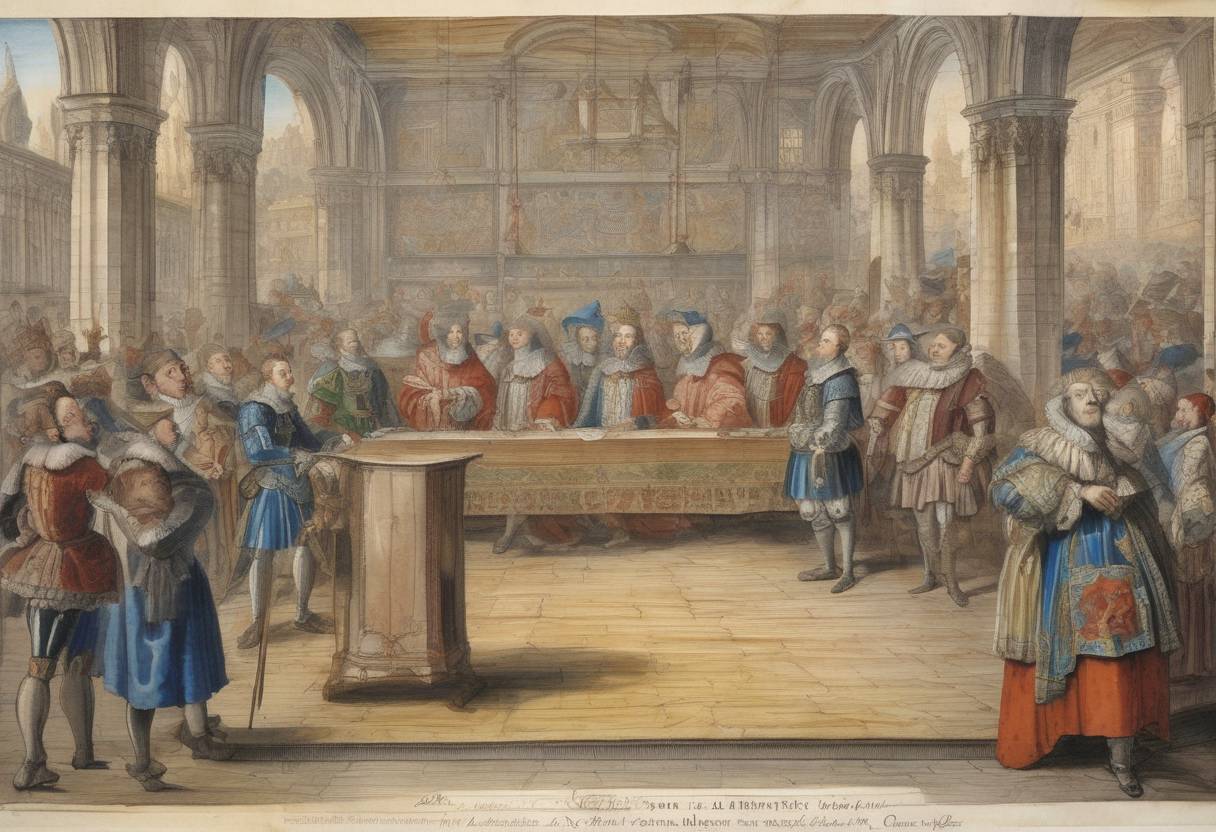
The Edict of Nantes: April 13, 1598
On April 13, 1598, King Henry IV of France issued the Edict of Nantes, a pivotal decree that granted substantial rights to the Huguenots, the French Protestants, and effectively ended the French Wars of Religion. This edict is considered a landmark in the history of religious tolerance in Europe.
Historical Context
The French Wars of Religion (1562–1598) were a series of conflicts primarily fought between French Catholics and Huguenots. These wars were marked by brutal violence, including massacres and assassinations, which devastated France and weakened its monarchy.
Henry IV, originally a Huguenot himself, ascended to the French throne in 1589. To consolidate his power and bring peace to a fractured nation, he converted to Catholicism in 1593, famously stating, “Paris is well worth a mass.” Despite his conversion, Henry IV remained sympathetic to the Protestant cause and sought to end the religious strife that had plagued France for decades.
Key Provisions of the Edict
The Edict of Nantes was a comprehensive document that contained several key provisions aimed at ensuring religious coexistence:
Freedom of Conscience: The edict granted Huguenots the freedom to practice their religion without persecution in certain designated areas.
Civil Rights: Huguenots were given the same civil rights as Catholics, including the right to hold public office and access to education.
Fortified Towns: The edict allowed Huguenots to maintain fortified towns for their protection, which included La Rochelle and Montauban.
Mixed Chambers: Special courts known as “chambers of the edict” were established to handle disputes involving Protestants, ensuring fair treatment.
Restoration of Property: It mandated the return of property confiscated during the wars to its rightful owners.
Aftermath and Significance
The Edict of Nantes is often hailed as a pioneering act of religious tolerance. It brought an end to the violent conflicts of the French Wars of Religion and allowed France to embark on a period of relative peace and prosperity. The edict also set a precedent for the treatment of religious minorities in Europe.
However, the peace it established was fragile. The edict was met with resistance from hardline Catholics and was never fully accepted by all factions. In 1685, King Louis XIV revoked the Edict of Nantes with the Edict of Fontainebleau, leading to renewed persecution of Huguenots and a mass exodus of Protestants from France.
Despite its eventual revocation, the Edict of Nantes remains a significant milestone in the history of religious tolerance and the development of modern secular states. It demonstrated the potential for coexistence in a deeply divided society and laid the groundwork for future efforts toward religious freedom.