The Hossbach Memorandum: November 5, 1937
1937 · Berlin, Germany
Adolf Hitler held a secret meeting and outlined his plans for acquiring 'living space' for the German people, which later became known as the Hossbach Memorandum.
August 2, 1934
Adolf Hitler became the Führer of Germany after the death of President Paul von Hindenburg, consolidating his power and marking a pivotal moment in Nazi Germany's history.
Berlin, Germany | Nazi Party
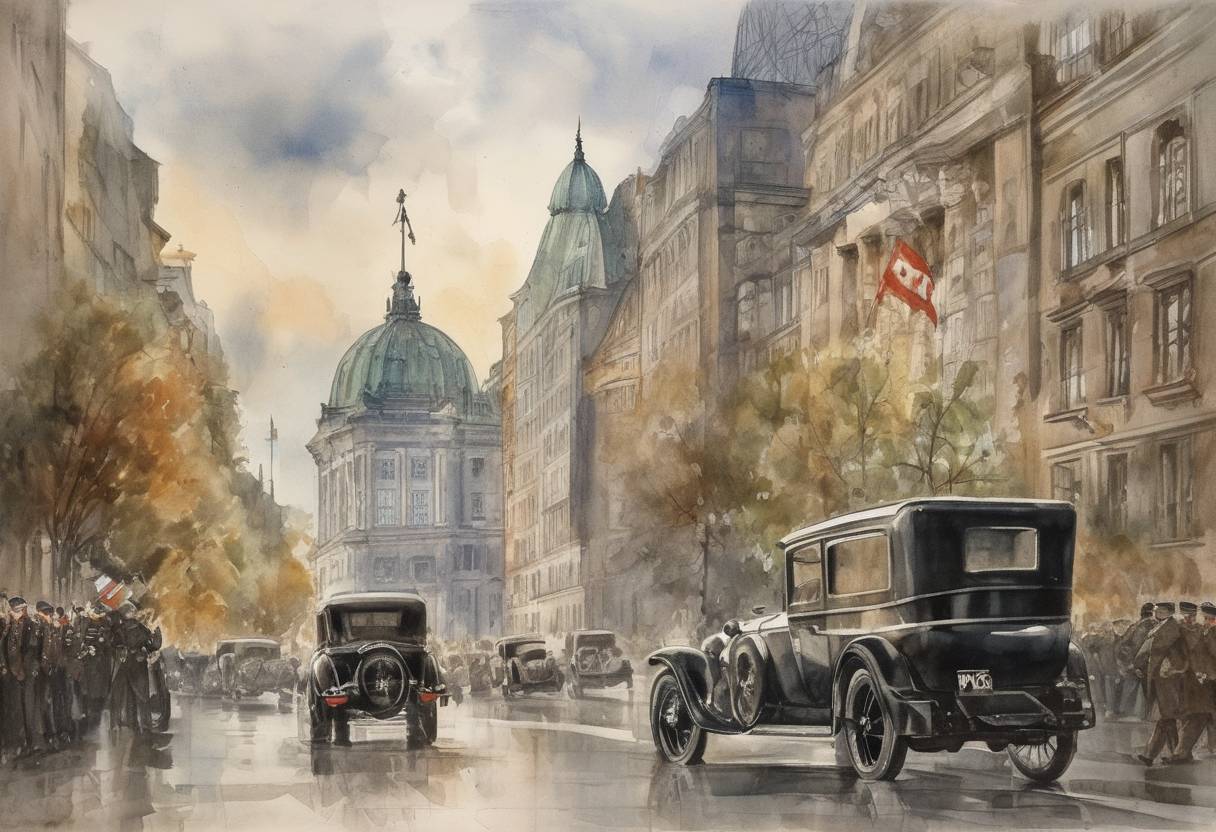
On August 2, 1934, a significant turning point in German history occurred when Adolf Hitler consolidated his power by becoming the Führer of Germany. This event marked the culmination of a series of strategic political maneuvers that allowed Hitler and the Nazi Party to establish a totalitarian regime.
Rise of the Nazi Party: The Nazi Party, led by Adolf Hitler, gained significant traction in the early 1930s amidst the economic turmoil and political instability of the Weimar Republic. The Great Depression had severely affected Germany, leading to widespread unemployment and discontent.
Appointment as Chancellor: On January 30, 1933, Adolf Hitler was appointed Chancellor of Germany by President Paul von Hindenburg. This appointment was part of a political deal intended to stabilize the government, but it ultimately provided Hitler with a platform to expand his influence.
Reichstag Fire and Enabling Act: Following the Reichstag Fire in February 1933, the Reichstag Fire Decree was enacted, suspending civil liberties and allowing for the arrest of political opponents. In March 1933, the Enabling Act was passed, granting Hitler the power to enact laws without the Reichstag’s consent, effectively dismantling the democratic framework of the Weimar Republic.
Hindenburg’s Death: President Paul von Hindenburg, a revered World War I military leader and the last obstacle to Hitler’s absolute power, died on August 2, 1934. His death removed the final constitutional check on Hitler’s authority.
Merger of Offices: Upon Hindenburg’s death, Hitler moved swiftly to consolidate his power. The offices of the President and Chancellor were merged, and Hitler assumed the title of “Führer und Reichskanzler” (Leader and Chancellor), effectively making him the head of state and government.
Oath of Loyalty: The German military, which had previously sworn allegiance to the constitution, was now required to swear an oath of personal loyalty to Hitler. This solidified his control over the armed forces and further entrenched his dictatorship.
Totalitarian Regime: With no legal or political constraints, Hitler’s regime rapidly transformed Germany into a totalitarian state. The Nazi Party’s ideology permeated all aspects of German life, and dissent was ruthlessly suppressed.
Path to World War II: Hitler’s consolidation of power set the stage for aggressive expansionist policies, leading to the outbreak of World War II in 1939. His leadership would result in catastrophic consequences for Germany and the world, including the Holocaust and immense human suffering.
The events of August 2, 1934, were pivotal in the establishment of Nazi Germany. Hitler’s rise to absolute power marked the end of the Weimar Republic and the beginning of a dark chapter in history characterized by dictatorship, war, and genocide. Understanding this moment is crucial for comprehending the dynamics that led to World War II and the Holocaust, underscoring the importance of safeguarding democratic institutions and human rights.
Source: en.wikipedia.org