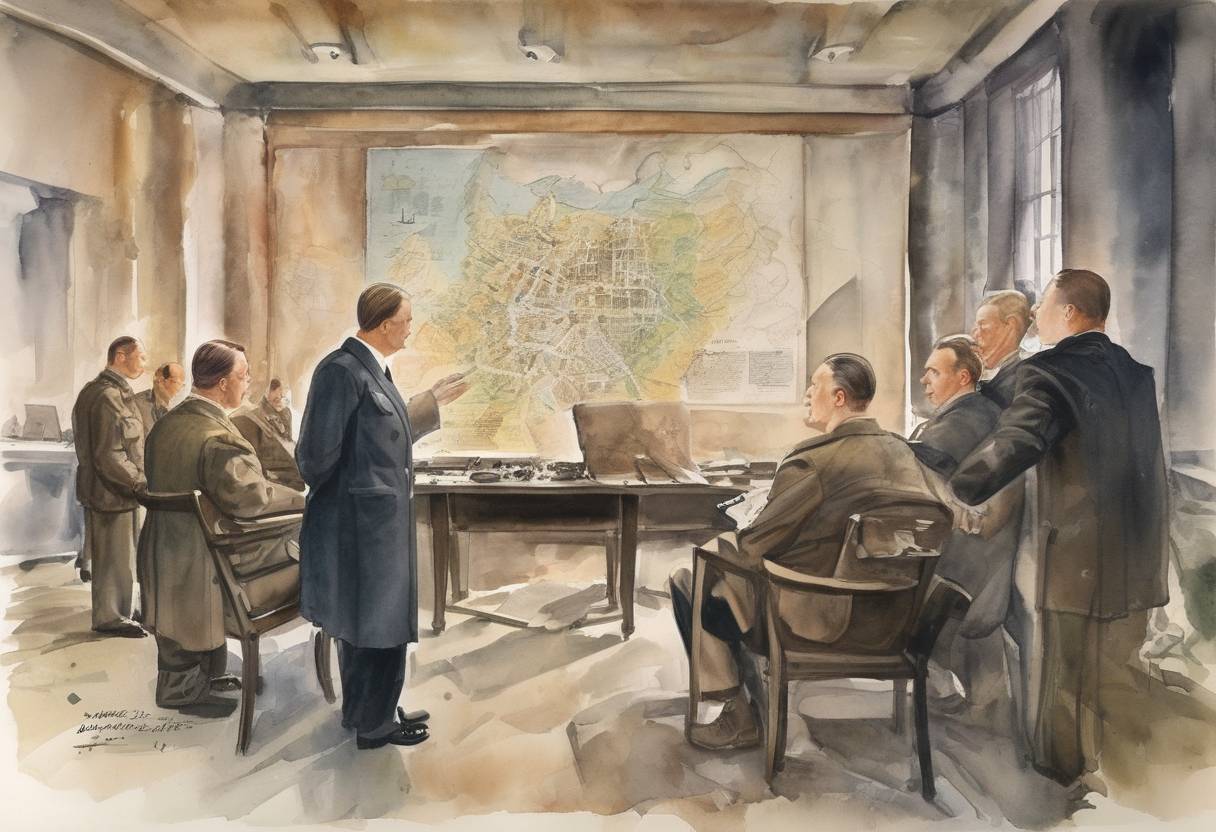
The Instruction for the ‘Final Solution’: July 31, 1941
On July 31, 1941, a pivotal and grim directive was issued in the history of the Holocaust. Hermann Göring, a leading member of the Nazi Party and one of Adolf Hitler’s closest associates, instructed Reinhard Heydrich to prepare a comprehensive plan for what would become known as the “Final Solution to the Jewish Question.” This order marked a significant escalation in the Nazi regime’s systematic approach to the genocide of the Jewish people.
Context Leading to the Directive
Nazi Anti-Semitic Policies: Since the Nazis rose to power in 1933, anti-Semitic policies had been incrementally intensifying. Jews were progressively marginalized through laws such as the Nuremberg Laws of 1935, which stripped them of German citizenship and barred them from various professions.
World War II Expansion: By 1941, Nazi Germany had occupied large parts of Europe, bringing millions of Jews under their control. The invasion of the Soviet Union in June 1941 further expanded the number of Jews in territories under Nazi influence.
Einsatzgruppen Operations: Following the invasion of the Soviet Union, mobile killing units known as Einsatzgruppen began mass shootings of Jews, marking the beginning of the Holocaust by bullets.
The Directive
Hermann Göring’s Role: As a high-ranking official, Göring was instrumental in the Nazi hierarchy. His directive to Heydrich was a formal authorization to devise a plan for the systematic extermination of the Jewish population.
Reinhard Heydrich’s Task: Heydrich, head of the Reich Main Security Office (RSHA), was tasked with organizing and coordinating the logistics of the genocide. This included the identification, assembly, and deportation of Jews to extermination camps.
The Aftermath and Implementation
Wannsee Conference: The directive led to the Wannsee Conference on January 20, 1942, where Heydrich and other Nazi officials discussed and coordinated the implementation of the “Final Solution.” This meeting formalized the plans for the mass deportation and extermination of Jews.
Extermination Camps: Following the conference, extermination camps such as Auschwitz, Sobibor, and Treblinka were established or expanded, becoming central sites of the Holocaust where millions of Jews were murdered.
Historical Significance: The directive and subsequent actions represent one of the darkest chapters in human history, highlighting the bureaucratic and systematic nature of the Holocaust. It underscores the extent of Nazi ideology and the lengths to which the regime went to achieve its genocidal goals.
Conclusion
The instruction from Göring to Heydrich on July 31, 1941, was a critical step in the Nazi regime’s transition from persecution to the industrial-scale genocide of the Jewish people. It set in motion a series of events that would lead to the deaths of six million Jews and leave an indelible mark on history. Understanding this directive is crucial to comprehending the mechanisms of the Holocaust and the importance of remembering its victims.