Big Ben's First Tolling at the Palace of Westminster
1859 · London, United Kingdom
The tolling bell known as Big Ben rang out for the first time at the Palace of Westminster in London, England.
May 31, 1859
The clock tower at the Houses of Parliament, which houses Big Ben, began keeping time for the first time.
London, England | Houses of Parliament
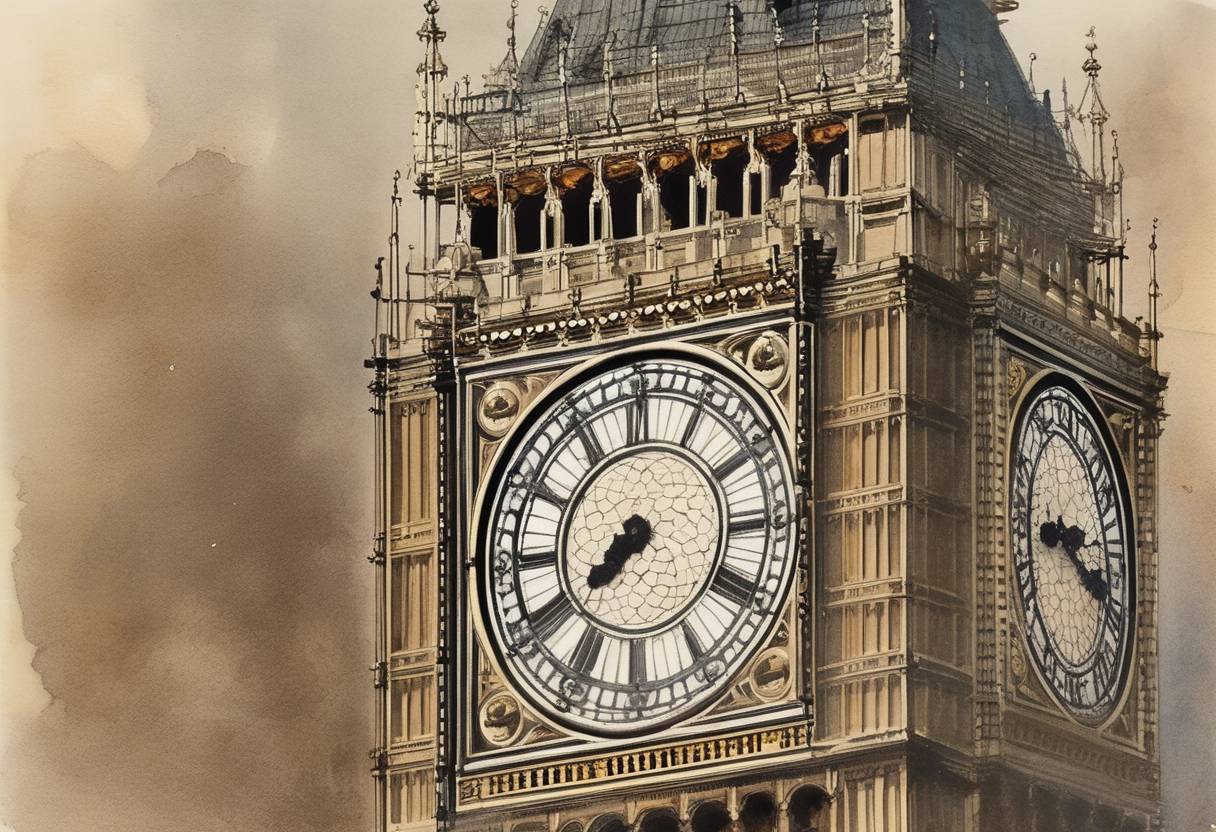
On May 31, 1859, the clock tower at the north end of the Palace of Westminster in London, commonly known as the Houses of Parliament, began keeping time for the first time. This iconic structure, which houses the Great Bell known as Big Ben, has since become one of the most recognizable symbols of the United Kingdom.
The clock tower, now officially named the Elizabeth Tower, was part of the reconstruction of the Palace of Westminster after it was largely destroyed by fire in 1834. The new design was created by architect Charles Barry, with the clock tower being a prominent feature. Barry collaborated with Augustus Pugin, a leading figure in the Gothic Revival architectural movement, who was responsible for the tower’s ornate detailing.
The clock mechanism was designed by Edmund Beckett Denison, a lawyer and amateur horologist, and constructed by clockmaker Edward John Dent. After Dent’s death in 1853, his stepson Frederick Dent completed the work. The clock is renowned for its accuracy and innovative design, featuring a double three-legged gravity escapement that ensures precision.
While the clock tower itself is often referred to as Big Ben, this name originally applied only to the Great Bell housed within the tower. The bell weighs approximately 13.5 tons and was cast in 1858 at the Whitechapel Bell Foundry. It was named after Sir Benjamin Hall, the First Commissioner of Works, although some suggest it was named after the heavyweight boxing champion Benjamin Caunt.
The clock began keeping time on May 31, 1859, but it was not without its challenges. The Great Bell first chimed on July 11, 1859. However, it cracked shortly after being installed, leading to a period of silence while repairs were made. A lighter hammer was installed, and the bell was rotated to present an undamaged section for striking. This solution has allowed Big Ben to continue chiming to this day.
The clock tower and Big Ben have witnessed numerous historical events and have become a symbol of British resilience and democracy. The chimes of Big Ben are broadcast by the BBC, marking the time for listeners around the world. The tower’s silhouette is a defining feature of the London skyline, and its image is often used to represent the city and the nation.
The commencement of timekeeping by the clock tower at the Houses of Parliament on May 31, 1859, marked the beginning of a legacy that continues to this day. The tower and its bell, Big Ben, have become enduring symbols of British culture and history, standing as a testament to the architectural and engineering achievements of the 19th century.
Source: en.wikipedia.org