1961 · Goldsboro, United States
A B-52 bomber carrying two nuclear bombs crashed near Goldsboro, North Carolina, narrowly avoiding a nuclear disaster.
January 17, 1966
A B-52 bomber collides with a KC-135 tanker over Spain, dropping three 70-kiloton hydrogen bombs near the town of Palomares.
Palomares, Spain | United States Air Force
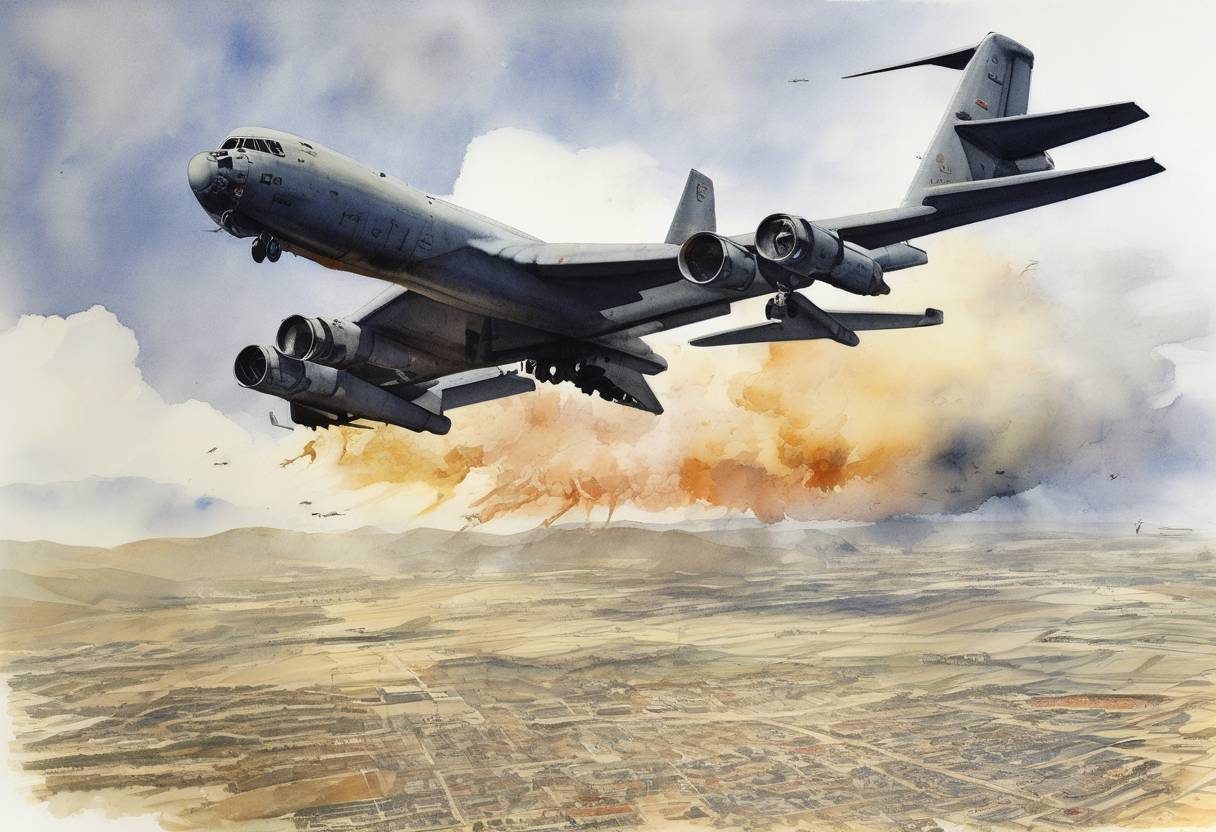
On January 17, 1966, a significant accident involving U.S. military aircraft occurred over the skies of Spain, known as the Palomares Incident. This event involved a mid-air collision between a B-52 bomber and a KC-135 tanker during a routine aerial refueling operation.
During the Cold War, the United States maintained a policy of continuous airborne alert, known as Operation Chrome Dome, which involved B-52 bombers armed with nuclear weapons flying regular patrols to ensure a rapid response capability. The B-52 involved in this incident was part of such a mission, carrying four hydrogen bombs.
During the refueling maneuver, the B-52 collided with the KC-135. The tanker exploded, killing all four crew members aboard. The B-52 was severely damaged, leading to a breakup in mid-air. Of the seven crew members on the B-52, four ejected and survived, while three perished.
The B-52 was carrying four B28 hydrogen bombs. Upon the aircraft’s destruction:
Three bombs fell on land near Palomares:
The fourth bomb fell into the Mediterranean Sea and was recovered after an extensive search lasting nearly three months.
The Palomares Incident highlighted the risks associated with the Cold War nuclear strategy and the potential for catastrophic accidents involving nuclear weapons. It prompted a reevaluation of nuclear safety protocols and contributed to the eventual cessation of continuous airborne alert missions by the United States.
The incident remains a poignant reminder of the dangers inherent in the nuclear arms race and the importance of stringent safety measures in handling nuclear arsenals.
Source: en.wikipedia.org