First Recorded Ascent of Mont Blanc
1778 · Mont Blanc, France
The first recorded ascent of Mont Blanc, the highest mountain in the Alps, is successfully completed by Jacques Balmat and Dr. Michel Paccard.
August 8, 1786
Mont Blanc, the highest mountain in the Alps, was climbed for the first time by Jacques Balmat and Dr. Michel-Gabriel Paccard.
Chamonix, France | none
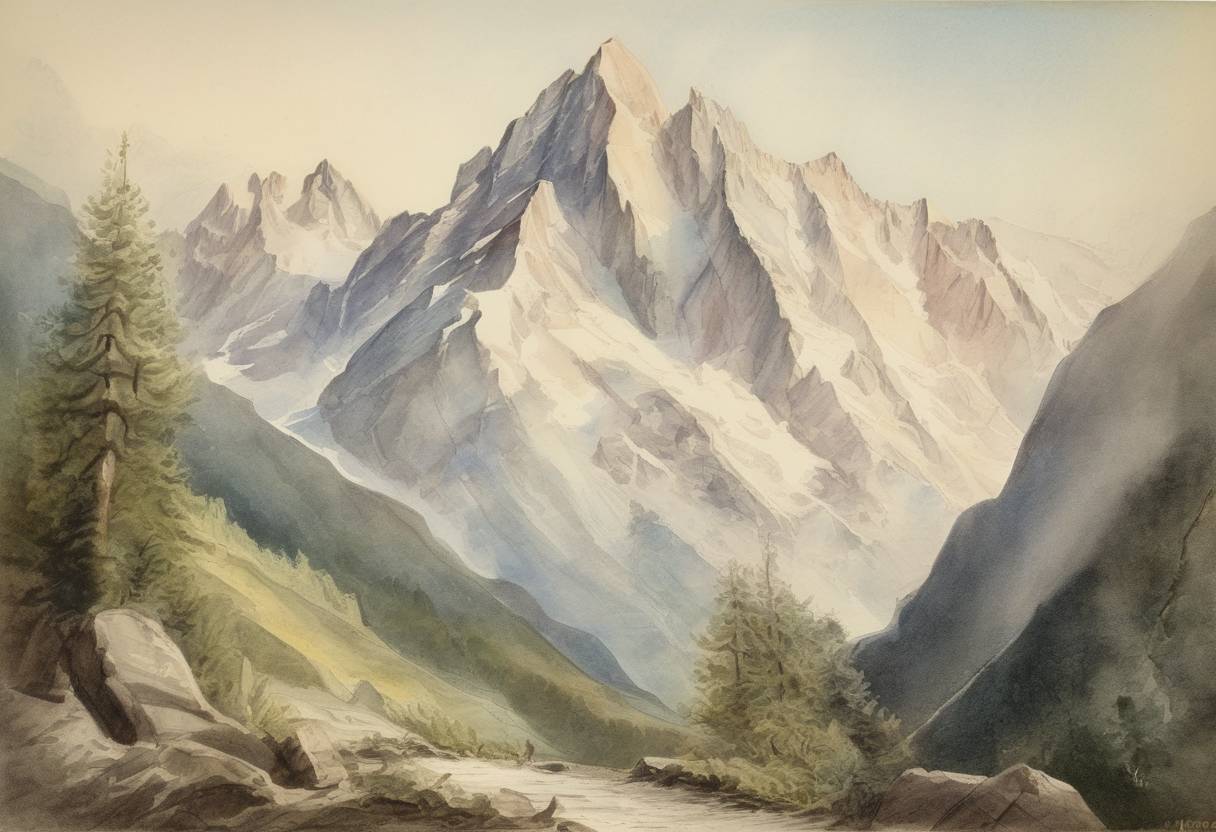
On August 8, 1786, Mont Blanc, the highest peak in the Alps, was successfully climbed for the first time by Jacques Balmat and Dr. Michel-Gabriel Paccard. This historic ascent marked a significant milestone in the history of mountaineering and paved the way for future explorations of high-altitude peaks.
Mont Blanc, standing at 4,808 meters (15,774 feet), had long been a subject of fascination and challenge for explorers and scientists. The mountain, located on the border between France and Italy, was considered one of the most formidable natural barriers in Europe. The quest to reach its summit was driven by both scientific curiosity and the spirit of adventure that characterized the Age of Enlightenment.
Jacques Balmat: A local Chamonix mountaineer and crystal hunter, Balmat was known for his exceptional climbing skills and intimate knowledge of the Mont Blanc massif. His expertise in navigating the treacherous terrain was crucial for the success of the expedition.
Dr. Michel-Gabriel Paccard: A physician from Chamonix, Paccard was deeply interested in the scientific study of the Alps. His determination to reach the summit was motivated by both personal ambition and the desire to contribute to the scientific understanding of high-altitude environments.
The ascent began on August 7, 1786. Balmat and Paccard set out from the village of Chamonix, equipped with rudimentary climbing gear and provisions. They faced numerous challenges, including crevasses, steep ice slopes, and unpredictable weather conditions. Despite these obstacles, the duo persevered, relying on their skills and determination.
On August 8, after a grueling climb, Balmat and Paccard reached the summit of Mont Blanc. Their successful ascent was a testament to human endurance and the spirit of exploration. The achievement was celebrated as a triumph of human ingenuity and courage.
The successful climb of Mont Blanc had several important consequences:
Scientific Advancement: The ascent provided valuable data for scientific studies, particularly in the fields of geology, meteorology, and physiology. It also inspired further scientific expeditions to high-altitude regions.
Mountaineering Legacy: The climb of Mont Blanc is often regarded as the birth of modern mountaineering. It inspired future generations of climbers and adventurers to explore the world’s highest peaks.
Tourism and Economy: The ascent contributed to the development of Chamonix as a major center for alpine tourism. The region became a popular destination for climbers and tourists, boosting the local economy.
In summary, the first ascent of Mont Blanc by Jacques Balmat and Dr. Michel-Gabriel Paccard on August 8, 1786, was a landmark event in the history of mountaineering. It demonstrated the potential for human achievement in the face of natural challenges and laid the groundwork for future explorations of the world’s great mountains.
Source: www.britannica.com