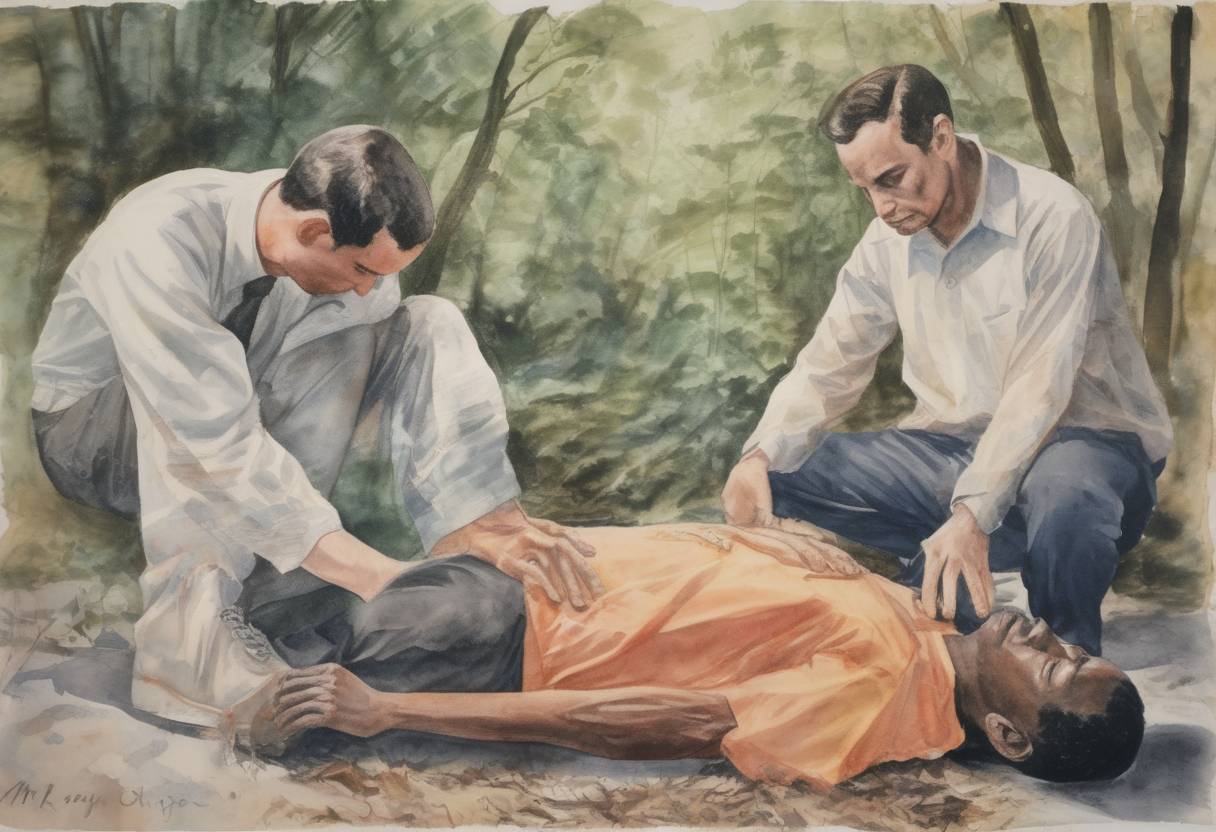
Discovery of the Bodies of Civil Rights Workers - August 4, 1964
On August 4, 1964, the bodies of civil rights workers Michael Schwerner, Andrew Goodman, and James Chaney were discovered in an earthen dam near Philadelphia, Mississippi. This grim discovery came six weeks after their disappearance on June 21, 1964, a case that had drawn national attention and highlighted the violent resistance to the Civil Rights Movement in the American South.
Background
Michael Schwerner, Andrew Goodman, and James Chaney were part of the Freedom Summer campaign, an initiative aimed at registering African American voters in Mississippi. The campaign was organized by the Congress of Racial Equality (CORE) and the Student Nonviolent Coordinating Committee (SNCC), and it sought to combat the systemic disenfranchisement of Black voters in the South.
On June 21, 1964, the three men were investigating the burning of a church that had been used as a meeting place for civil rights activities. After being briefly detained by local police, they were released, only to be ambushed by members of the Ku Klux Klan.
The Investigation
The disappearance of Schwerner, Goodman, and Chaney prompted a massive federal investigation, led by the FBI under the code name “Mississippi Burning.” The case drew significant media attention and became a pivotal moment in the Civil Rights Movement, highlighting the extreme dangers faced by activists in the South.
Discovery and Aftermath
The bodies were found buried in an earthen dam, with evidence indicating they had been brutally murdered. The discovery confirmed the worst fears of many involved in the civil rights struggle and underscored the violent opposition to racial equality.
The murders led to a national outcry and increased support for the Civil Rights Movement. The federal government intensified its efforts to combat racial violence and discrimination, contributing to the passage of the Civil Rights Act of 1964 and the Voting Rights Act of 1965.
Legal Proceedings
In 1967, seven men were convicted on federal conspiracy charges related to the murders, but none served more than six years in prison. It wasn’t until 2005 that Edgar Ray Killen, a former Klan member, was convicted of manslaughter for his role in orchestrating the killings and sentenced to 60 years in prison.
Historical Significance
The murders of Schwerner, Goodman, and Chaney became emblematic of the brutal resistance to civil rights efforts in the South. Their sacrifice is remembered as a catalyst for change, galvanizing public opinion and strengthening the resolve of those fighting for equality and justice in the United States.