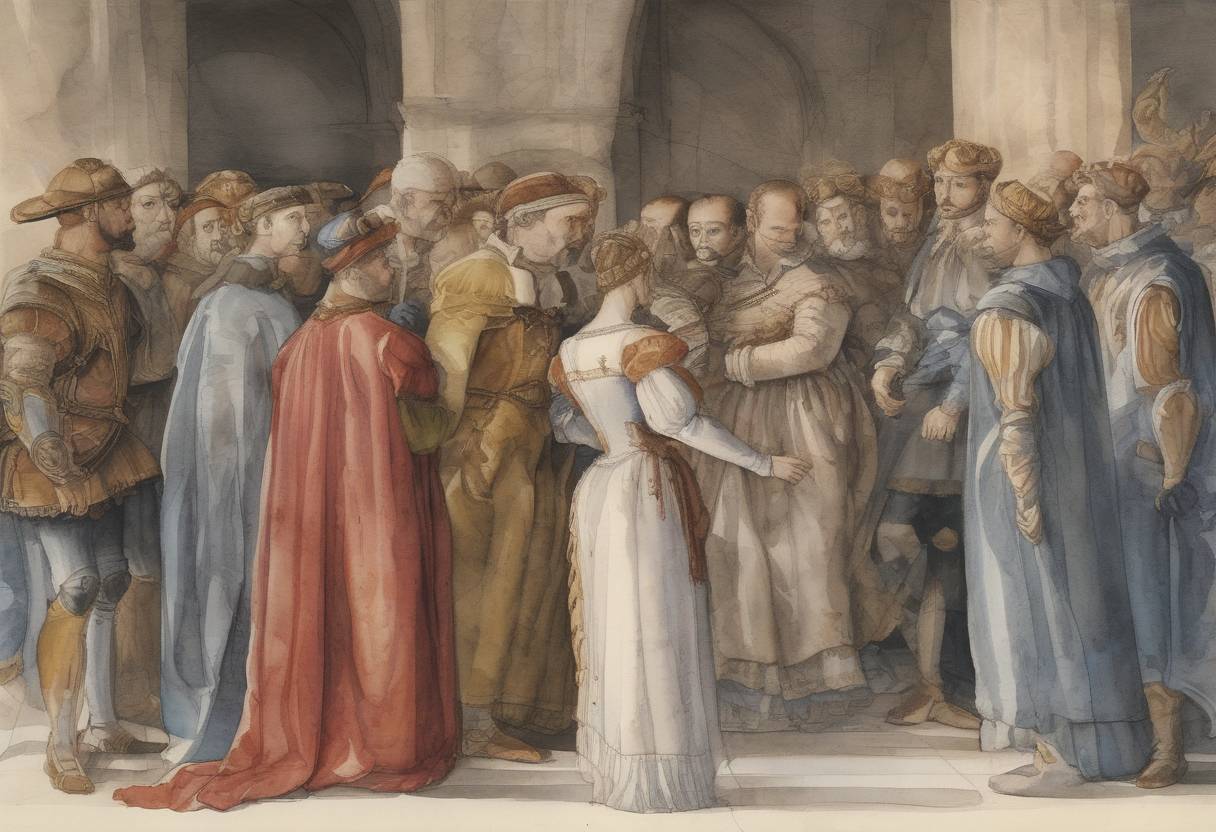
Florence Expels the Medici Family and Restores a Republican Government - May 16, 1527
On May 16, 1527, the city of Florence witnessed a significant political upheaval as the Medici family was expelled, and a republican government was reinstated. This event marked a pivotal moment in the history of Florence, reflecting the city’s turbulent political landscape during the Renaissance.
Background
The Medici family, a powerful banking dynasty, had been influential in Florentine politics since the early 15th century. Their patronage of the arts and strategic marriages helped them maintain control over the city. However, their rule was not without opposition, as many Florentines resented their autocratic governance and the erosion of republican ideals.
In the early 16th century, the Medici’s power was bolstered by their connections to the papacy. Giovanni de’ Medici became Pope Leo X in 1513, and his cousin Giulio de’ Medici ascended to the papal throne as Pope Clement VII in 1523. These papal ties further entrenched Medici influence in Florence.
Events Leading to the Expulsion
The political climate in Italy during the 1520s was marked by instability and conflict, particularly due to the Italian Wars involving France, Spain, and the Holy Roman Empire. In 1527, Rome was sacked by the troops of Charles V, Holy Roman Emperor, an event that weakened the Medici’s papal support.
Taking advantage of the chaos, anti-Medici factions in Florence, led by prominent families and republican sympathizers, seized the opportunity to challenge Medici rule. The dissatisfaction with the Medici was compounded by economic hardships and the perception that the family prioritized their interests over those of the city.
The Expulsion and Restoration of the Republic
On May 16, 1527, a popular uprising in Florence forced the Medici to flee the city. The expulsion was largely bloodless, as the Medici, recognizing the strength of the opposition, chose to leave rather than incite violence.
Following their departure, Florence re-established a republican form of government. The new government sought to restore the traditional civic freedoms and institutions that had been eroded under Medici rule. A Great Council was formed, modeled after the Venetian system, to ensure broader participation in governance.
Aftermath and Historical Significance
The restoration of the republic in Florence was short-lived. In 1530, after a protracted siege, the city was recaptured by forces loyal to the Medici, with the support of Emperor Charles V. The Medici returned to power, and Alessandro de’ Medici was installed as the Duke of Florence, marking the end of the republic.
Despite its brevity, the 1527 expulsion of the Medici and the restoration of the republic were significant. They underscored the persistent tension between republican ideals and autocratic rule in Renaissance Florence. The event also highlighted the complex interplay of local and international politics in shaping the destiny of Italian city-states during this period.
The Medici’s eventual return to power did not erase the legacy of the republican movement, which continued to inspire political thought and action in Florence and beyond.