Impeachment of President Park Geun-hye: March 10, 2017
2017 · Seoul, South Korea
South Korea's Constitutional Court upheld the impeachment of President Park Geun-hye, removing her from office over a corruption scandal.
May 14, 2004
The Constitutional Court of South Korea overturned the impeachment of President Roh Moo-hyun, allowing him to resume his duties.
Seoul, South Korea | Constitutional Court of South Korea
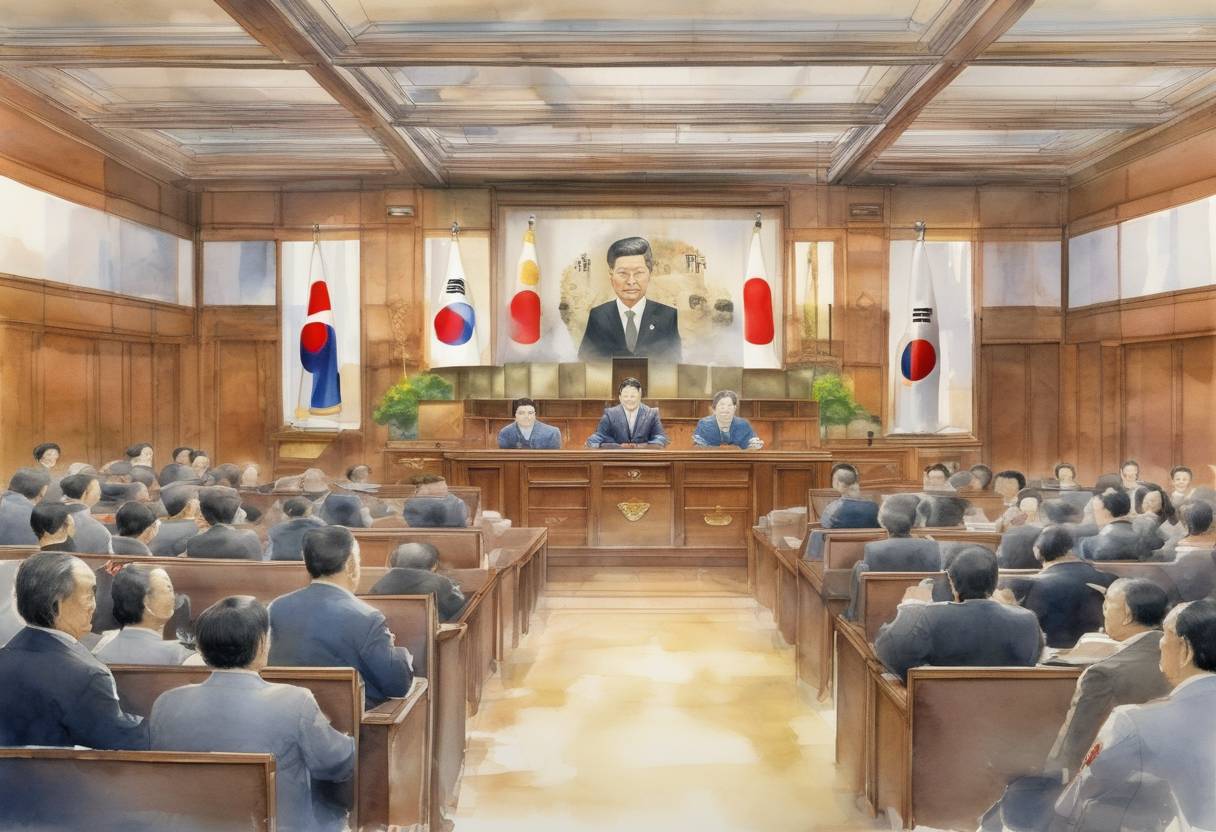
On May 14, 2004, the Constitutional Court of South Korea made a landmark decision by overturning the impeachment of President Roh Moo-hyun, allowing him to resume his presidential duties. This event marked a significant moment in South Korea’s political history, reflecting the complexities of its democratic processes and the evolving nature of its political landscape.
Roh Moo-hyun, a former human rights lawyer and a progressive politician, was elected as the President of South Korea in 2002. His presidency was marked by efforts to reform the political system and improve relations with North Korea. However, his tenure faced challenges, including economic issues and political opposition.
In March 2004, the South Korean National Assembly voted to impeach President Roh. The impeachment was primarily based on allegations that he had violated election laws by expressing support for a particular political party ahead of parliamentary elections. This move led to a temporary suspension of his presidential powers, with Prime Minister Goh Kun assuming the role of acting president.
The Constitutional Court’s decision on May 14, 2004, was pivotal. The court ruled that while President Roh had indeed violated the election law, the breach was not severe enough to justify his removal from office. The court’s ruling emphasized the principle of proportionality, stating that the punishment of impeachment was disproportionate to the offense committed.
The decision was made with an 8-1 vote, underscoring the court’s view that the impeachment did not meet the constitutional requirement of a “grave violation of the Constitution or law.”
The court’s ruling allowed President Roh to resume his duties, restoring his position as the head of state. This decision had several significant implications:
Political Stability: The ruling helped stabilize the political situation in South Korea, which had been marked by uncertainty and division following the impeachment vote.
Judicial Independence: The decision highlighted the role of the Constitutional Court as an independent arbiter in South Korea’s democratic system, capable of checking the powers of the legislative branch.
Public Reaction: The public reaction was mixed, with supporters of Roh celebrating the decision as a victory for democracy, while opponents viewed it as a setback.
Impact on Roh’s Presidency: Although reinstated, President Roh’s presidency continued to face challenges, including political opposition and economic issues. However, he remained committed to his reform agenda.
In conclusion, the overturning of President Roh Moo-hyun’s impeachment by the Constitutional Court on May 14, 2004, was a defining moment in South Korea’s democratic journey. It underscored the importance of judicial review and the balance of power within the country’s political system, setting a precedent for future political and legal proceedings.
Source: www.bbc.com