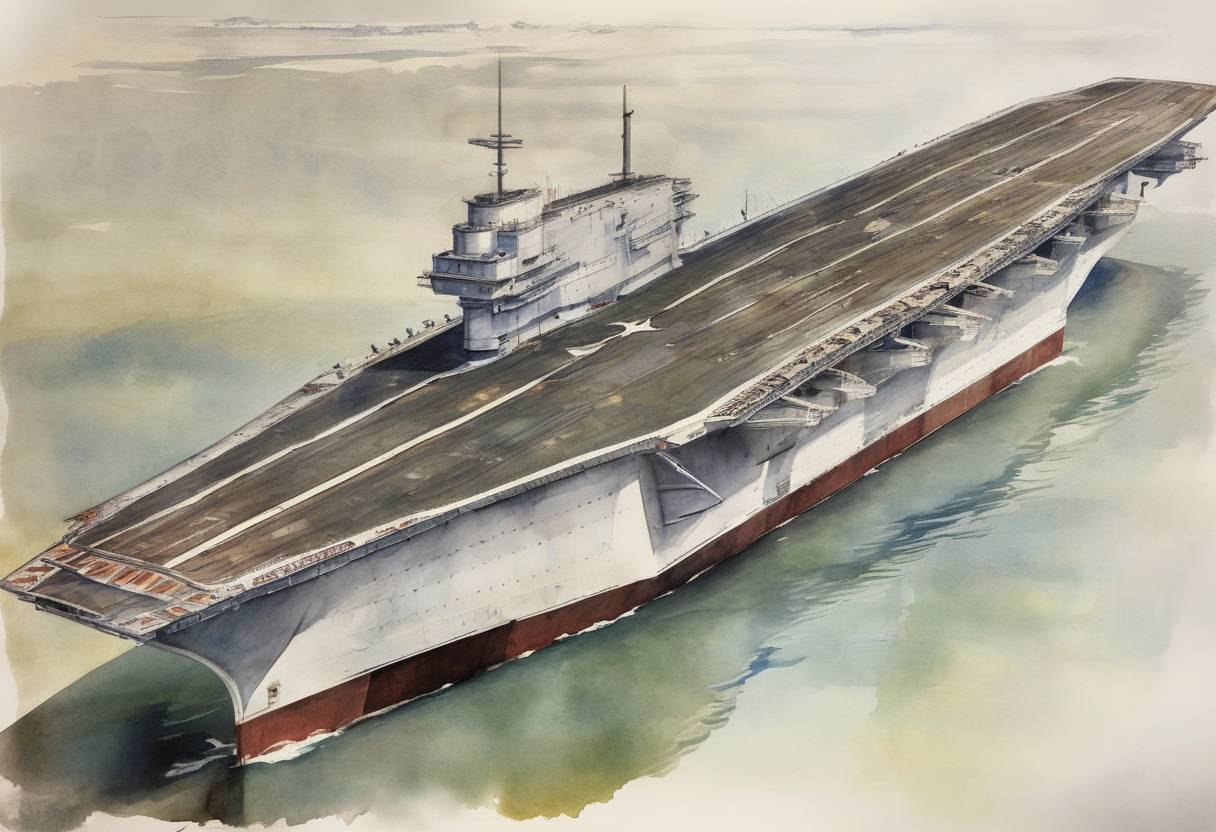
The Commissioning of USS Langley (CV-1)
Overview
On March 20, 1922, the USS Langley (CV-1) was commissioned as the United States Navy’s first aircraft carrier, marking a pivotal moment in naval aviation history. This event signified the Navy’s commitment to integrating air power into its maritime strategy, a development that would profoundly influence naval warfare in the 20th century.
Background
- Origins: The USS Langley was originally a collier named USS Jupiter (AC-3), launched in 1912. In 1919, the Navy decided to convert Jupiter into an experimental aircraft carrier, reflecting the growing interest in aviation’s potential for naval operations.
- Conversion: The conversion took place at the Norfolk Naval Shipyard in Portsmouth, Virginia. The ship was fitted with a flight deck, hangars, and other necessary modifications to support aircraft operations.
Key Features
- Flight Deck: The Langley featured a flat flight deck, which allowed for the takeoff and landing of aircraft. This was a novel concept at the time and required significant innovation in ship design and aviation technology.
- Capacity: The carrier could accommodate up to 34 aircraft, a modest number by later standards but significant for its time.
- Catapult System: The Langley was equipped with a catapult system to assist aircraft in taking off, an essential feature for launching planes from a moving ship.
Significance
- Innovation in Naval Warfare: The commissioning of the USS Langley represented a shift in naval strategy, emphasizing the importance of air superiority and reconnaissance in naval engagements.
- Training and Development: The Langley served as a platform for developing carrier operations and tactics, training pilots and crews in the complexities of naval aviation.
- Legacy: The success of the Langley paved the way for future aircraft carriers, which would become central to naval operations during World War II and beyond.
Aftermath
- Service: The USS Langley served primarily as a training ship and experimental platform throughout the 1920s and 1930s. It played a crucial role in the development of carrier aviation techniques and procedures.
- World War II: During World War II, the Langley was converted into a seaplane tender and was eventually sunk by Japanese aircraft in 1942 while en route to deliver aircraft to the Dutch East Indies.
Conclusion
The commissioning of the USS Langley on March 20, 1922, was a landmark event in naval history. It marked the beginning of a new era in which aircraft carriers would become indispensable assets in naval fleets worldwide, shaping the future of maritime military strategy. The Langley’s legacy is evident in the powerful carrier strike groups that form the backbone of modern naval forces.