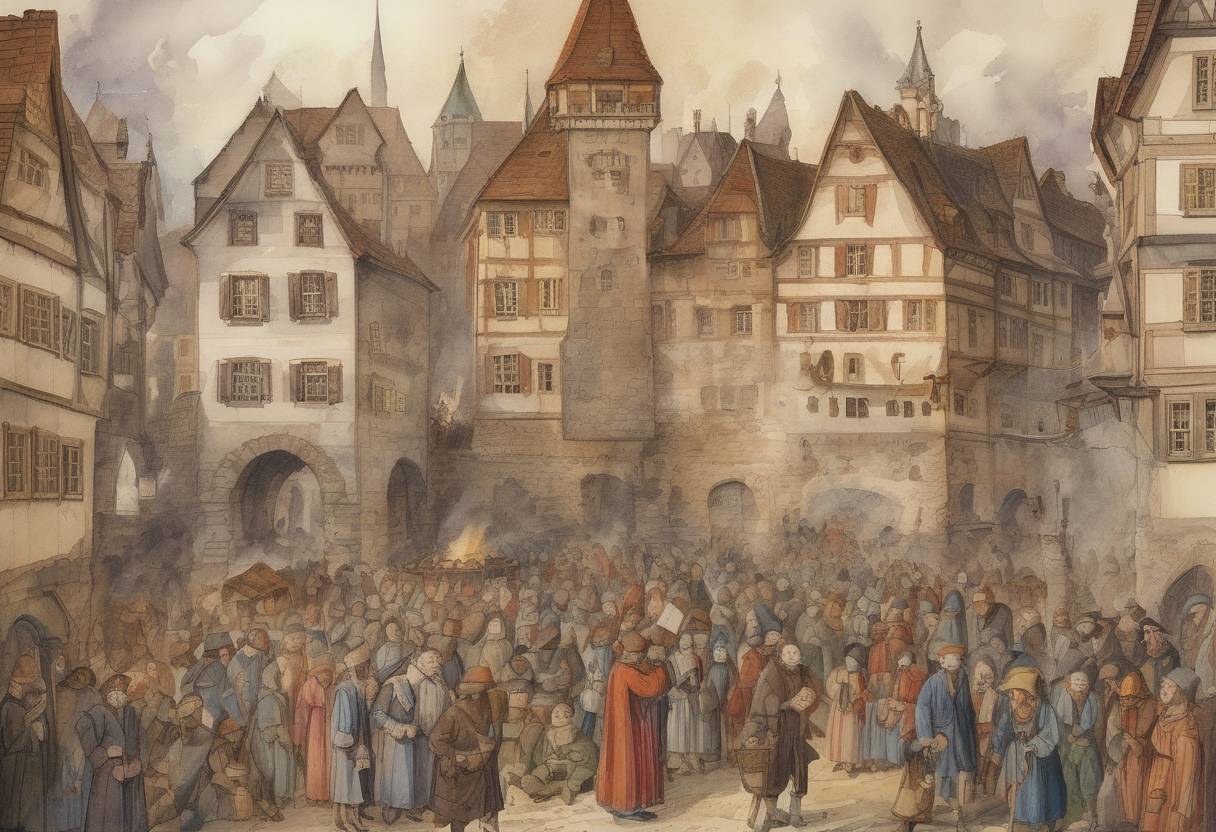
The Basel Massacre of 1349
On January 9, 1349, a tragic and horrific event unfolded in Basel, Switzerland, as part of a broader wave of violence against Jewish communities during the Black Death pandemic. This event is known as the Basel Massacre, where the Jewish population of the city was rounded up and incinerated by townspeople who falsely blamed them for the spread of the plague.
Context
The Black Death, which swept through Europe between 1347 and 1351, was one of the deadliest pandemics in human history, resulting in the deaths of an estimated 25 to 30 million people in Europe alone. The disease, caused by the bacterium Yersinia pestis, was transmitted through fleas that infested rats, and it spread rapidly along trade routes.
In the face of such unprecedented mortality and suffering, fear and superstition took hold. Many people sought scapegoats to blame for the catastrophe, and Jewish communities, already marginalized and subject to widespread anti-Semitic prejudice, became targets of baseless accusations. Rumors spread that Jews had poisoned wells to cause the plague, leading to violent pogroms across Europe.
The Events in Basel
In Basel, these tensions culminated in a brutal massacre. On January 9, 1349, the Jewish residents of the city were forcibly gathered by the townspeople. Despite the lack of evidence and the irrationality of the accusations, the Jewish community was blamed for the plague’s devastation.
The townspeople constructed a wooden structure on an island in the Rhine River, where they imprisoned the Jewish population. Tragically, they set the structure on fire, resulting in the deaths of several hundred Jewish men, women, and children. This act of violence was part of a series of pogroms that occurred throughout the Holy Roman Empire during this period.
Aftermath and Historical Significance
The massacre in Basel was one of many similar atrocities committed against Jewish communities during the Black Death. These events had long-lasting impacts on Jewish life in Europe, leading to further marginalization and displacement. Many Jewish survivors fled to Eastern Europe, where they sought refuge from persecution.
The Basel Massacre is a stark reminder of the dangers of scapegoating and the devastating consequences of unchecked prejudice and fear. It underscores the importance of historical memory and the need to combat anti-Semitism and other forms of discrimination.
In the centuries that followed, the Jewish community in Basel, like many others in Europe, gradually rebuilt, but the scars of such events remained a poignant part of their collective history. The massacre serves as a somber chapter in the broader narrative of the Jewish diaspora and the challenges faced by minority communities throughout history.