President Harry S. Truman's First Televised White House Address
1947 · Washington, D.C., United States
President Harry S. Truman delivered the first televised White House address, urging Americans to conserve food to aid post-war Europe.
November 1, 1800
John Adams becomes the first President of the United States to live in the Executive Mansion (later known as the White House).
Washington, D.C., United States | U.S. Government
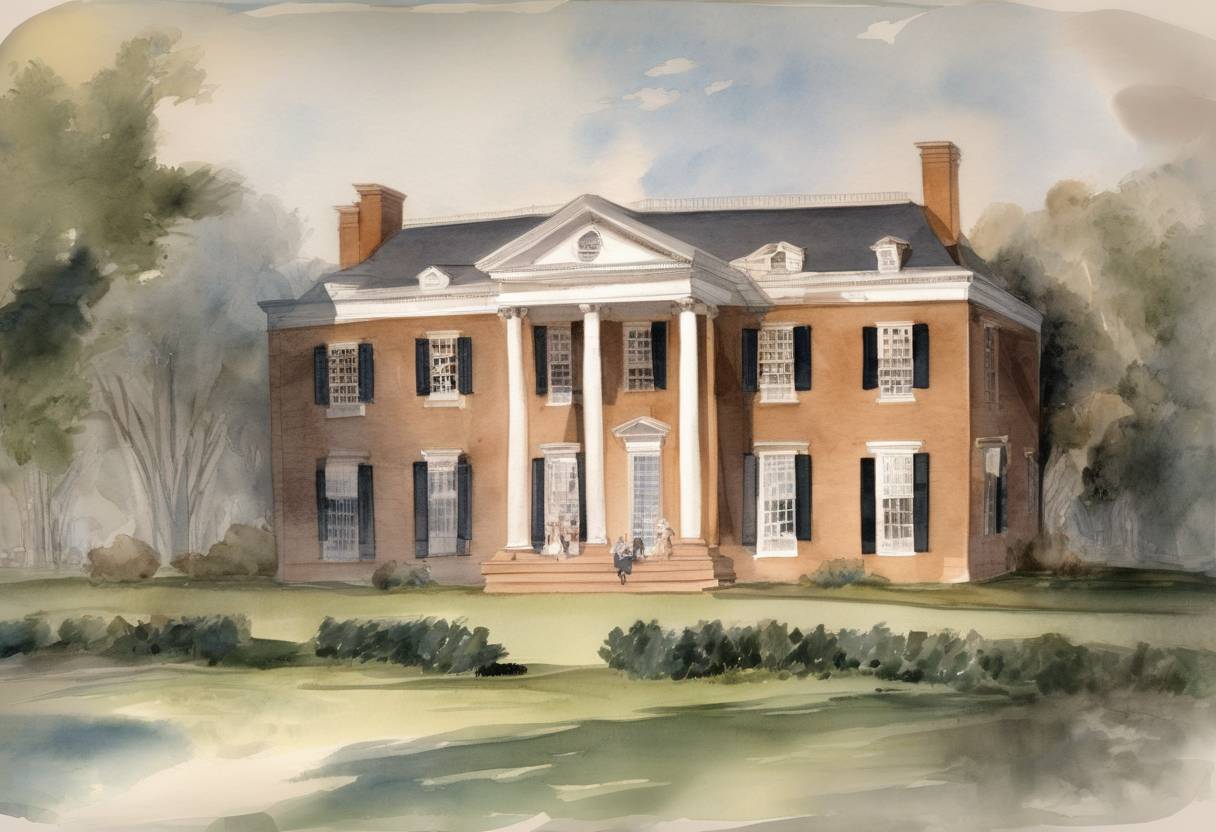
On November 1, 1800, John Adams, the second President of the United States, became the first president to reside in the Executive Mansion, which would later be known as the White House. This event marked a significant moment in American history, as it symbolized the establishment of the nation’s capital in Washington, D.C., and the functioning of the federal government from its new seat.
The Capital’s Relocation: The decision to move the capital from Philadelphia to Washington, D.C., was part of the Residence Act of 1790. This act was a result of a compromise between Alexander Hamilton and Thomas Jefferson, facilitated by James Madison, to have the federal government assume state debts in exchange for establishing the capital along the Potomac River.
Construction of the Executive Mansion: Designed by Irish-born architect James Hoban, the construction of the Executive Mansion began in 1792. The building was constructed using Aquia Creek sandstone, and its neoclassical design was inspired by Leinster House in Dublin, Ireland.
Completion and Move-In: Although the mansion was not fully completed, it was deemed ready enough for occupancy by the fall of 1800. President Adams moved in during the final months of his presidency, accompanied by his wife, Abigail Adams.
Adams’ Tenure in the Mansion: John Adams lived in the Executive Mansion for only a few months, as he lost the presidential election to Thomas Jefferson in 1800. Despite the short duration, his residency established the tradition of the President living in the White House.
Symbol of the Presidency: The move into the Executive Mansion underscored the establishment of the presidency as a central institution in the U.S. government. It also highlighted the importance of Washington, D.C., as the political heart of the nation.
Legacy of the White House: Over the years, the White House has become an iconic symbol of the American presidency and a site of significant historical events. It has undergone numerous renovations and expansions since Adams’ time, adapting to the needs of successive presidents.
Adams’ Reflection: In a letter to his wife, Abigail, John Adams expressed a wish that “none but honest and wise men ever rule under this roof,” a sentiment that has been inscribed on the mantel in the State Dining Room of the White House.
John Adams’ move into the Executive Mansion marked the beginning of a new era for the American presidency, setting a precedent for future leaders and solidifying the role of the White House as the official residence and workplace of the President of the United States.
Source: en.wikipedia.org