The Ratification of the Treaty of Paris: January 14, 1784
1784 · Annapolis, United States
The United States ratifies the Treaty of Paris, officially ending the American Revolutionary War.
November 25, 1783
The last British troops leave New York City, marking the end of British occupation in the United States after the American Revolutionary War.
New York City, United States
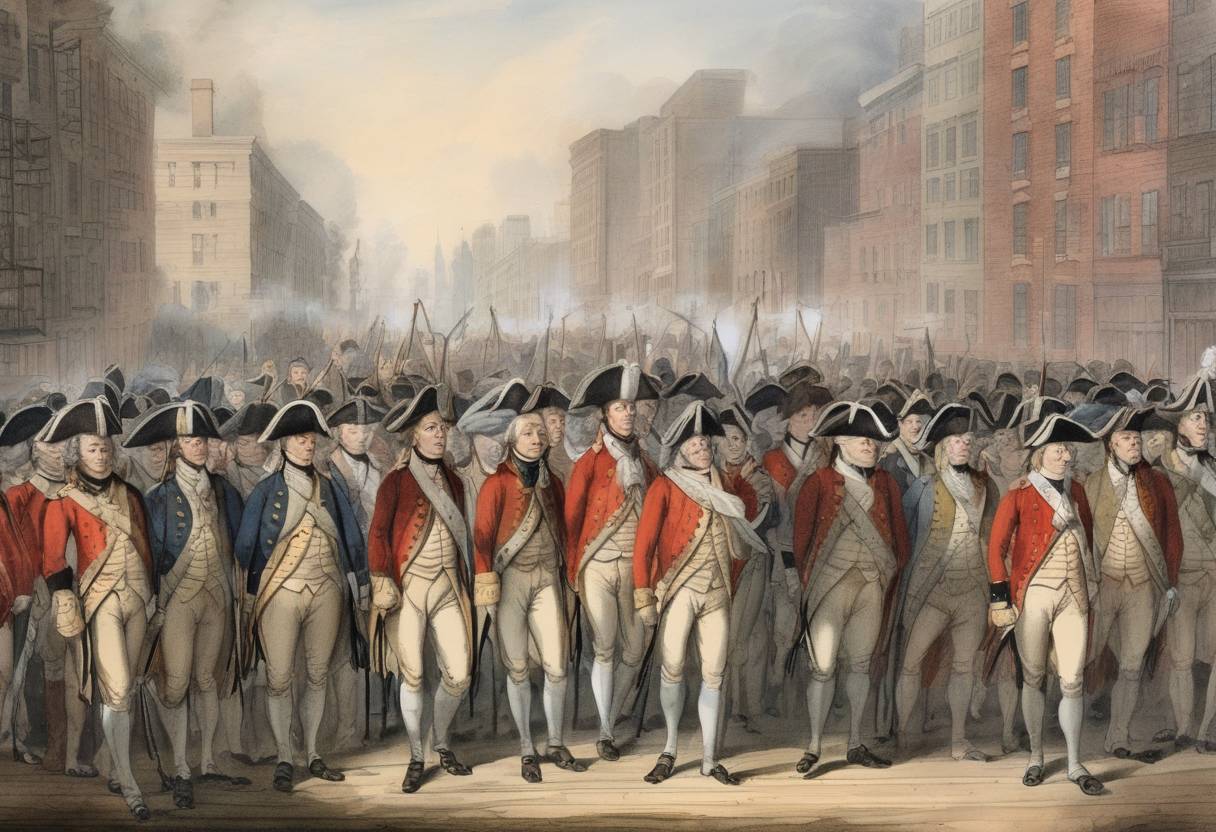
On November 25, 1783, a significant event in American history took place as the last British troops departed from New York City, marking the end of British occupation in the United States following the American Revolutionary War. This day is celebrated as “Evacuation Day.”
The American Revolutionary War, which began in 1775, was a conflict between the thirteen American colonies and Great Britain. The war was driven by the colonies’ desire for independence and resistance to British taxation and governance without representation. The conflict officially ended with the signing of the Treaty of Paris on September 3, 1783, which recognized the sovereignty of the United States.
Treaty of Paris (1783): The treaty formally ended the Revolutionary War and established the terms for British withdrawal from American territory. It was ratified by the Continental Congress in January 1784.
British Occupation of New York City: New York City had been under British control since September 1776, serving as a major military base and headquarters for British operations during the war.
Preparations for Departure: Following the treaty, British forces began preparations to evacuate their remaining strongholds in the United States, with New York City being the last major point of departure.
Departure of British Troops: On the morning of November 25, 1783, the last British soldiers boarded ships in New York Harbor. The British flag was lowered, and the American flag was raised over Fort George, symbolizing the end of British rule in the city.
Triumphal Entry of American Forces: General George Washington, accompanied by Governor George Clinton and other American officials, led a triumphant procession into the city. This marked a celebratory moment for the citizens of New York and the newly independent nation.
Symbol of Independence: Evacuation Day became a powerful symbol of American independence and the successful conclusion of the Revolutionary War. It was celebrated annually in New York City for many years, particularly in the 19th century.
Transition to Peace: The departure of British troops allowed the United States to begin the process of rebuilding and establishing a government free from colonial rule. It paved the way for the drafting of the U.S. Constitution in 1787 and the establishment of a new nation.
Legacy: While Evacuation Day is not as widely commemorated today, it remains an important historical milestone, representing the end of foreign occupation and the beginning of a new era for the United States.
Evacuation Day stands as a testament to the resilience and determination of the American people in their quest for independence and self-governance.
Source: en.wikipedia.org