Anesthetic Ether Used for the First Time by Dr. William Morton
1846 · Boston, United States
Anesthetic ether is used for the first time by American dentist Dr. William Morton during a tooth extraction.
October 16, 1846
William T. G. Morton administers ether anesthesia for the first time in a public demonstration at the Massachusetts General Hospital in Boston, marking a significant advancement in medical surgery.
Boston, United States | Massachusetts General Hospital
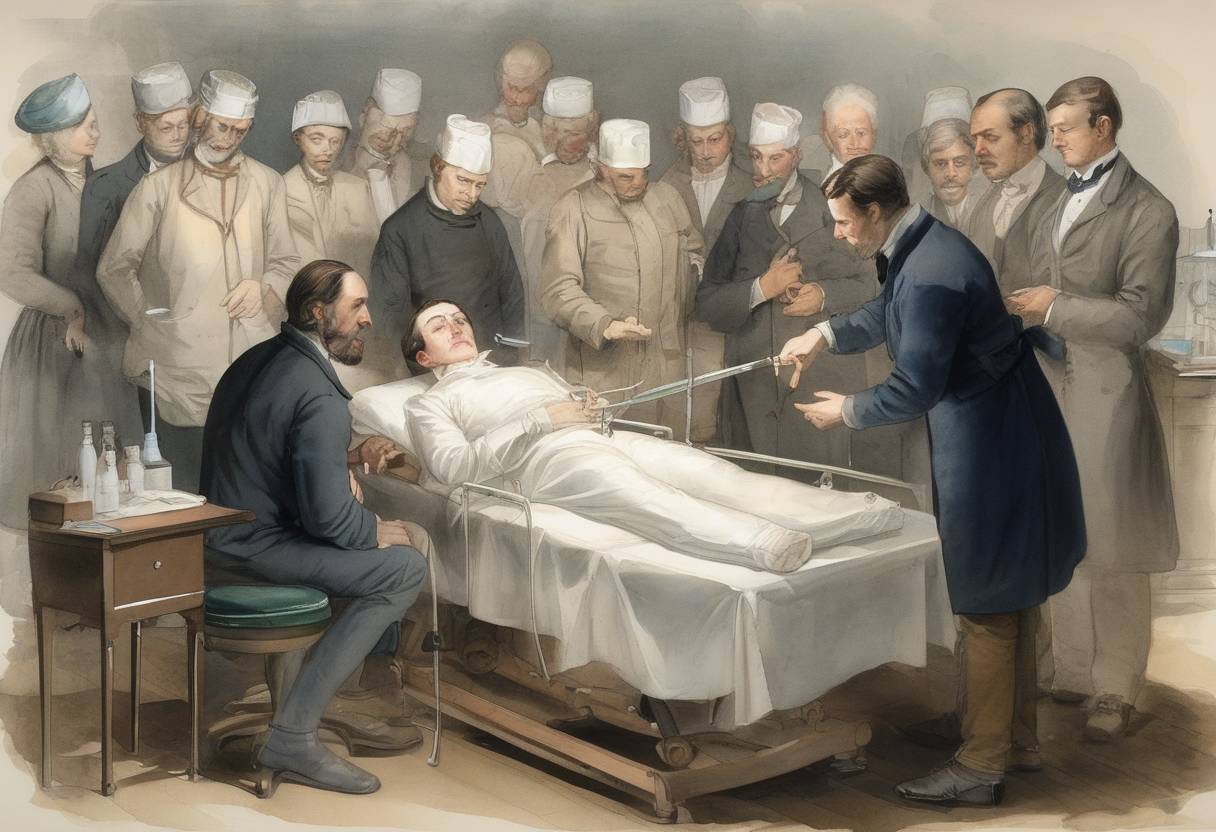
On October 16, 1846, a pivotal moment in medical history occurred at the Massachusetts General Hospital in Boston. William T. G. Morton, a dentist by profession, successfully demonstrated the use of ether as an anesthetic in a public setting, revolutionizing surgical procedures and pain management.
Before the introduction of anesthesia, surgery was a traumatic experience for patients, often performed with the patient fully conscious and in excruciating pain. Surgeons had to work quickly to minimize suffering, which often compromised the quality and scope of the procedures.
William T. G. Morton, who had been experimenting with various substances to alleviate pain during dental procedures, discovered that ether could effectively render patients unconscious and insensible to pain. His work built upon earlier research by other scientists, including Crawford Long and Charles Jackson, who had also explored the anesthetic properties of ether.
Morton’s public demonstration took place in the surgical amphitheater of Massachusetts General Hospital, now famously known as the “Ether Dome.” The patient, Edward Gilbert Abbott, was scheduled to undergo surgery to remove a vascular tumor from his neck.
Dr. John Collins Warren, a prominent surgeon, performed the operation. Before the procedure began, Morton administered ether to Abbott using a specially designed inhaler. To the astonishment of the attending doctors and medical students, Abbott remained unconscious and did not exhibit any signs of pain during the surgery.
The success of Morton’s demonstration marked a turning point in medical history. The use of ether anesthesia quickly spread across the United States and Europe, transforming surgical practice by allowing more complex and lengthy operations to be performed without causing distress to patients.
This breakthrough laid the foundation for the development of modern anesthesiology, significantly improving patient care and surgical outcomes. It also spurred further research into other anesthetic agents, leading to the diverse range of anesthetics available today.
The introduction of ether anesthesia not only advanced medical science but also had profound social implications. It changed public perceptions of surgery, making it more acceptable and less feared. This development contributed to the growth of hospitals as centers for medical treatment and innovation.
Morton’s demonstration is celebrated as a landmark achievement, underscoring the importance of scientific experimentation and collaboration in advancing human health and well-being. The event is commemorated annually as Ether Day, honoring the legacy of those who contributed to this life-changing discovery.
Source: en.wikipedia.org