Nobel Peace Prize Awarded to Nelson Mandela and F.W. de Klerk
1993 · Oslo, Norway
Nelson Mandela and F.W. de Klerk were awarded the Nobel Peace Prize for their efforts to peacefully end apartheid and establish a new democratic South Africa.
December 10, 1984
South African Bishop Desmond Tutu received the Nobel Peace Prize for his role as a unifying leader in the campaign to resolve the problem of apartheid in South Africa.
Oslo, Norway | Nobel Foundation
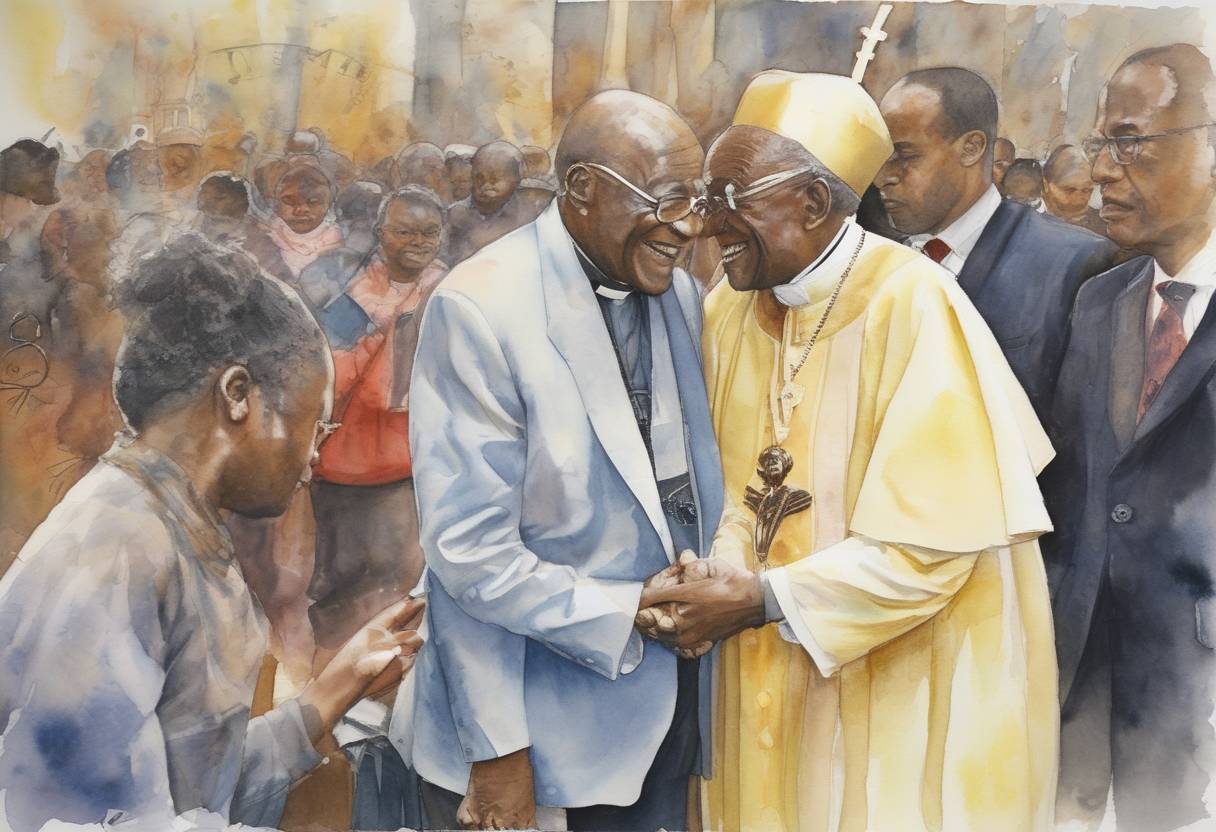
On October 12, 1984, South African Bishop Desmond Tutu was awarded the Nobel Peace Prize for his significant role as a unifying leader in the campaign to resolve the problem of apartheid in South Africa. This recognition highlighted his dedication to nonviolent protest and his efforts to bring about social justice and racial equality in a nation deeply divided by racial segregation.
Apartheid in South Africa: Apartheid was a system of institutionalized racial segregation and discrimination in South Africa that began in 1948. It enforced a hierarchy privileging the white minority over the non-white majority, leading to widespread human rights abuses and international condemnation.
Desmond Tutu’s Role: As an Anglican bishop, Tutu became a prominent voice against apartheid. He advocated for peaceful resistance and was known for his ability to articulate the struggles of black South Africans to a global audience. His leadership in the South African Council of Churches and his moral authority made him a key figure in the anti-apartheid movement.
Nonviolent Advocacy: Tutu consistently called for nonviolent means to end apartheid, emphasizing reconciliation and dialogue. His approach was rooted in his Christian faith and belief in the power of forgiveness and understanding.
International Influence: Tutu’s efforts extended beyond South Africa. He traveled internationally to garner support for sanctions against the apartheid regime, raising awareness and urging global leaders to take action.
Moral Leadership: Tutu’s leadership was characterized by his unwavering commitment to justice and equality. He was a vocal critic of both the apartheid government and the violence perpetrated by some anti-apartheid activists, advocating for peaceful solutions.
Global Recognition: The Nobel Peace Prize brought international attention to the anti-apartheid struggle and underscored the importance of nonviolent resistance. It also provided a platform for Tutu to further his advocacy on a global scale.
Encouragement for Change: The award was seen as a moral victory for the anti-apartheid movement, encouraging activists within South Africa and abroad to continue their efforts towards dismantling apartheid.
Continued Advocacy: Following the Nobel Prize, Tutu remained an influential figure in South Africa’s transition to democracy. He played a crucial role in the Truth and Reconciliation Commission, which aimed to heal the nation post-apartheid through truth-telling and forgiveness.
Enduring Impact: Desmond Tutu’s legacy is one of peace, reconciliation, and justice. His work has inspired countless individuals and movements worldwide, emphasizing the power of nonviolent resistance and moral leadership in the face of oppression.
In summary, Desmond Tutu’s receipt of the Nobel Peace Prize in 1984 was a pivotal moment in the struggle against apartheid, highlighting the effectiveness of peaceful protest and the importance of global solidarity in the fight for human rights.
Source: en.wikipedia.org