The End of the Battle of the Bulge: January 25, 1945
1945 · Ardennes, Belgium
The Battle of the Bulge ended with an Allied victory which repelled the last major German offensive of World War II.
September 6, 1944
World War II: The city of Ypres was liberated by Allied forces.
Ypres, Belgium | Allied Forces
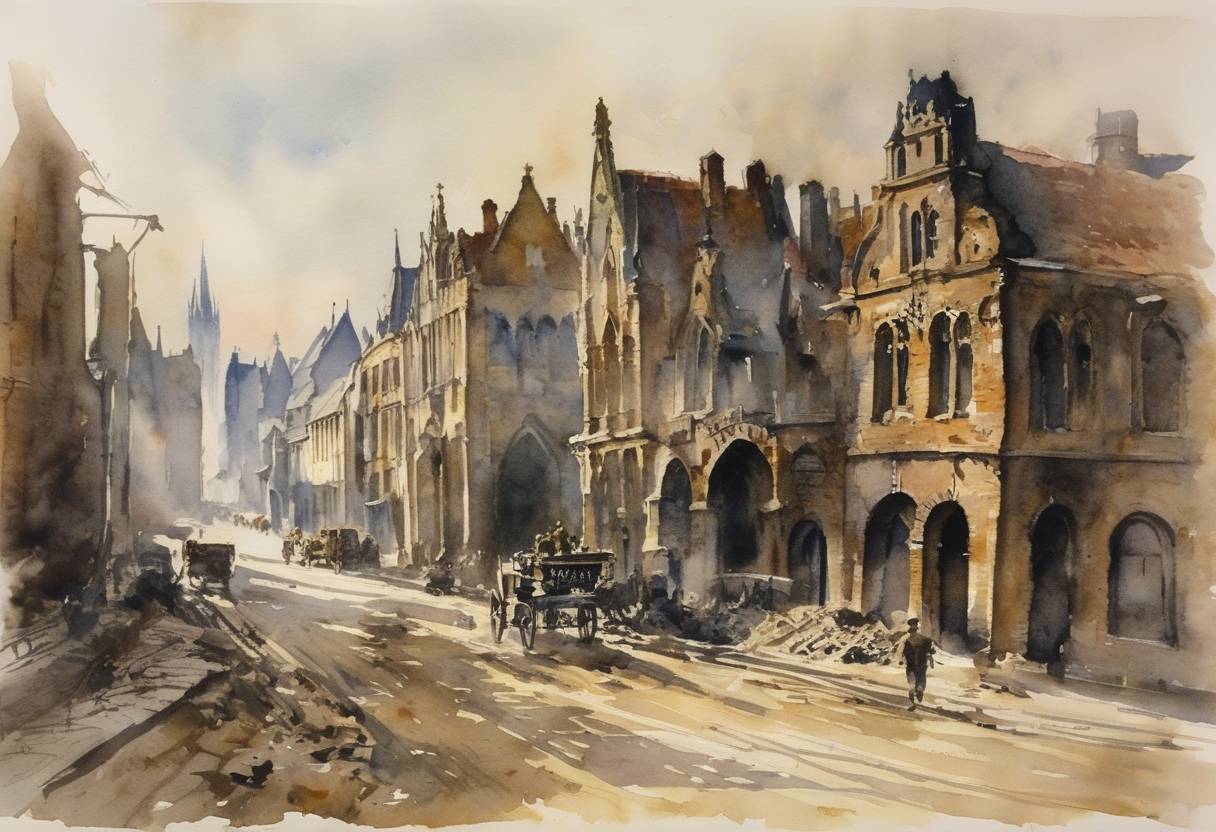
Ypres, a city located in the Belgian province of West Flanders, holds a significant place in World War I history due to several major battles that took place there. During World War II, the city came under German occupation following their successful invasion of Belgium in May 1940. The liberation of European territories occupied by Nazi Germany became a primary objective of the Allied forces following the successful D-Day landings on June 6, 1944.
After the Normandy landings, the Allied forces embarked on a rapid advance across France, liberating towns and cities along their path. The strategic goals included cutting off German forces in Western Europe from their supply lines and liberating occupied territories across Belgium and the Netherlands.
In early September 1944, as part of their broader campaign through Belgium, the Allies aimed to free key areas, advancing through Flanders. The Belgian Resistance played a crucial role during this period, providing intelligence, sabotaging German efforts, and facilitating the liberation.
On September 6, 1944, Ypres was liberated by Allied forces, specifically elements of British and Canadian troops. The liberation was part of Montgomery’s Anglo-Canadian 21st Army Group’s operations, which sought to secure the entire region. Their arrival signified the restoration of Belgian sovereignty in the city and marked an end to German military governance there.
The liberation of Ypres was an emotional victory for both Belgium and the Allies. It underscored the effectiveness of the rapid Allied push through northwestern Europe and helped to buoy the spirits of Allied forces and civilians alike. Importantly, the liberation also facilitated further Allied advances toward the German border, setting the stage for the eventual complete liberation of Belgium and Luxembourg.
The swift success of these operations demonstrated the German forces’ declining capacity to effectively counter the Allied onslaught, partially due to stretched supply lines and exhausted manpower. For Ypres, the return to Belgian administration marked the beginning of rebuilding and restoration, free from the conflict that had shadowed its streets for several years.
Source: en.wikipedia.org