The First Successful Human Heart Transplant
1967 · Cape Town, South Africa
The first successful human heart transplant was performed by Dr. Christiaan Barnard in Cape Town.
November 25, 2005
The first human face transplant was conducted by French surgeons on Isabelle Dinoire, who had been mauled by her dog. The operation took place in Amiens, France.
Amiens, France | Amiens University Hospital
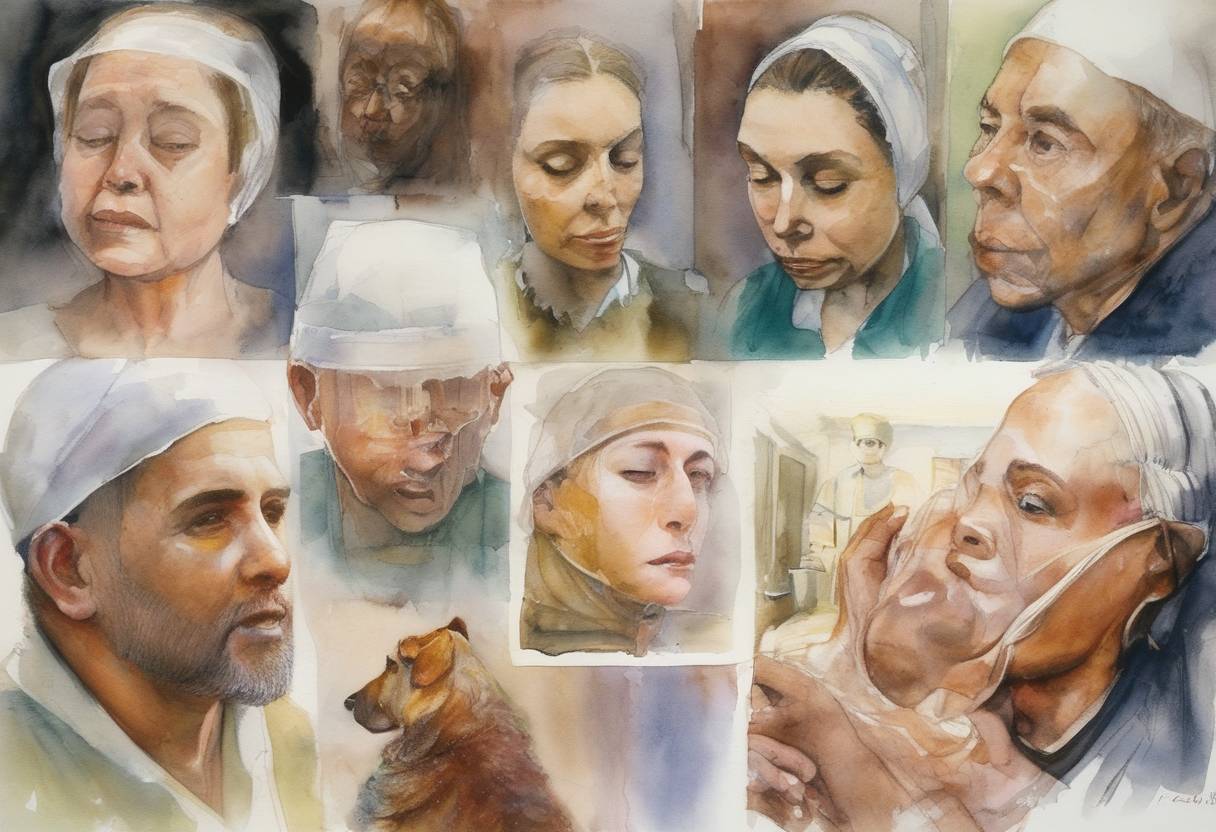
The first partial human face transplant was performed on November 25, 2005, by a team of French surgeons in Amiens, France. This groundbreaking medical procedure was conducted on Isabelle Dinoire, a French woman who had suffered severe facial injuries after being mauled by her dog.
Isabelle Dinoire, who was 38 at the time, experienced extensive disfigurement, which affected her ability to eat and speak. Her condition resulted in a pressing need for reconstructive surgery beyond conventional methods. Prior to this, while there had been significant advancements in transplantation of other body parts, facial transplantation had not been attempted.
The surgical team was led by Dr. Jean-Michel Dubernard, a pioneer in transplant surgeries, and Dr. Bernard Devauchelle, a maxillofacial surgeon. The operation involved grafting a triangular section of face tissue—consisting of the nose, lips, and chin—from a brain-dead donor onto Dinoire’s face.
The operation required the precise attachment of blood vessels, muscles, and nerves to integrate the transplanted tissue effectively. This represented a significant medical challenge due to the complexity and visibility of the human face.
Although Isabelle Dinoire faced life-long challenges related to immune suppression and tissue rejection, the surgery was successful in restoring her basic facial functions and appearance to a significant extent. This operation was hailed as a breakthrough in reconstructive surgery, paving the way for future procedures and offering hope for individuals with severe facial injuries.
The first human face transplant not only opened up new avenues in surgical techniques but also raised ethical and psychological considerations about identity and the extent to which such procedures should be pursued. This groundbreaking achievement underscored the possibilities of transplant surgeries and defined new standards of care for trauma and disfigurement patients.
Source: www.nature.com