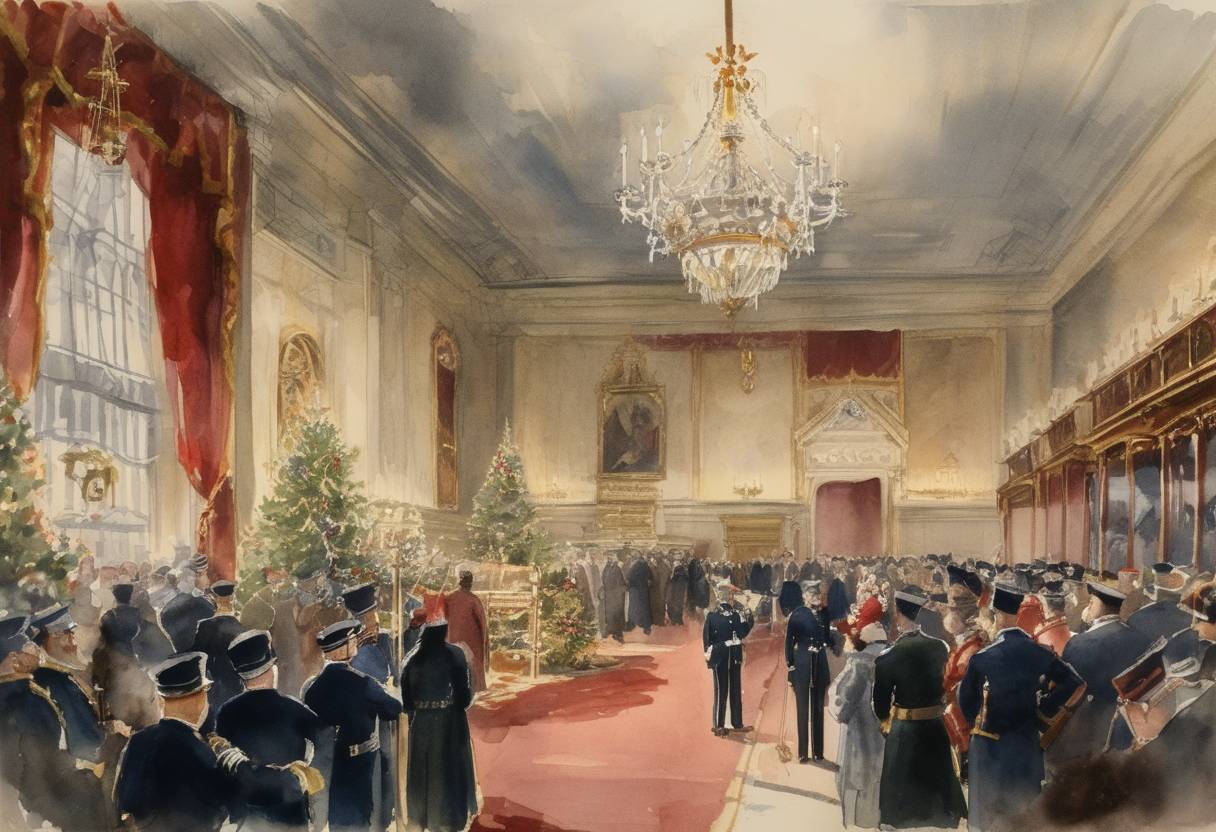
The First Royal Christmas Message by King George V
On December 25, 1932, King George V delivered the first Royal Christmas Message to the British Empire, inaugurating a tradition of annual Christmas broadcasts that endure to this day. The broadcast was transmitted via the British Broadcasting Corporation’s (BBC) Empire Service, marking a significant development in the use of radio technology for mass communication and the British monarchy’s embrace of this medium to engage with its subjects across the globe.
Context and Background
The idea for a Christmas broadcast had been proposed by Sir John Reith, the General Manager of the BBC, as an innovative way to unify the vast territories of the British Empire and connect the monarchy more directly with its people. The Empire at that time spanned multiple continents, including significant territories in Africa, Asia, Australasia, and the Americas. A radio broadcast provided a means to reach various time zones and audiences simultaneously.
Composition and Delivery
The speech was composed by Rudyard Kipling, a celebrated author and poet known for his works such as “The Jungle Book.” Delivered live from Sandringham House, the message was transmitted to an audience estimated in the millions. The broadcast lasted approximately two and a half minutes, featuring a sincere tone aiming to resonate with a wide audience during a period marked by economic hardship due to the Great Depression.
In his address, King George V expressed his desire to speak directly to every household within the Empire, to offer words of comfort, fellowship, and hope amid trying times. His message underscored themes of unity, peace, and the shared challenges faced by the nations.
Impact and Legacy
The success of this initial broadcast reinforced the potential of radio as a tool for royal communication and public engagement. It set a precedent that was followed diligently by subsequent monarchs, establishing a cherished tradition known as the Royal Christmas Message. Typically broadcast on Christmas Day, it remains an opportunity for the Sovereign to reflect on the year’s events and to extend messages of goodwill to the Commonwealth.
This tradition not only demonstrated the monarchy’s adaptability to technological advancements but also reflected a shift towards a more personable and relatable image of the British Royal Family. Radio broadcasts allowed the monarchy to maintain its relevance and influence throughout the 20th century and into the present day.