Germany Annexes Western Poland - October 8, 1939
1939 · Warsaw, Poland
Germany annexes Western Poland, incorporating it into the Third Reich following the invasion of Poland at the start of World War II.
October 6, 1939
Poland's last troops surrendered to Nazi Germany, concluding the Invasion of Poland which marked the beginning of World War II in Europe.
Kock, Poland | Nazi Germany
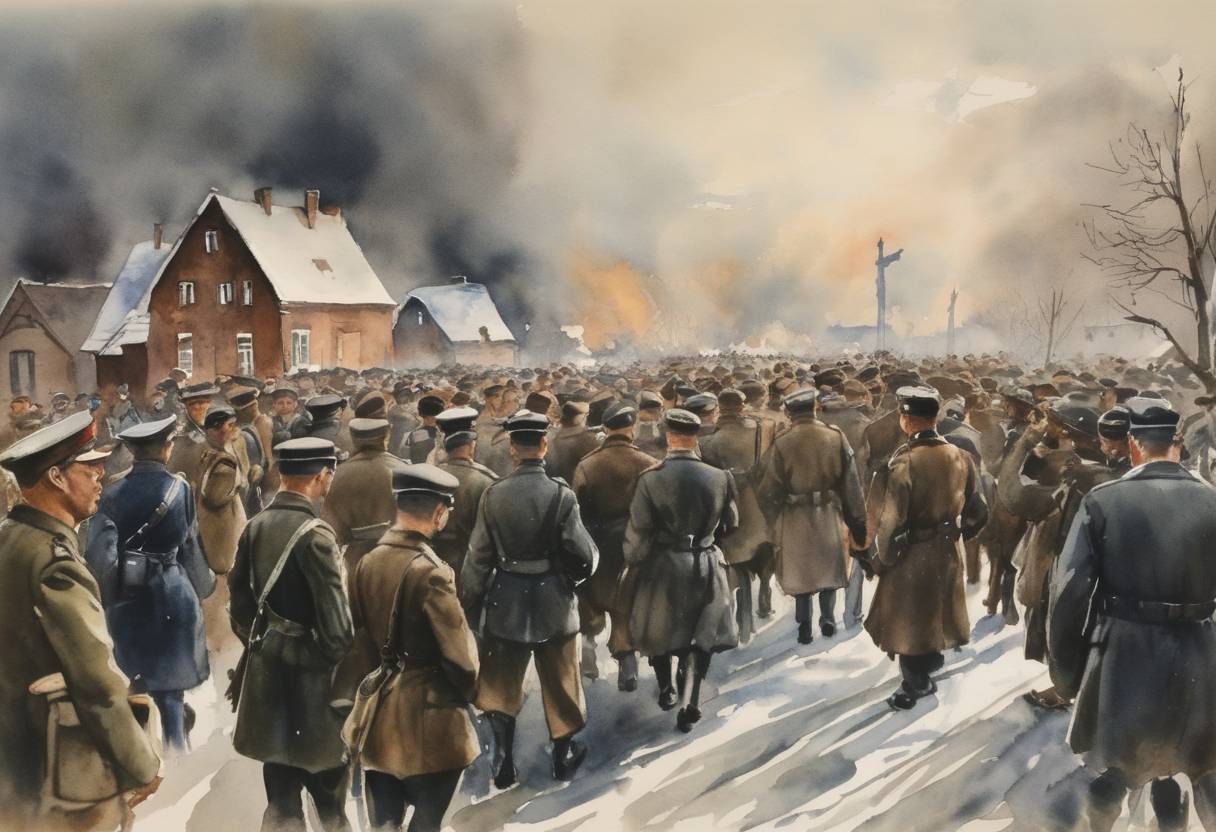
On October 6, 1939, the last organized Polish military resistance effectively concluded with the surrender of the Independent Operational Group Polesie to Nazi German forces. This event marked the end of the Invasion of Poland, which had begun on September 1, 1939, and signified the onset of World War II in Europe.
The German invasion strategy, known as the “Blitzkrieg” or “lightning war,” involved rapid and overwhelming attacks combining air power and fast-moving ground forces. The Polish campaign, codenamed “Case White,” saw Germany attacking from the north, south, and west, while Soviet forces invaded from the east on September 17, 1939, following the Molotov-Ribbentrop Pact.
The Independent Operational Group Polesie, commanded by General Franciszek Kleeberg, was among the last to hold out against the German advance. Despite being significantly outmatched in terms of manpower and resources, General Kleeberg managed to mount a strong defense and delay tactics, ultimately culminating in a final stand near Kock, north of Lublin.
From October 2 to October 5, 1939, the Battle of Kock unfolded as the last major battle of the campaign. Polish forces, comprising about 18,000 soldiers, demonstrated remarkable resilience against the German 14th Motorized Corps. Despite the numerical and technological disadvantages, Polish forces inflicted substantial casualties on the Germans.
Facing insurmountable odds, with ammunition running low and no hope of reinforcement, Kleeberg chose to surrender on October 6, 1939. This act of capitulation officially brought an end to organized resistance in Poland. Although Poland was partitioned between Nazi Germany and the Soviet Union, scattered resistance continued, laying the groundwork for the Polish underground state and resistance movement during the occupation.
The fall of Poland highlighted the effectiveness of the German military strategy and underscored the vulnerabilities of countries relying on static defenses. The rapid defeat also led to a reevaluation of military tactics and coalition strategies by Allied powers, shaping subsequent engagements in World War II. The invasion and its aftermath had profound implications for Polish society, leading to its division, occupation, and the instigation of a brutal regime of repression and exploitation by both occupying forces.
Source: www.history.com