Treaty of Dresden: February 18, 1745
1745 · Dresden, Germany
The Treaty of Dresden was signed, ending the Second Silesian War between Prussia and Saxony.
May 31, 1740
The Kingdom of Prussia and the Habsburg Monarchy signed the Treaty of Breslau, ending the First Silesian War. Under this treaty, most of Silesia was ceded to Prussia, significantly increasing its power and influence.
Breslau, Prussia (now Wrocław, Poland)
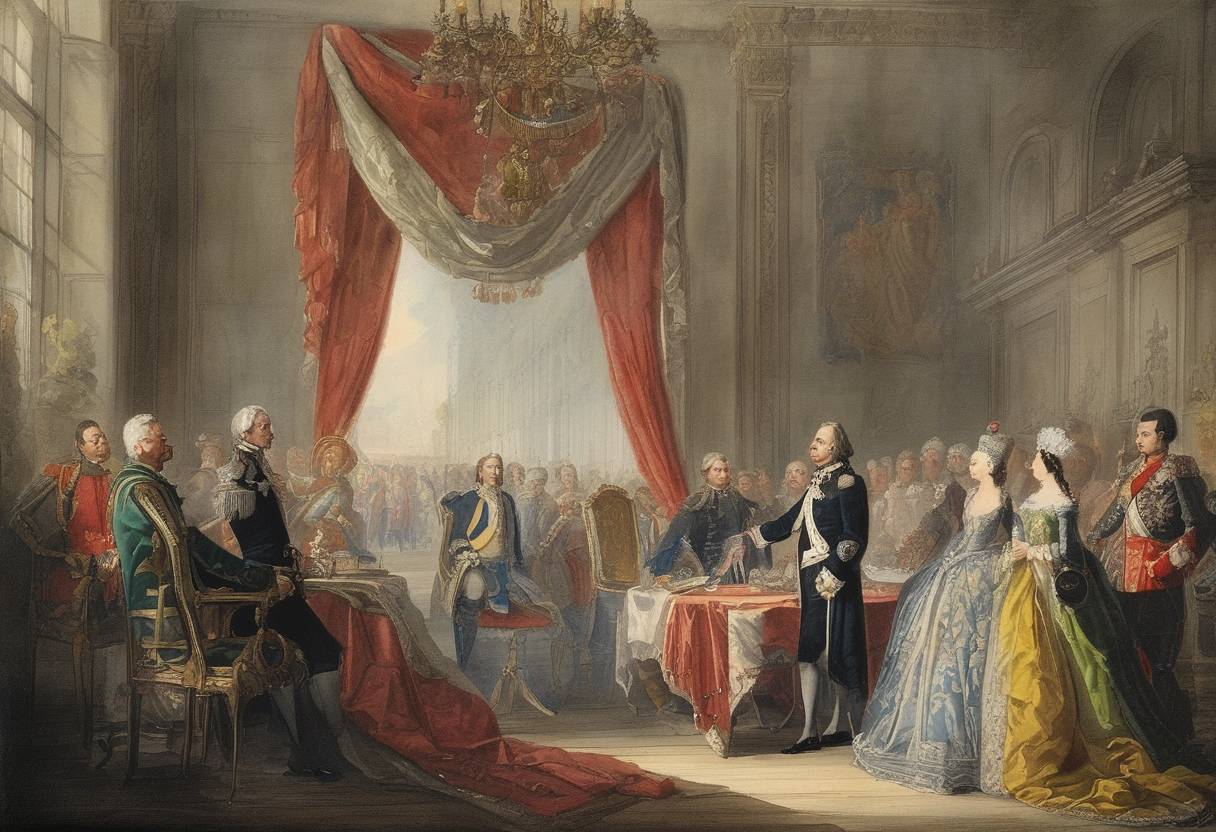
On May 31, 1742, the Kingdom of Prussia and the Habsburg Monarchy signed the Treaty of Breslau, marking the conclusion of the First Silesian War. This treaty was pivotal in shaping the balance of power in Central Europe during the 18th century.
The First Silesian War (1740–1742) was part of the broader conflict known as the War of the Austrian Succession. The conflict arose shortly after the death of Holy Roman Emperor Charles VI in 1740, when Frederick II of Prussia took advantage of the perceived weakness of his successor, Maria Theresa of Austria, to invade the resource-rich region of Silesia. Silesia was strategically important due to its economic resources, particularly its substantial mineral wealth.
The Treaty of Breslau resulted in the majority of Silesia being ceded to Prussia along with the County of Glatz. This territorial acquisition substantially increased Prussia’s wealth and military potential, bolstering its position as a major European power.
The key provisions of the treaty included:
The Treaty of Breslau had significant long-term implications:
The Treaty of Breslau is often viewed as a milestone in the rise of Prussia as a dominant force and a precursor to later conflicts within the region.
Source: en.wikipedia.org