The First Transcontinental Telegraph Message: October 24, 1861
1861 · Salt Lake City, United States
The first transcontinental telegraph message was sent successfully, marking a significant milestone in communication technology in the United States.
January 11, 1838
The first public demonstration of the telegraph, developed by Samuel Morse, took place.
Morristown, United States | None
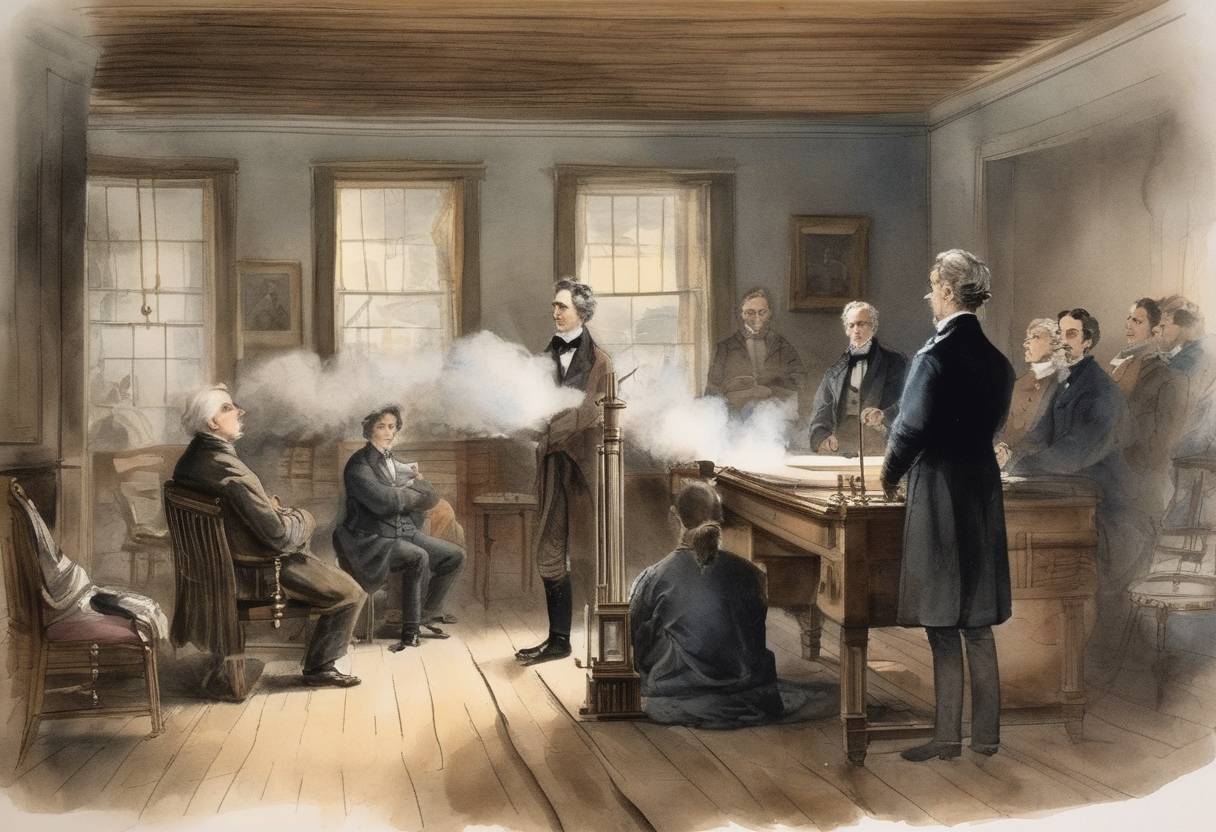
On January 11, 1838, Samuel Morse conducted the first public demonstration of the electric telegraph at the Speedwell Ironworks in Morristown, New Jersey. This event marked a pivotal moment in the history of communications technology, showcasing a device that would revolutionize the way information was transmitted over long distances.
The development of the telegraph was the culmination of years of work by Samuel Morse, who was inspired to explore rapid long-distance communication methods after learning of the sudden death of his wife, an event delayed in reaching him. Collaborating with Leonard Gale, a chemistry professor, and Alfred Vail, a skilled machinist and inventor, Morse refined the electric telegraph into a practical means of communication by early 1838.
During the demonstration at Speedwell Ironworks, Morse successfully transmitted a message over two miles of copper wire. The message, comprised of a series of dots and dashes that became known as Morse code, demonstrated the potential of the telegraph for instant communication. Observers witnessed how signals representing letters and numbers could travel electrically over a considerable distance with unprecedented speed.
The public demonstration confirmed the feasibility of using electric impulses to convey messages. It set in motion the creation of a vast network of telegraph lines, first within the United States and then internationally, which would dominate global communication by the mid-19th century. Moreover, this event highlighted Morse’s ingenuity not only in engineering but also in creating a standardized language for electronic communication—Morse code.
Following the successful demonstration, Morse sought funding from the U.S. government to establish a telegraph line. In 1843, Congress approved funding for the first telegraph line between Washington, D.C., and Baltimore, which was completed in 1844. The success of this line cemented the telegraph’s role as an essential instrument in communication, facilitating everything from journalism to business and personal communication.
Samuel Morse’s invention laid the groundwork for the modern era of telecommunications, with effects rippling through every aspect of life, from media to military to everyday personal connections, establishing the foundation for future technological advances in communication.
Source: www.history.com