1836 · San Antonio, Republic of Texas
The Battle of the Alamo Mission in San Antonio began on October 25, 1836, marking the start of this pivotal conflict in Texas' fight for independence from Mexico.
May 14, 1836
The Treaty of Velasco is signed, following the Battle of San Jacinto, effectively ending the Texas Revolution. General Santa Anna of Mexico is compelled to sign the treaty, granting Texas its independence.
Velasco, Republic of Texas | Republic of Texas and Mexican Government
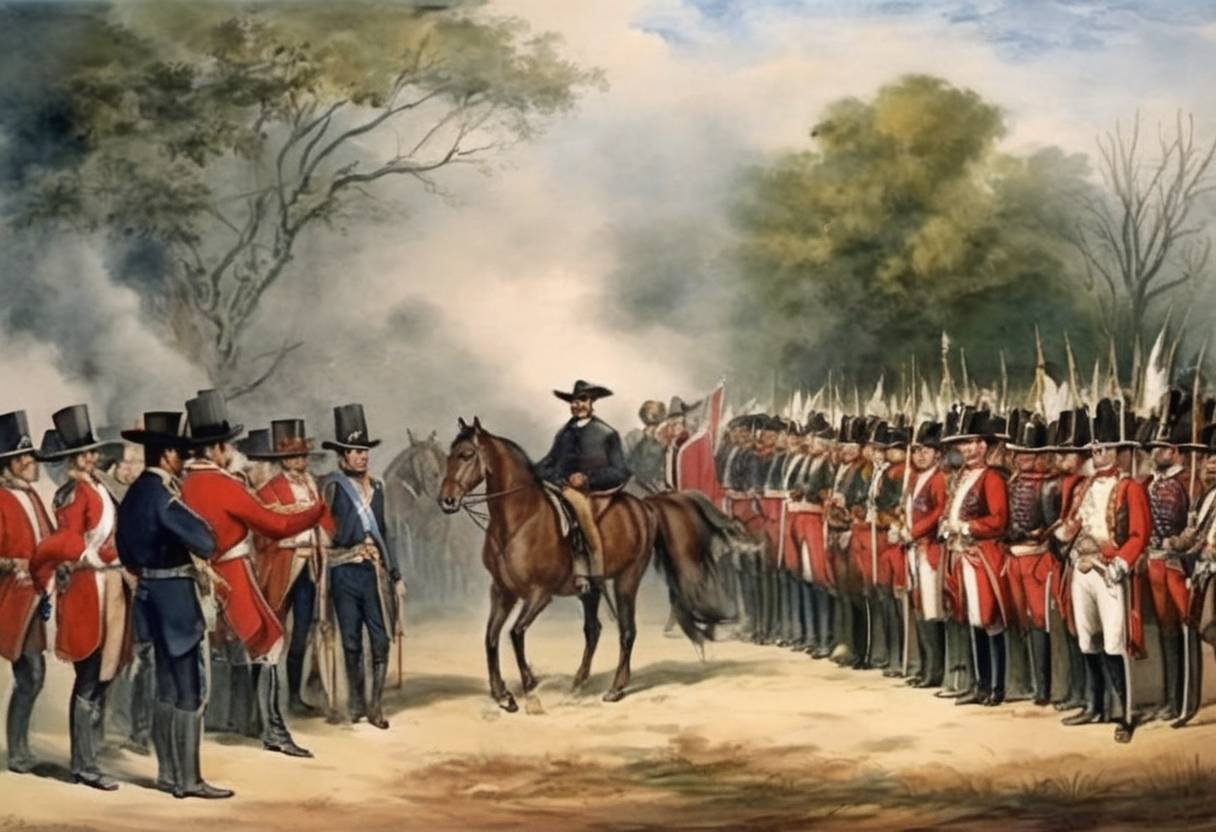
On May 14, 1836, the Treaty of Velasco was signed, marking a pivotal moment in the Texas Revolution as it effectively granted Texas independence from Mexico. The treaty came in the aftermath of the decisive Battle of San Jacinto on April 21, 1836, where Texian forces, led by General Sam Houston, achieved a stunning victory over the Mexican army commanded by General Antonio López de Santa Anna.
The Texas Revolution began in October 1835 as a rebellion against the centralist policies of the Mexican government and the leadership of Santa Anna. The conflict was characterized by a series of battles and skirmishes, including the infamous Battle of the Alamo, where Texian defenders suffered a dire defeat. However, the tide turned at San Jacinto, where Texian troops defeated the Mexican army in a mere 18 minutes, capturing Santa Anna the following day.
The Treaty of Velasco was signed in Velasco, Texas (now part of the city of Freeport) and was comprised of two agreements: one public and one secret. Santa Anna, compelled by his capture and pressure from Texas forces, agreed to these terms as part of his promise to secure his release.
Public Treaty: This document contained ten articles, which included the cessation of hostilities and agreed that Mexican troops would withdraw south of the Rio Grande. Furthermore, it guaranteed the exchange of all prisoners and reliance on Santa Anna’s pledge not to engage in hostilities against Texas again.
Secret Treaty: To secure Santa Anna’s cooperation, this private arrangement promised his expedited release in exchange for a commitment to recognize the independence of Texas, along with establishing the boundary between Texas and Mexico at the Rio Grande River.
Despite the signing, the Treaty of Velasco had a complex and contentious aftermath:
Lack of Recognition by Mexico: The Mexican government refused to recognize the treaty as legitimate, arguing that Santa Anna, as a prisoner of war, had no authority to sign treaties.
Continued Tensions: The rejection of the treaties by both Mexico and Santa Anna upon his return contributed to ongoing tensions and conflicts over Texas’ status until the U.S. annexation in 1845 led to the Mexican-American War.
Road to Annexation: The establishment of the Republic of Texas and its subsequent recognition by several countries laid the groundwork for its eventual annexation into the United States.
The Treaty of Velasco thus serves as a symbol of Texian determination and the complexities surrounding its quest for independence, significantly influencing the future geopolitical landscape of North America.
Source: www.tshaonline.org