1882 · Washington D.C., United States
U.S. Congress enacts the Immigration Act of 1882, which imposes a head tax of 50 cents on each immigrant and excludes certain classes of immigrants.
March 26, 1910
U.S. Congress issues a speed limit for automobiles in Washington D.C.
Washington D.C., United States | U.S. Congress
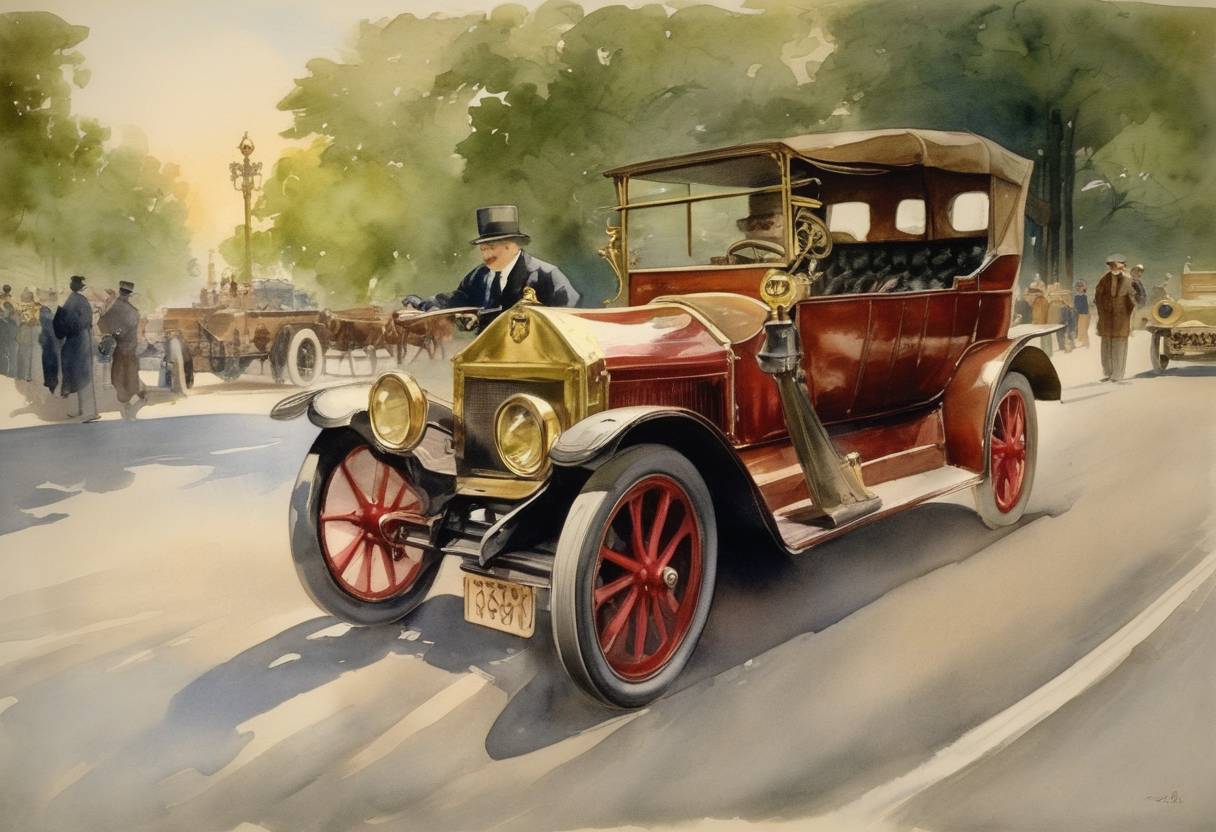
On March 26, 1910, the U.S. Congress enacted legislation to address the burgeoning issue of automobile traffic and safety in Washington D.C. This regulation was a response to the increasing presence of automobiles on the roads, a trend that had raised concerns about pedestrian safety and the maintenance of public order in the rapidly modernizing nation’s capital.
The early 20th century marked a significant shift in transportation, with the motor vehicle swiftly gaining popularity among Americans. This surge in automobile use necessitated new traffic regulations to manage urban environments, especially in densely populated cities like Washington D.C.
Before this legislation, the District of Columbia lacked consistent traffic rules tailored for motor vehicles, which led to a series of road safety challenges. As a federal district under the direct jurisdiction of Congress, it fell upon this legislative body to implement local traffic laws.
The 1910 legislation introduced a speed limit to curtail the hazards posed by rapidly moving vehicles. It mandated:
These limits were established following concerns about safety risks, as the rising number of automobiles interacted with pedestrians and horse-drawn carriages.
The establishment of these speed limits was one of the earliest instances of formal motor vehicle regulation in American urban settings. It represented a significant step towards structured traffic management and highlighted the need for governing bodies to adapt to technological and societal changes.
Furthermore, setting a speed limit underscored the growing influence and permanence of automobiles in American life, prompting further regulatory developments across the country.
The 1910 speed limit legislation in Washington D.C. set a precedent for other municipalities and states to follow, leading to the standardization of traffic laws, which became increasingly necessary as vehicle ownership soared. It also set the stage for subsequent traffic regulations, including the enforcement of licenses, vehicle registration, and insurance mandates.
This move by Congress demonstrated a proactive approach to managing urban growth and the emerging technological landscape, ensuring public safety while facilitating modern transportation advancements.
Source: en.wikipedia.org